
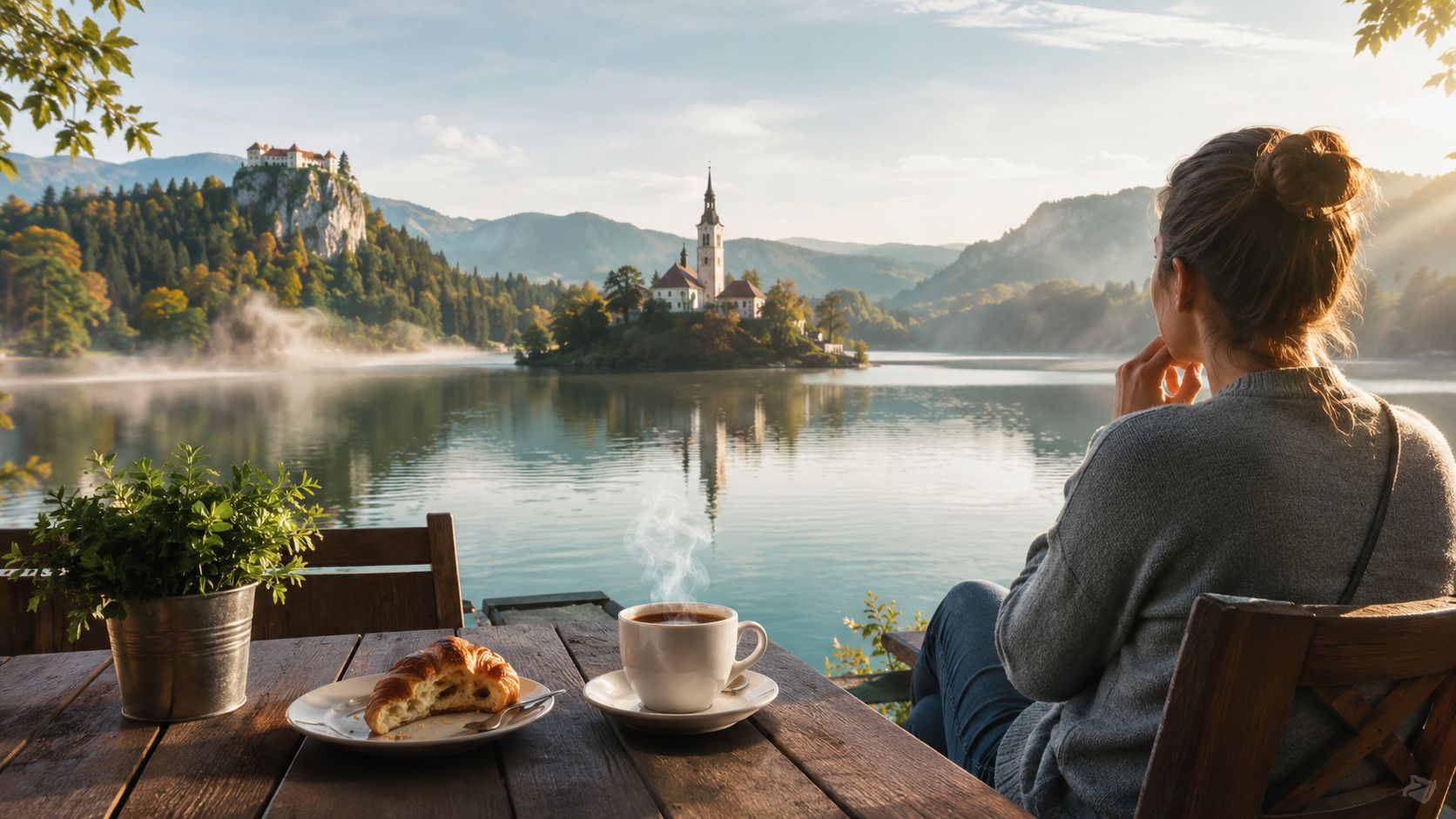
You can spend a full morning in Bled and still leave feeling like you only saw the postcard version. Breakfast on a lakeside terrace, the island in front of you, the castle above, a boat gliding past, and then the same question every active traveller asks sooner or later, what turns this into a proper day out? For many first-timers, the answer is canyoning in Slovenia for beginners, because it gives you the alpine terrain around Lake Bled in a way that walking, boating, or sightseeing can't.
That's also why it gets missed. Most visitors shortlist the obvious choices first, boat rides, pletna trips, castle visits, an easy hike, maybe a bike ride, and canyoning stays in the background until someone mentions it over coffee. In Slovenia, though, beginner canyoning is not some fringe option for specialists, it's a structured part of the activity market, with independent travel reporting noting that about 70% of canyoning tours are designed for complete beginners, and that around 10 canyons are open commercially for guided descents from easy half-day outings to advanced rappels as high as 55 metres. For first-timers near Bled and the Soča Valley, the most commonly cited beginner routes are Sušec, Grmečica, and Jerečica, and easy-canyon age thresholds are often set at 8 to 10 years for the simplest routes and 10 to 12 years for slightly harder beginner options. That beginner structure is laid out in independent Slovenia canyoning travel coverage.
What canyoning adds is simple to say and hard to replicate. You walk up to the gorge in sports shoes, pull on a wetsuit and harness, then descend downstream using a mix of rope work, natural slides, short swims, and sometimes small jumps. In Slovenia, the experience is usually guide-led from start to finish, so the guide controls the rope and the line of travel, while you focus on moving well and staying relaxed in cold water. That matters because “beginner” does not mean flat water and no exposure. It usually means the route is chosen to keep the technical demands sensible, not to remove real abseils altogether.
A lot of travellers also underestimate the feel of the surroundings itself. The Soča side tends to be broader and often feels more open, while the Bled and Bohinj area is tighter, greener, and more enclosed. That isn't just a scenery note, it changes the mood of the day. A beginner trip near Bled can feel like a contained alpine route through limestone walls and mossy channels, not a waterpark with a few wet obstacles bolted on.
Practical rule: if you're expecting a splashy play session with no rope, no cold, and no real height, you're looking at the wrong activity.
A proper beginner canyon near Bled still involves genuine abseils, often in the 5 to 20 metre range, plus controlled slides and sections where the water is cold enough to keep everyone moving with purpose. The good news is that the hard parts are not improvised. Guides manage the sequence, check the line, and decide when a jump is smart or when it should be skipped. In Slovenia, that is exactly what makes canyoning workable for people who have never worn a harness before.
The other reason canyoning fits Bled so well is that it turns a short stay into something more than a scenic pause. The lake, castle, and island are memorable, but they're also familiar by the time you've seen a few photos. A guided gorge day gives you access to the part of Triglav-adjacent terrain that most road-trippers and casual hikers never see, because the route is below the trails, inside the watercourse, and shaped by the canyon itself rather than by a viewpoint.
For 2025 and 2026, that point matters even more because the beginner market is being shaped not just by terrain, but by access. In Triglav National Park, canyoning isn't a matter of showing up with a guide and hoping for the best. It sits inside a managed system of permissions, registrations, and seasonal limits that affect how easy it is to book the right day. If you're planning a trip from Bled, the question isn't whether beginners can do canyoning. It's whether you can match the right canyon, the right timing, and the right level of comfort without forcing a tough day on yourself.
Table of Contents
- Honest Fitness, Skill, and Comfort Thresholds Beginners Should Check
- Comparing Beginner Canyons Near Bled and Triglav National Park
- What a Typical Canyoning Day Looks Like From Pickup to Drop-Off
- Safety, Conditions, and the Rules That Shape Your Trip
- Booking, Pricing, and What to Ask Before You Reserve
- Beginner Questions, Combinations, and Planning Your Trip
Honest Fitness, Skill, and Comfort Thresholds Beginners Should Check
Before booking, check four practical filters. They decide whether a first canyoning day feels manageable in cold water with a harness, rather than turning into an endurance test.
What you need to be comfortable with
Swimming comfort comes first. Race fitness is unnecessary, but you should be able to float, breathe calmly, and move through gentle current while wearing a wetsuit and helmet. Mobility matters on the approach and exit, where wet ground, short steep sections, and several hours on your feet are normal. Height comfort matters at beginner abseils too. You may still stand at the edge of a waterfall while the guide controls the rope and gives each instruction.
Age and body size can affect route choice and availability. Operators commonly screen for minimum ages around 10 to 12 years, with harness weight ranges around 35 to 40 kg at the low end and 110 to 130 kg at the high end, depending on the canyon. Ask about your specific group before paying, especially if children or larger adults are joining.
Your footwear must stay on when wet. Bring old trainers you do not mind soaking. No sandals, no bare feet, and no shoes that could slip off during a slide. Alpine canyon water can remain around 8 to 14°C even in summer, so a properly fitted wetsuit makes a real difference. The water-temperature range and beginner screening windows noted earlier are typical for Slovenian operators.
Comfort with the setting deserves an honest answer. Can you stay calm when mildly cold, slightly exposed, and asked to follow instructions before seeing the next move? That matters more than being quick or powerful. Guides can adjust the pace and explain technique, but they cannot remove the need to enter the water, walk on uneven rock, or commit to a controlled descent.
If you can swim a little, walk a few kilometres, and step off a 3-metre diving board without freezing up, you're probably ready for a Sušec- or Grmečica-level day.
Tell the operator about injuries, medical concerns, or serious discomfort with heights before the trip. A candid conversation may lead to a different canyon or a different activity, and that is a better outcome than forcing a group into a day that exceeds someone's comfort level.
Comparing Beginner Canyons Near Bled and Triglav National Park
The beginner routes most guides reach for near Lake Bled are Sušec, Grmečica, and Jerečica. They are not interchangeable, even though all three sit in the beginner-friendly part of the market. The choice depends on whether the person wants more sliding, more rope work, or a balance of the two, plus how tightly the park is controlling slots when they're travelling.
| Canyon | Difficulty & Time | Distance from Bled | Best Season | Beginner Fit |
|---|---|---|---|---|
| Sušec | Easy beginner route, often chosen for a first guided descent | In the wider Bovec side of the park network, so it is the longest transfer of the three from Bled | Best in stable weather windows, with slots tighter in peak summer | Good for first-timers who want the classic beginner setup |
| Grmečica | Beginner-friendly, with a more varied feel and a stronger swimming component | Bohinj side, so closer to Bled than the Soča side | Works well when spring and autumn conditions stay settled | Suits mixed groups and people who want a gentler pace |
| Jerečica | Beginner route with a more compact feel and a clear intro profile | Near Bled, which makes it the easiest logistical option | Useful when you want a shorter transfer and a low-friction day | Good for families and travellers who want the simplest day from town |
The practical difference is simple. Sušec is the name many first-timers hear most often, and it remains the classic answer when someone wants a proper introduction to canyoning rather than a watered-down version. Grmečica tends to appeal when the group wants something balanced and the day has to feel smooth rather than ambitious. Jerečica is often the easiest answer from a logistics standpoint because it keeps the transfer short and the planning light.
The other thing beginners should know is that booking pressure changes the decision. For 2025 to 2026, park slot allocations can make Sušec harder to secure in July and August, which is one reason late-spring and early-autumn beginners often end up happier with Grmečica or Jerečica. Triglav National Park's visitor rules and registration requirements explain why access can be tighter than people expect.
The question to ask an operator is not “Which canyon is best?” It's, “Which one matches my group's comfort with swimming, height, and cold water, and can you still book it legally on my dates?”
If you're comparing options beyond Bled, the link between beginner and more advanced canyoning becomes obvious once you see how route character changes across Slovenia, including the Bovec side of the market, which is why some travellers also look at the wider canyoning area around the Soča Valley through the Bovec canyoning route overview.
What a Typical Canyoning Day Looks Like From Pickup to Drop-Off
A beginner canyoning day around Bled starts with an 8 a.m. pickup and usually finishes in the early to mid-afternoon. The water section is only part of the commitment. Driving, the approach walk, changing, safety checks, and the return all take time.
From Bled, the group drives to the trailhead, then walks for 20 to 30 minutes in sports shoes. At the canyon entrance, the guide checks wetsuit and harness sizes, explains the sequence, and confirms that everyone understands the signals. Gear fitting is quick when the group arrives prepared, but it should never be rushed. Photos often happen after dressing and again near the first section where the group has settled into a shared pace.
Where the time actually goes
Inside the gorge, plan for two to three hours of movement through abseils, slides, swims, and short walking sections. The canyon time is often shorter than beginners expect because the approach, changing, transfers, and return walk make up much of the day.
The guide may also pause between obstacles so the group can move safely and stay together. Cold water, higher flow, or a group that needs more time on the first abseil can extend the schedule. The route order may change, and a guide may wait before entering a pool or narrow section rather than push the pace. That style of guided timing is consistent with beginner canyoning logistics around Bled.
Expect the day to feel like a half-day outdoor trip with a few intense moments, not a quick excursion you squeeze between breakfast and lunch.
After the descent, you walk back to the vehicle and return to Bled. Lunch is usually separate from the canyoning activity, so eat beforehand or plan a proper meal afterward. A snack before pickup is useful, especially when the group has an early start.
Pack a swimsuit, towel, and dry clothes for the journey back. Leave jewellery, valuables, and anything you do not want wet in the vehicle. Bring only what you need at the canyon, since wet gear, rock, and small pools are hard on loose personal items. Treat the outing like a mountain swim with technical sections, not like an ordinary sightseeing stop.
Beginners should confirm pickup details, equipment, meeting arrangements, and slot availability with the operator before booking. Anyone travelling from Ljubljana should also allow for the transfer, using this Ljubljana to Bled route overview to decide whether canyoning fits better before or after other plans.
Safety, Conditions, and the Rules That Shape Your Trip
On a guided beginner trip, safety is not an abstract promise, it's the structure of the day. The guide checks the group before departure, watches for mismatched confidence levels, and adjusts the route when the water or the people in front of them say the plan needs softening. Every abseil is controlled from above, and jumps are treated as optional, not mandatory. If a guest doesn't like a ledge, the guide should have a walk-around or lower-line option ready.
What the guide is really managing
The most important part of the system is that the guide has permission to slow the group down. That matters more than the canyon name itself, because a beginner-friendly gorge can feel hard if the water is high or the group is nervous. Good guides shorten the day before it becomes a struggle, not after someone has already lost confidence.
Triglav National Park adds another layer. Canyoning there requires prior consent from the park authority, a wild-water-rescue presence for profit-driven guiding, a maximum group size of 9 including the guide, and mandatory use of the registration application for Fratarica and Predelica. The park also introduced a 2025 rule that each group must register at least 30 minutes before arriving at the designated parking lot. Those are the kinds of rules most beginner pages barely mention, yet they shape availability, timing, and how easy it is to book a slot in the first place. The park's official FAQ page sets out those access and registration requirements.
Recent rain raises flow, and June snowmelt can change the character of a canyon quickly. That's why the calmest beginner conditions are usually the result of timing, not luck. When in doubt, ask the operator whether the day is being run for your comfort level or because the booking calendar is full.
Check the cancellation policy before you pay, and make sure the trip is run by certified guides, not just generic outdoor hosts. If an operator can't explain the weather threshold, the park access rules, or what happens when a route is too high, keep looking.
Booking, Pricing, and What to Ask Before You Reserve
A useful booking message should identify the actual trip, not just request a price. Ask which canyon you will enter, how many people are in the group, what the guide ratio is, and what happens if water levels change. Confirm how far in advance you can cancel or move the date. Vague answers make it harder to judge whether the operator is matching the route to your group.
July and August generally require earlier planning than May or September. Beginner departures fill sooner, while park-managed access can reduce the number of workable slots. Ask for the total cost and check what the headline price includes. Technical canyoning equipment is often provided, but photos, neoprene socks, pickup outside Bled, lunch, and video packages may cost extra. The current activity page should take priority over an older article or saved price.
Red flag: a trip described as “easy for everyone” with no named canyon, no water-level policy, and a promise to run every day no matter the weather.
Age and weight limits for beginner trips commonly start around 10 to 12 years, with harness limits adjusted to keep gear safe. Ask the operator to confirm the limits for your specific route and equipment rather than relying on a general booking form.
Booking details matter because canyon access depends on both commercial arrangements and changing conditions. A responsible operator should explain the route, group size, equipment, weather decision, and alternatives if the canyon is too high. If those answers are missing, the issue is not only the price. You may be booking a day that does not suit your group.
If you are choosing between providers, Outdoor Slovenia Activities offers beginner canyoning near Bled with guided logistics and provided technical equipment. Check its current activity page for the present setup, then ask other operators the same practical questions before reserving.
Beginner Questions, Combinations, and Planning Your Trip
Cold water is the first concern many beginners raise after seeing canyoning photos. A proper 5 mm wetsuit keeps the initial shock manageable. The water still feels cool, but once you are moving, attention usually shifts to the rope, the guide, and the next foothold. If you already know that cold water makes you tense, say so before choosing a route. It can affect whether the day feels comfortable.
Non-swimmers may be accepted on some beginner routes, but only after the operator considers the person, the water conditions, and the canyon. Stay calm in moving water and be able to swim at least a little. Do not treat a general booking form as a final decision. Minimum ages commonly fall around 10 to 12 years, while harness limits depend on the equipment and route. Confirm both for your group before reserving. Independent travel coverage of Slovenia's beginner canyoning market discusses those kinds of practical thresholds.
Your comfort with height, jumping, and enclosed spaces matters as much as fitness. Guides can usually offer alternatives for individual obstacles, but a participant who freezes repeatedly can slow the group and make the route unsuitable. Tell the operator about injuries, strong fears, or anyone who may need more time with the equipment.
Photos and GoPros need realistic expectations. Guides may stop for a few shots, but rope work and moving water make continuous filming impractical. Ask whether photos or video are included, and whether a personal camera can be carried safely or should remain dry in the van.
Canyoning fits well into a wider Slovenia itinerary. From Bled, rafting or kayaking can work on another day. A trip farther west can combine canyoning with a Soča-focused holiday, provided the schedule leaves recovery time. Avoid stacking active days back to back when travelling with children, older relatives, or anyone who dislikes cold water and long transfers.
Plan around the canyon, not just the calendar. Confirm dates, ask which beginner route is operating, and check shoulder-season availability early. Access requirements can affect the available departure slots, so ask whether the operator has arranged the required consent and advance registration for the selected canyon. A clear answer about water levels, route choice, access, and alternatives is a good sign.
For current options around Bled, Outdoor Slovenia Activities lists guided canyoning with practical logistics and technical equipment. Compare the route details with your group's comfort and fitness before booking.