
You're in Bled, you've got one free day, and the easy part is deciding you want to get on the water. The harder part is choosing how. One option puts you in a raft with a guide and a crew, paddling a river together. The other takes you into a narrow gorge where progress happens on foot, in pools, over rock, and sometimes on rope.
That hesitation is normal. Most first-timers aren't choosing between a “safe” activity and a “wild” one. They're choosing between two very different kinds of movement, two different social dynamics, and two different levels of contact with the surroundings. Around Bled and Bohinj, that difference matters even more because the local rivers and canyons aren't run in the same way.
After many seasons on the Sava Dolinka and in the nearby canyons, the pattern is familiar. Some guests think they want the bigger adrenaline hit, then realise they want the easier group day. Others book rafting because it sounds simpler, then discover they were really hoping for something more hands-on and immersive. The right choice usually comes down to a few practical points: what the activity feels like, how comfortable you are with heights or current, how your group works together, and how local access rules shape the day.
This guide is built around that real decision. It looks at experience, difficulty, safety and regulation, age and fitness, seasonality, logistics, and whether doing both makes more sense than choosing one. If you're staying in Bled or Bohinj and want a clear answer without generic travel fluff, this is the comparison that usually helps.
Table of Contents
- Introduction Which Adventure Fits Your Bled Holiday
- What Canyoning and Rafting Actually Involve Near Bled
- Canyoning vs Rafting Side by Side Comparison
- Safety Regulations Seasons and Water Conditions
- Who Should Choose Which Activity
- What to Bring Logistics and Booking Tips From Bled
- Best Combo Itineraries and Final Recommendation
Introduction Which Adventure Fits Your Bled Holiday
A couple arrives in Bled and asks for “something active, but not too extreme”. A family with teenagers wants one proper outdoor day together. A group of friends wants the story they'll still be talking about at dinner. Those sound like similar requests, but they don't always point to the same activity.
The choice usually starts with the wrong question
Some begin by asking which is more exciting. That's understandable, but it's not the best way to choose between canyoning vs rafting. The better question is what kind of excitement suits you.
Rafting is shared and rhythmic. You're in the boat together, listening to the guide, paddling when asked, and moving with the current. Canyoning is more personal. You move through the gorge yourself, step by step, with the guide controlling the pace and the order, but not carrying you through the terrain.
That's why two equally adventurous people can choose differently and both be right.
Practical rule: If you want the day to feel social first and physical second, rafting usually fits better. If you want the day to feel immersive first and social second, canyoning usually does.
What matters around Bled and Bohinj
Around Lake Bled, Bohinj, and Triglav National Park, the decision isn't just about personality. Local conditions shape the day in very concrete ways. Rivers are planned around flow and seasonal access. Canyons are managed with tighter controls, smaller groups, and route-specific logistics.
For travellers, that affects more than safety in the abstract. It changes how trips are scheduled, how groups move, and what kind of atmosphere you get on the day.
A simple comparison helps. The rest comes down to what kind of active holiday you came here for.
What Canyoning and Rafting Actually Involve Near Bled
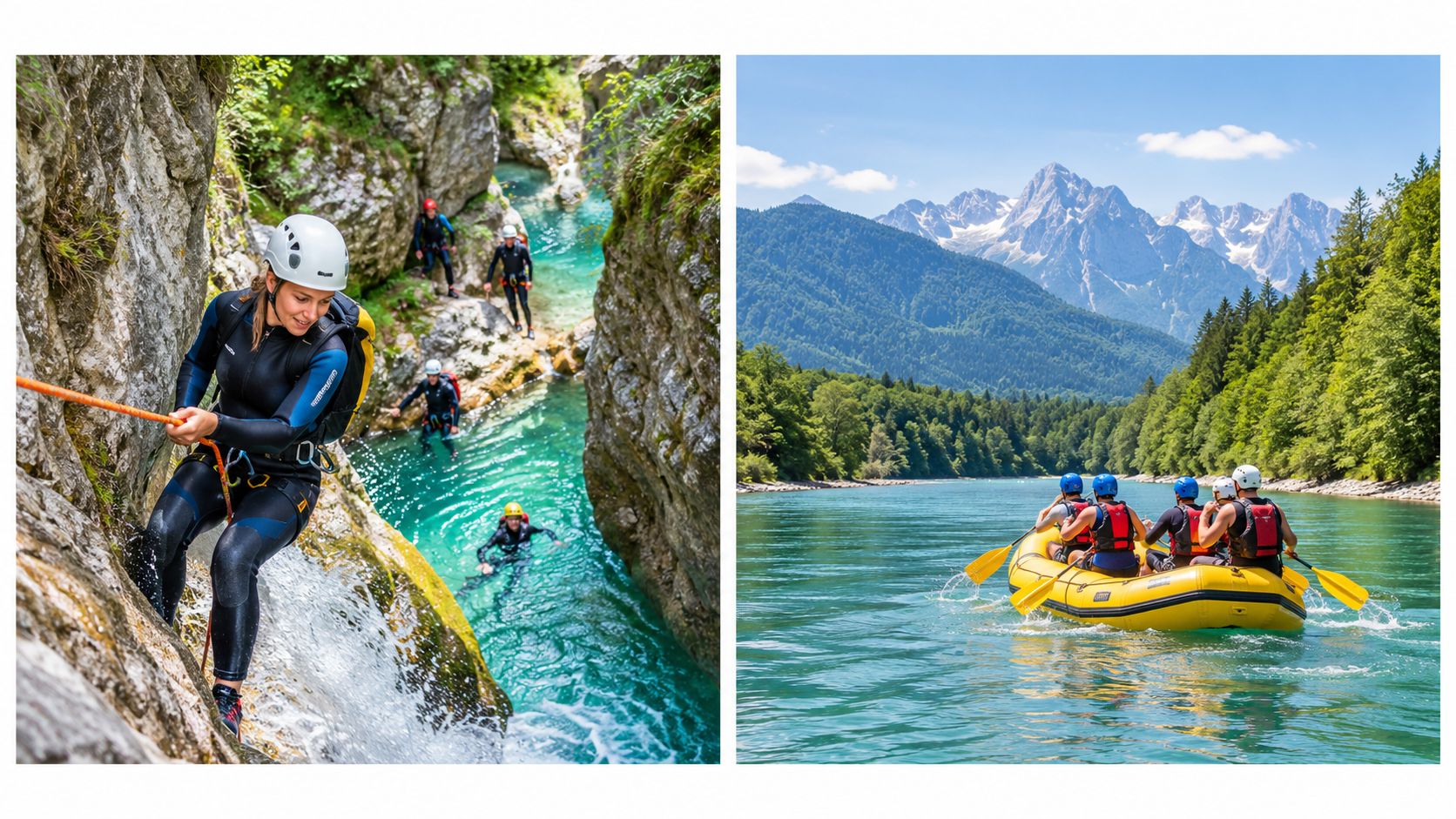
At 9 a.m. from Bled, these trips already start to separate. A rafting group can load several vans, reach the river quickly, and spread across multiple rafts on the same launch window. A canyoning group usually moves in smaller numbers, with tighter timing, because entry capacity, guide ratios, and the pace inside the gorge are less flexible.
That difference shapes the whole day.
What canyoning feels like in practice
Canyoning begins with more setup than rafting. You change into neoprene, check helmet and harness fit, sort footwear, then drive to the canyon access point. After that, there is often an approach on foot before you even touch the water.
Inside the gorge, progress is sequential. One person moves. The next waits in a safe pocket. The guide positions each guest for the next descent, slide, jump, or short swim. In local canyons near Bled and Bohinj, the exact mechanics depend heavily on the route. Some are playful and compact. Others are colder, steeper, and more technical, with rope work setting the pace rather than walking.
That is why canyoning feels personal. You are not just along for the ride. You are placing your feet on wet rock, lowering yourself through narrow sections, and dealing with the exposure one obstacle at a time.
Route choice matters more than many visitors expect. Near Bled, operators work within small-group formats and route-specific access limits, so canyoning is rarely a high-volume activity. If you want a realistic picture of how these departures are organised locally, this overview of canyoning trips from Bled shows the format well.
What rafting feels like in practice
Rafting is easier to read from the bank. You gear up, get the paddle talk, learn a few commands, and launch with the rest of the crew. Once the raft is on the Sava Dolinka or another nearby run, the movement is more continuous than in a canyon. The river sets the line. The guide calls the timing. The group paddles together, braces when asked, and settles back in calmer sections.
The workload is different too. On a raft, guests do not need to solve each step of the terrain with their own body position in the same way. They still need to listen and react, but the boat carries the group through features that would feel much more exposed on foot in a gorge.
Around Bled, that also makes rafting easier to schedule at scale. Rivers can handle more departures than canyons, and that is one reason rafting is often the simpler choice for families, larger groups, and short-stay visitors trying to fit an activity into a half day.
A practical way to separate the two:
- Canyoning: hiking, scrambling, sliding, swimming, and sometimes rope descents through a confined gorge
- Rafting: paddling a shared boat through moving water under guide commands
- Both: guided activities where local conditions decide the final plan
For first-timers, rafting usually feels more straightforward in the first ten minutes. Canyoning asks for more patience early on, then pays it back with a closer, more physical experience of the terrain. If you want a general refresher on river habits before a paddle trip, this short guide on paddling safety for boaters is useful background.
Canyoning vs Rafting Side by Side Comparison
The cleanest way to choose is to compare the same criteria side by side. Around Bled, the two activities overlap in audience, but not in feel.
| Criteria | Canyoning Near Bled | Rafting on Sava Dolinka / Bohinjka |
|---|---|---|
| Environment | Narrow gorge, rock, pools, small waterfall features, enclosed terrain | Open river corridor, wider valley feel, current-driven movement |
| How you move | Hiking, wading, swimming, sliding, jumping, rappelling depending on route | Sitting in raft, paddling on command, bracing, occasional swimming only if needed |
| Group dynamic | Smaller, more sequential, one person moves at a time through key sections | Shared boat experience, everyone involved together |
| Main challenge | Heights, wet rock, cold water, vertical features | Following commands, paddling together, comfort with current and splashes |
| Thrill style | Personal and hands-on | Social and fast-moving |
| Beginner feel | Very memorable, but more exposed to the terrain | Easier to understand quickly for most first-timers |
| Pace of the day | Stop-start progression through obstacles | More continuous flow once on the river |
| Best fit | Travellers who want immersion and active participation | Travellers who want a fun team adventure with simpler logistics |
The key trade-off
Canyoning gives you a close-up experience of the gorge. It also asks more from you. You'll usually need to move with care on uneven surfaces, follow detailed instructions at each obstacle, and stay comfortable in a tighter environment.
Rafting spreads the challenge across the group. That makes it easier for mixed-ability groups, and it's often the smoother first choice for people who want adventure without the feeling of being individually tested at every step.
If canyoning feels like moving through a route one feature at a time, rafting feels like joining a single flow and working with it.
What works well for different travel styles
A couple choosing one activity often does best by being honest about comfort levels. If one person dislikes heights, canyoning can become mentally tiring even when the route is suitable for beginners. If one person wants a more physical day and the other wants a straightforward introduction, rafting often keeps both happier.
Friend groups split differently. If the group wants laughter, team energy, and a smoother start from Bled, rafting is usually easier. If the group came specifically looking for something more tactile and unusual, canyoning tends to leave the deeper impression.
Families with teenagers often ask for the “best” option. There isn't one. There's the better fit for that family on that day.
For readers comparing actual local options, rafting near Bled on the Sava rivers gives the river side of that choice.
A quick decision filter
Use this if you're still torn:
- Choose canyoning if you like scrambling, don't mind getting fully involved in each section, and want the day to feel earned.
- Choose rafting if you want strong group energy, easier instructions, and a more continuous ride.
- Choose based on the hesitant person in your group if you're booking for more than yourself.
That last point saves a lot of bad decisions.
Safety Regulations Seasons and Water Conditions
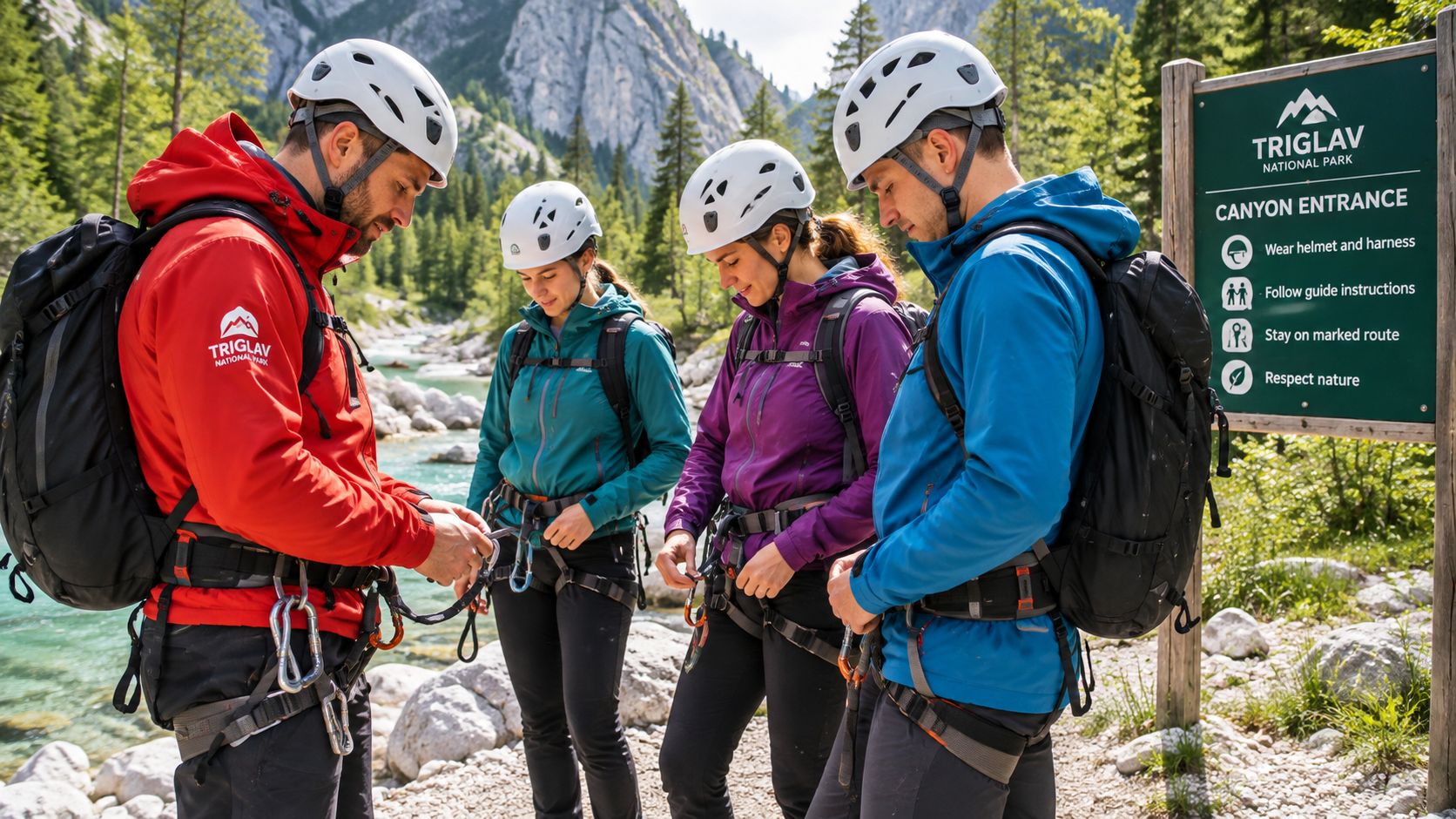
You can feel the difference before the trip even starts. For a canyoning departure near Bled, the guide checks the roster, keeps the group small, confirms the route is open, and adjusts pace around each person. For a rafting departure, the setup is broader. More seats to fill, more departures possible, and the final go or no-go usually comes down to river level and current speed.
That difference is not just style. It comes from how these activities are managed around Triglav National Park and the wider Bled area.
Why canyoning is controlled more tightly
Local canyoning runs on limited access, small groups, and route-by-route oversight. In the park area, canyoning is allowed only under specific conditions, with prior consent required, group size limited, and extra operating rules on some routes, as set out in the Triglav National Park visitor guidance.
From a guide's point of view, that has practical consequences. Canyoning near Bled cannot be treated as a high-volume activity, even in peak summer. Groups stay small because the terrain demands it. You move one obstacle at a time, often on wet limestone, sometimes on rope, and any delay at one drop affects everyone behind.
That is why canyoning spaces disappear faster than rafting spaces in July and August. It is not marketing pressure. It is capacity.
How rafting works under a different operating logic
Rafting has rules as well, especially on protected waters, but the logistics are usually easier to scale. A raft carries several guests with one guide, put-ins and take-outs are fixed, and the river corridor can handle more traffic than a narrow canyon slot if conditions are suitable.
Around Bled, that makes rafting the easier activity to schedule for mixed groups, short stays, and last-minute bookings. The main variable is water. If levels are too low, the trip can become slow and bony. If levels rise after rain, a section that was friendly yesterday may stop being the right choice for beginners today.
On the river, regulations matter. On the day, flow matters more.
Seasons change the two activities differently
Canyoning usually depends on stable footing, manageable water volume, and enough warmth that time in cold water stays enjoyable rather than draining. A route can be technically open and still be a poor choice after heavy rain, during a cold spell, or early in the season when the water has real bite.
Rafting near Bled has a longer practical window for many visitors because the format is more forgiving. People sit in the raft, work as a team, and stay less exposed between features than they do in a canyon. That does not make rafting risk-free. It does make it easier to run consistently across a wider range of holiday dates.
Spring runoff, summer thunderstorms, and dry late-season periods all change the feel of the river. In the canyon, the same weather can change whether a descent is comfortable at all.
What visitors from Bled should actually plan for
If you are staying in Bled without much flexibility, rafting is usually the simpler booking. It has higher capacity and fewer access bottlenecks. Canyoning asks for more alignment between permits, guide ratios, route condition, and guest suitability.
For a two- or three-day stay, leave your water day away from the wettest forecast if canyoning is your priority. Check the weather patterns in Bled through the season before you lock in dates.
The short version is simple. Rafting is controlled mostly by river conditions and operating window. Canyoning is controlled by river conditions, access rules, group size, and the character of the gorge itself. Near Bled and Triglav, that difference matters as much as the adventure style.
Who Should Choose Which Activity
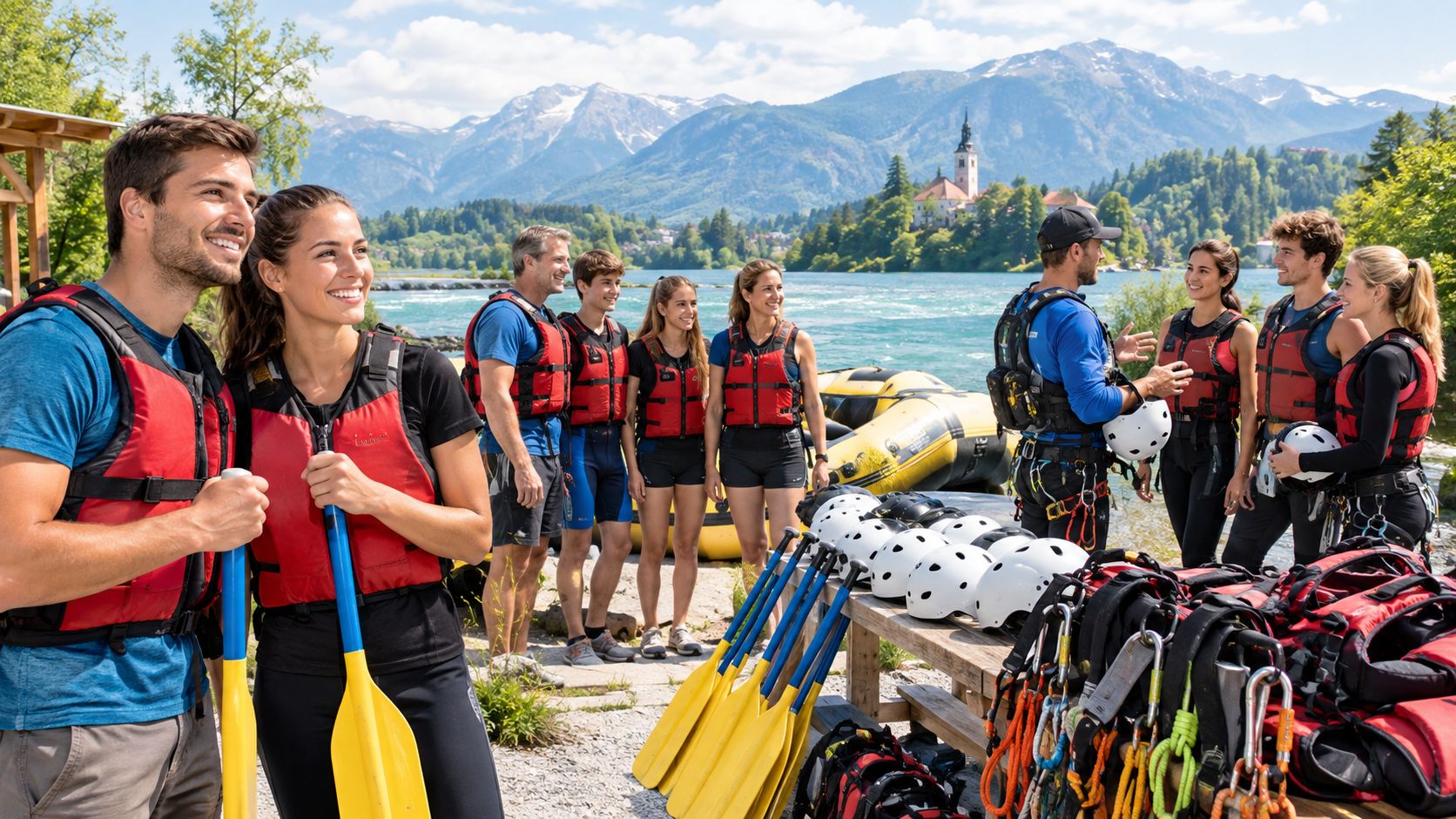
You are in Bled for three days. One person in the group wants a proper adrenaline day. One hates heights. Another is fit enough but does not want a technical briefing to dominate the morning. That is usually where the choice gets clear.
Near Bled, the decision is not only about adventure style. It is also about how these trips run around Triglav. Rafting has higher daily capacity and is easier to fit around short holiday schedules. Canyoning runs in smaller groups, with tighter guide ratios and more route limits, so it suits people who are choosing the canyon itself, not just a generic water activity.
Choose canyoning if you want participation, not just exposure
Canyoning suits guests who want to do the route with their hands, feet, and head switched on the whole time. You move over wet rock, follow precise instructions, manage short awkward sections, and often deal with rope work or jumps depending on the canyon and the day's line choice.
That appeals to active couples and small groups who enjoy problem-solving together. It also suits travelers who care less about covering distance and more about entering terrain they would never reach from a marked path.
Height tolerance matters. So does comfort on slippery ground.
I tell guests this plainly before we leave Bled. If someone already knows they freeze on ledges, hates stepping into cold pools, or wants the guide to do almost everything for them, rafting is usually the better call. A good beginner canyon still asks for commitment at each obstacle, even when the route is well within normal holiday fitness.
Choose rafting if you want shared excitement with fewer personal barriers
Rafting works better for mixed groups. One nervous guest does not slow the whole format in the same way they can in a canyon, because the raft carries the group through the route and the work is shared between paddlers.
On the Sava Dolinka, that matters a lot. The river near Bled is commonly used as an introduction to whitewater because the current is active enough to feel exciting but, on normal beginner sections, the moves are straightforward under guide instruction. Guests still paddle, listen, and get wet. They are just not making repeated individual decisions at the edge of each drop.
This is also why rafting is often the easier answer for short-stay visitors. More departures can run in a day, transport is simpler, and operators can usually handle larger groups without the same bottlenecks that apply in permit-sensitive canyon areas.
Simple filter: If anyone in your group is uneasy about rappels, jumps, or exposed starts, book rafting first. If the whole group wants a more technical half-day and accepts a smaller-group format, canyoning is the stronger fit.
Families, teenagers, and nervous swimmers
Families with teenagers can do well on either trip, but the reason they enjoy it is different. Teenagers who like challenge, scrambling, and the feeling of doing something slightly demanding often come back happiest from canyoning. Teenagers who mainly want laughs, splashes, and a shared activity usually click with rafting faster.
For nervous swimmers, ask what worries them. If the issue is deep moving water and the idea of floating outside the boat, rafting can sound harder at first. In practice, many nervous swimmers relax quickly because the structure is simple and the guide controls the pace. If the issue is heights, unstable footing, or stepping into pools one by one, canyoning is rarely the first choice.
Fitness is rarely about being sporty in the abstract. The question is whether you can keep moving confidently on uneven ground, stay warm enough to focus, and handle instructions under a bit of pressure. If yes, either activity can work. If your group wants the lower-friction option from Bled, rafting usually wins.
What to Bring Logistics and Booking Tips From Bled
Staying in Bled makes both activities easy to organise, but a smoother day usually comes from getting the small things right. People tend to overthink the technical side and forget the basics.
Bring the simple things you'll want afterwards
For either activity, bring swimwear, a towel, and a full change of clothes. If you're canyoning, secure footwear matters more because movement on wet ground is part of the experience. For rafting, people often care more about what they'll wear once they're back and warming up.
With Outdoor Slovenia Activities, technical equipment is provided, and photos and videos are included where applicable. Free pickup is available in the Bled area for applicable activities, which is useful if you're travelling without a car or don't want to organise separate transport on a short stay.
Booking well means leaving some flexibility
Peak summer fills quickly, especially for travellers who want a specific day around arrival and departure plans. If you already know your dates, it's smart to check current availability early rather than assuming you'll sort it out the night before.
A few practical points help:
- Check current trip details: Schedules and route choices can change with conditions, so use the live information on the operator's site rather than relying on an old blog post.
- Expect safety to overrule plan A: Good guides adjust for weather, water, and participant ability instead of forcing the original route.
- Treat small groups as part of the experience: This matters especially in canyoning, where spacing, briefing, and pace all work better when the group stays manageable.
If you're based in Bohinj instead of Bled, the same logic applies. The difference is usually just transfer and timing, not the core decision.
Best Combo Itineraries and Final Recommendation
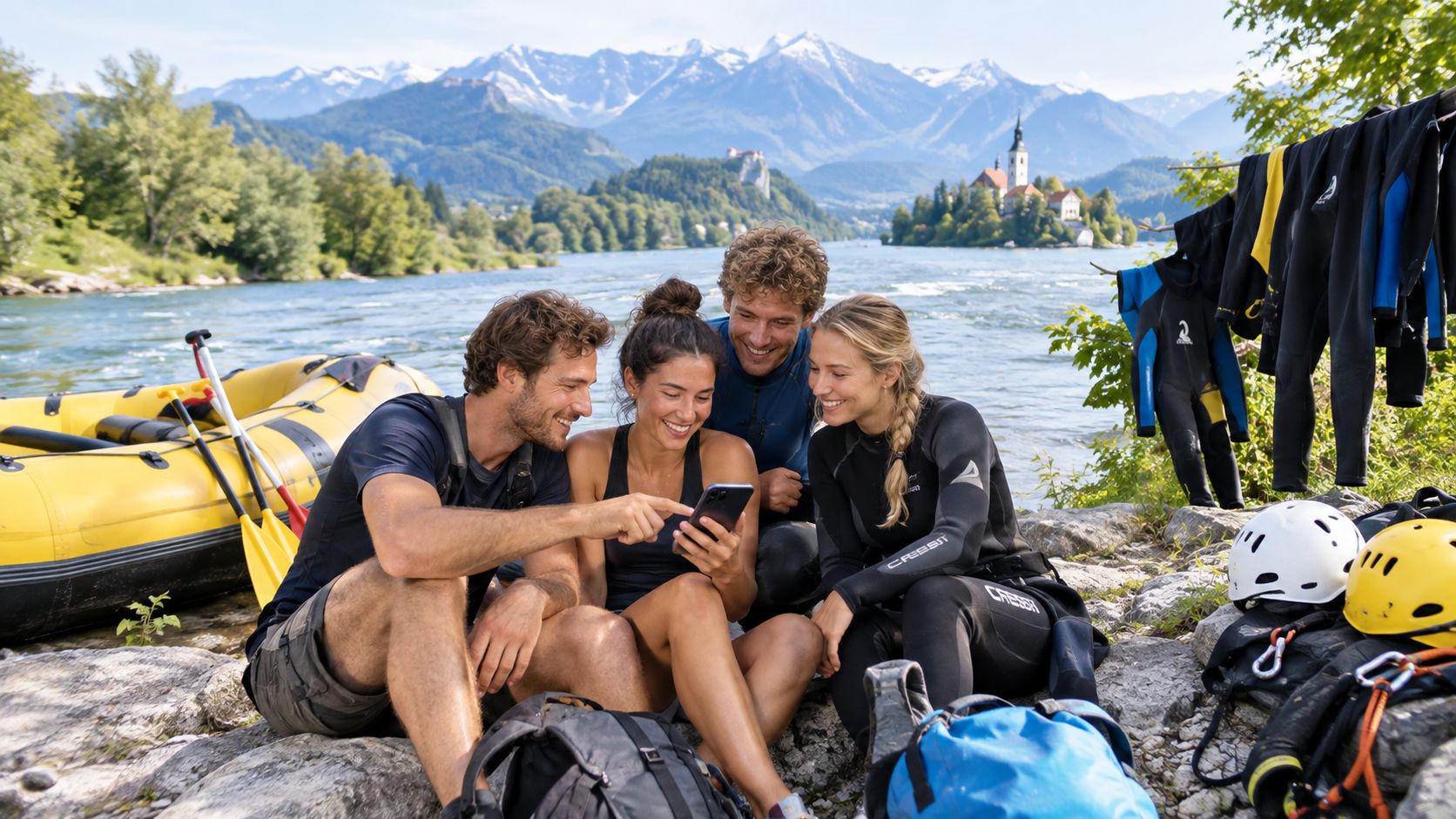
You wake up in Bled with one free day, a dry forecast until mid-afternoon, and two activities on the shortlist. That is usually where the decision starts. Around Triglav, the limiting factor is often not motivation but timing, transport, and whether there is still a canyon slot left.
Rafting is easier to fit into a tight plan because river trips run with higher capacity and simpler rotation. On the Sava Dolinka, groups can be turned around through the base, shuttle, briefing, and river section without much dead time. Canyoning is less flexible. Group sizes stay smaller, the pace through the gorge is slower, and departure times matter more because spacing in the canyon is controlled for safety and flow.
How to combine both without wasting a day
For a one-day combo from Bled, book canyoning first and rafting second if both are available. The reason is practical. Canyoning slots are the harder piece to replace, especially in peak summer when the suitable canyons near Bled fill earlier and guides keep groups tight. Rafting is usually easier to place later the same day, and a river finish is often more forgiving if the morning runs a little long.
A two-day split suits more travellers. Put canyoning on the day with the better weather window and fresher legs, then rafting on the other day. If conditions change, operators can often adjust the river plan more easily than a canyon plan. That matters in the Bled area, where guests are often trying to fit activities between arrival, Vintgar, Bohinj, or a Ljubljana transfer.
There is also a simple holiday rule I give guests after many seasons. Do the harder booking first, not the harder activity first.
If your stay is short, Outdoor Slovenia Activities offers a canyoning and rafting combination day. That works well for travellers who want one organised adventure day from Bled rather than splitting transport, kit issue, and check-in across separate bookings.
Final recommendation from a Bled base
If you only have one active half-day, rafting is usually the cleaner fit from Bled because scheduling is easier and last-minute availability is often better.
If you have one full day and you want the strongest contrast in a single trip, combine both, but lock in canyoning first and let the river trip sit around it.
If you have two active days, split them. You get better pacing, more margin for weather changes, and a better chance of getting the canyon departure you want.
That is the version that works best on the ground, not just on paper.
If you're staying around Lake Bled and want a practical way to compare the two, Outdoor Slovenia Activities offers guided canyoning, rafting on the Sava Dolinka, and combination trips that let you experience both styles in one stay. The setup is aimed at beginners as well as active travellers, with equipment, guiding, and Bled-area logistics handled clearly so you can choose the activity that fits your trip.