
You're standing beside Lake Bled in winter, the water quiet, the island half hidden by mist, and the snow on the plateau looks inviting until you realise you've never clipped into cross-country skis before. That mix of excitement and doubt is normal. Cross-country skiing for beginners around Bled works best when you treat the first outing as a learning day, not a performance test.
By the end of a sensible first session, you should be able to stand balanced on skis, shuffle forward on flat ground, handle a gentle hill without panic, and understand how to share a groomed trail safely with other skiers. The movement is built step by step, from balance to glide to simple hill technique, so the progress feels realistic rather than enormous. If you want a local winter experience that feels active but not intimidating, Bled is a very forgiving place to start, and if you're planning a guided day, this Lake Bled winter activity overview gives you a useful sense of the setting.
Table of Contents
- Your First Glide on Snow Around Bled
- What Cross-Country Skiing Is
- Gear You Need Before You Click In
- The Diagonal Stride Step by Step
- Climbing and Descending on Beginner Terrain
- Trail Etiquette Every Beginner Should Know
- Fitness Reality and Simple Prep
- Beginner-Friendly Routes Around Bled and Triglav
Your First Glide on Snow Around Bled
The first time often feels like this. You're on snow near Bled, your boots are clunky, the skis wobble a little, and the whole thing looks much easier on screen than it does under your feet. Then the first tiny glide happens, and the sport stops feeling mysterious. It starts to feel like something your body can learn.
That's the right mindset for cross-country skiing for beginners in the Slovenian Alps. The goal isn't to race, and it isn't to look elegant immediately. It's to move safely from one stable feeling to the next, first on flat ground, then on a gentle rise, then on a route that feels like an easy winter walk with skis under you.
Practical rule: if a first session feels calm, a little awkward, and mostly controlled, that's a success.
The rest of this guide follows that same logic. You'll see what the sport is, what gear matters, how to find the basic rhythm, what to do when a hill appears, and why shared-trail etiquette matters so much around busy winter spots like Bled. The point is to make the first day feel possible before you even step into the bindings.
If you've been wondering whether you need to be a strong skier already, or whether the local trails are too serious for a first outing, the answer is no on both counts. A beginner can learn enough to enjoy a short, guided session in one day, especially on terrain that stays gentle and groomed. The building blocks are small, and each one makes the next one easier.
What Cross-Country Skiing Is
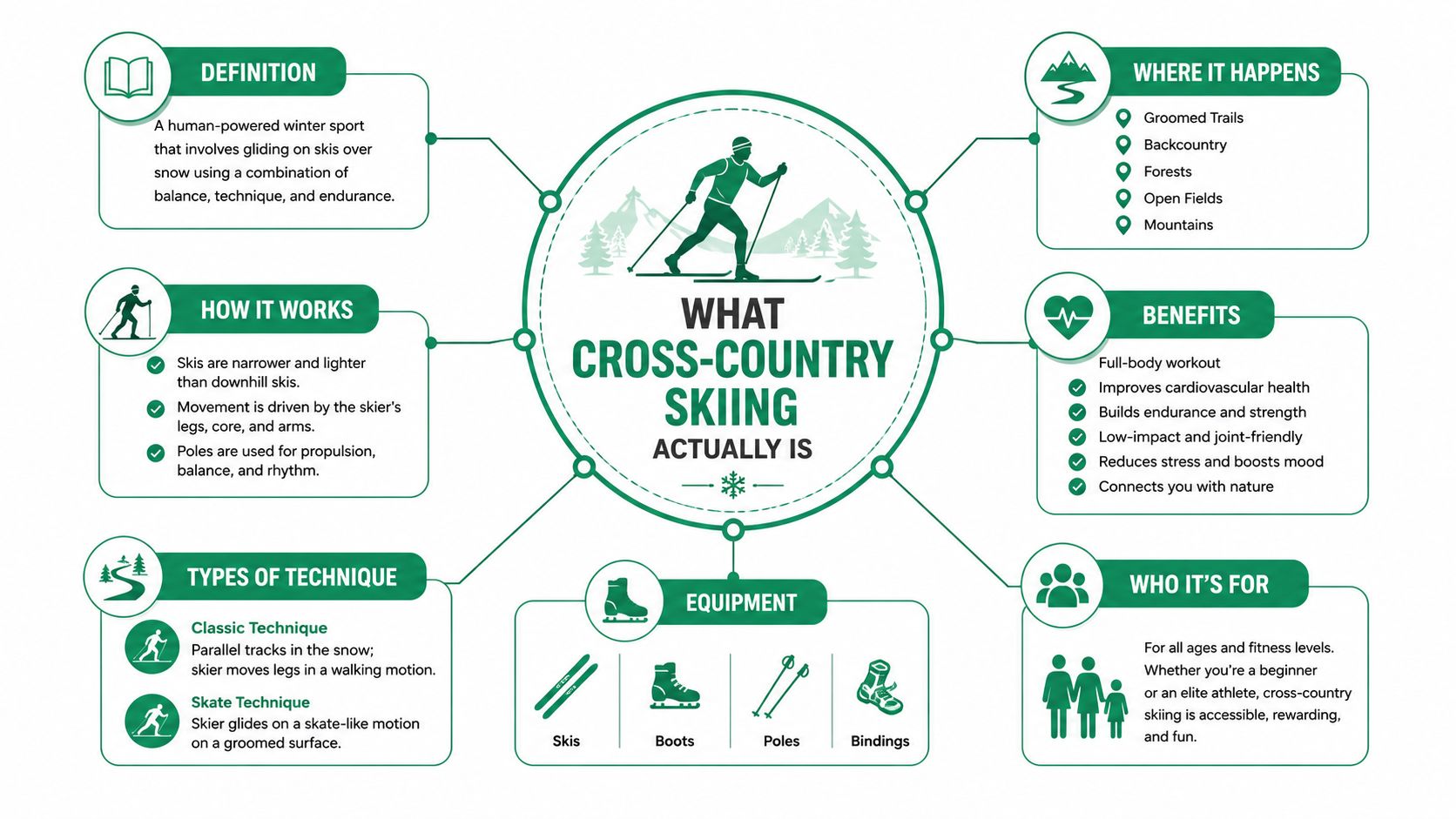
Cross-country skiing works like winter hiking on skis. You move across snow with your own effort, using a push and glide rather than chairlifts or steep downhill runs. The sport has deep roots in winter culture, and it appeared at the 1924 Olympic Winter Games (AFAR), but the beginner version is much simpler than the Olympic label might suggest.
Classic skiing and skate skiing
Classic skiing is the easiest starting point for many first-timers. The skis travel in prepared tracks or on gentle groomed snow, and the movement feels close to walking with a longer, sliding step.
Skate skiing is faster and more dynamic. It resembles ice skating on snow, asks for more balance, and suits people who already want a harder workout.
Around Bled, classic technique usually makes the most sense for a first outing because the early experience is about control, not speed. The plateau above the lake is well suited to that kind of learning. The terrain rises and falls gently, the trails are groomed for shared use, and the setting feels far less intimidating than downhill skiing, where speed and turns arrive immediately.
Simple distinction: downhill skiing sends you down a slope. Cross-country skiing lets you travel across winter terrain at your own rhythm.
That difference matters for families, cautious adults, and anyone who wants a scenic winter activity without learning steep-slope control on day one. You do not need a lift-ticket mindset. You need a walking mindset, plus patience for glide.
The local scene around Bled often includes lake views, quiet tracks, and people moving in a steady rhythm rather than a rush. That is one reason the region works so well for a first taste of the sport. It is approachable, scenic, and structured enough that a beginner can focus on balance before worrying about anything else.
If you want a practical place to sort out the basics before your first outing, a ski rental option near me can help take some of the guesswork out of the setup.
Gear You Need Before You Click In
The good news is that you don't need a mountain of kit to start. A beginner setup is built from a few simple layers, and rental shops around the lake usually make the process easy enough that you can turn up, get fitted, and head out without buying anything first. If you want to sort the basics near the base, this ski rental option near me is the kind of practical resource that removes a lot of guesswork.
What matters most
Start with classic touring skis, boots that match the binding system, and poles that feel comfortable in your hands. The ski shop should help with fit, because the wrong boot or pole length makes learning harder than it needs to be. Clothing matters too, but not in the heavy, bundled-up way many first-timers expect. You want a moisture-managing base layer, a light warm layer, and something that blocks wind without turning you into a snowman.
Good beginner clothing is about staying dry enough to keep moving, not about piling on bulk.
A rental package at the Bled base is usually the easiest way to begin because it keeps the first day simple. You can try the sport once, learn the feel of the gear, and decide later what's worth buying.
| Beginner XC Ski Rental Package at the Bled Base | What to Expect | Beginner Tip |
|---|---|---|
| Skis | Classic touring skis matched to groomed terrain | Pick stability over ambition |
| Boots | Warm, snug boots designed for the binding system | Make sure your toes can wiggle a little |
| Poles | Lightweight poles sized for easy pushing | Hold them relaxed, not death-grip tight |
| Clothing advice | Layered winter clothing that manages sweat and wind | Avoid thick everyday jackets |
| Optional fitting help | Staff can adjust boot and ski setup | Ask them to show you how the binding works |
Buy later, rent first
For a first session, renting beats buying. You don't yet know whether you'll prefer classic skiing for relaxed touring or whether you'll end up wanting more athletic skating later. A rental day gives you time to feel that difference without committing to expensive gear you may not use again.
The biggest beginner mistake is assuming more equipment equals more readiness. In reality, well-fitted basics matter far more than owning everything upfront. Once the boots fit, the skis glide cleanly, and the poles feel natural, the sport becomes much easier to understand.
The Diagonal Stride Step by Step
The diagonal stride is easiest to understand as walking on snow with a longer reach and a smoother finish. You stand on one ski, push with the opposite pole, move your weight forward, and let the ski slide before switching sides. That is the backbone of classic cross-country skiing, and it is the part that makes the motion feel rhythmic instead of awkward.
Start with the stacked stance
Balance comes first. Stand with your feet about shoulder-width apart, keep your knees and ankles soft, centre your hips over your feet, and rest your weight on the balls of your feet. Keep toe, knee, hip stacked over the loaded ski. That alignment reduces wobble and helps the ski stay quiet under you.
Keep your upper body quiet and let the ski move under you.
This habit helps more than overthinking pole timing. Many beginners lean back because it feels safer, but that makes the skis less steady. Staying centred gives you a cleaner glide and makes the next step easier to repeat.
Add kick, then glide
Once you feel steady, move your weight onto one ski and give the other ski a deliberate push. The kick stays small, not explosive. After the push, let the ski travel forward and ride the glide for a moment before you switch sides. If you rush the movement, the stride turns into a shuffle and the rhythm disappears.
A simple cue is plant the pole, then kick, then glide. The pole sets the timing, the kick gives direction, and the glide gives you the reward. When skiers say the motion should feel smooth, this is what they mean. You are not forcing your way across snow, you are letting the steps happen in a clear order.
Recover from the inevitable wobble
Everyone falls at first. That does not mean you are bad at it, it means the snow is teaching your body how to balance. If you tip over, keep your skis parallel, roll to your side if you can, and push up with your hands while bringing your feet under you one at a time. Do not yank at one ski while the other is stuck, because that usually makes the recovery messier.
A useful beginner habit is to stop every few minutes and reset your posture. Short checks keep the movement tidy. A long, tense first session usually builds bad habits faster.
Climbing and Descending on Beginner Terrain
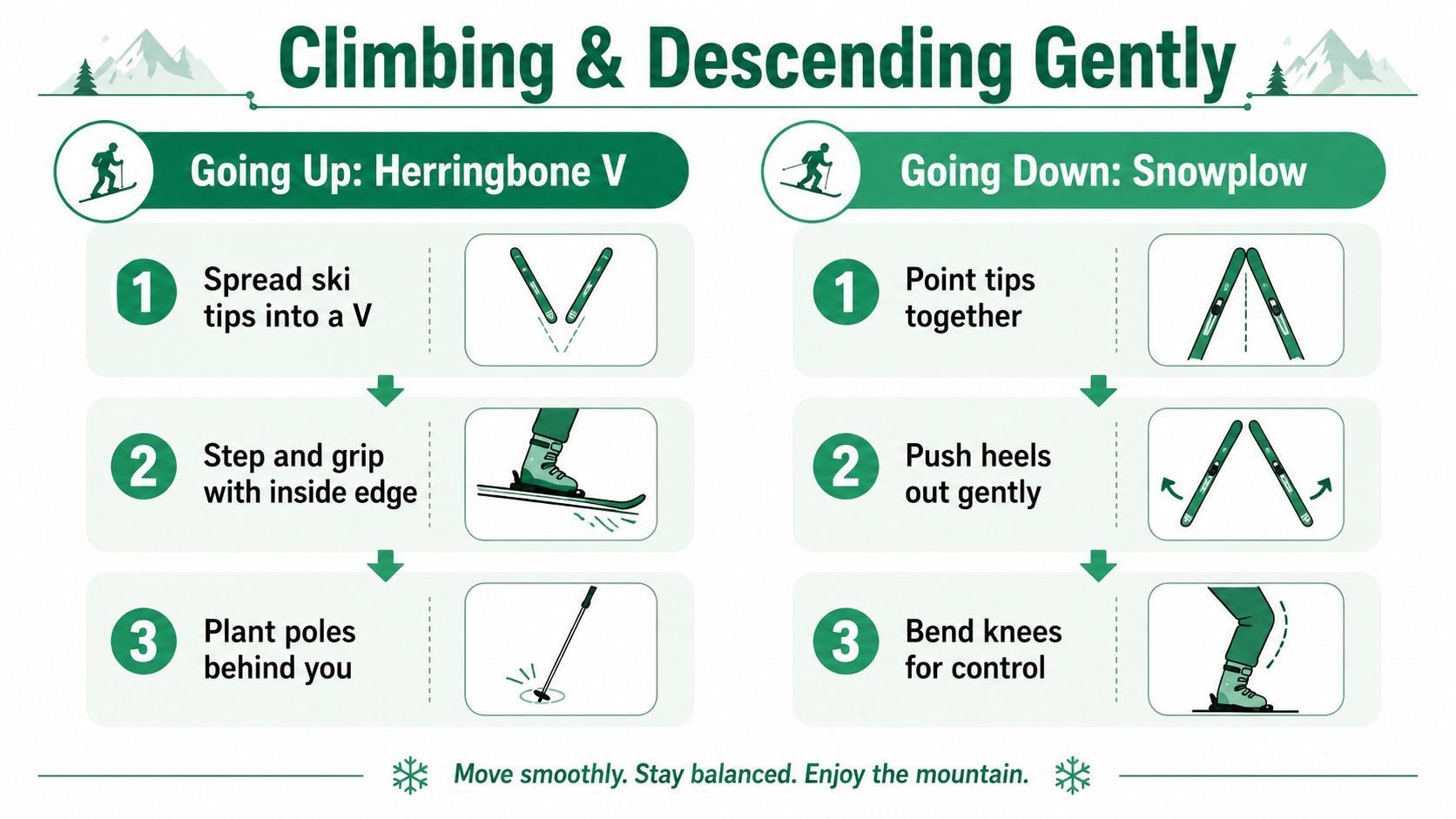
Hills are where beginners usually tense up, even when the slope is gentle. The trick is to switch from gliding to traction without making the motion feel like a fight. On the way up, classic skiers use the herringbone V, with the ski tips angled inward and the tails splayed wider so the inside edges grip the snow. On the way down, a light snowplow wedge gives you control without making you freeze.
Going up without slipping back
A gentle climb is the moment to step out of the tracks if the trail asks for it. Point the ski tips outward into a V, press the inside edges into the snow, and move forward one step at a time. Your poles help, but they're support, not a rescue rope. If the hill gets steeper, smaller steps usually work better than trying to stride through it.
Coming down without panic
On the descent, bring the ski tips closer together and push the heels slightly outward so the wedge forms. Bend your knees, keep your hands forward, and let the wedge control speed. The stance should feel like a calm brake, not a dramatic stop. If you're nervous, take the first part of the downhill from the side of the trail where you can move slowly and stay in control.
Beginner rule for downhills: speed you can't control is always too fast.
That matters around Bled because many groomed trails are shared, and a wobbling skier on a slope can become a hazard very quickly. The easiest solution is to choose routes that stay gentle and to ignore sections that look steeper than your current confidence level. Beginners don't need to prove anything on day one.
The mental side matters as much as the technique. A first downhill feels better if you breathe out, soften your knees, and let your skis settle before asking them to turn or stop. The body often learns the motion before the mind stops worrying about it.
Trail Etiquette Every Beginner Should Know
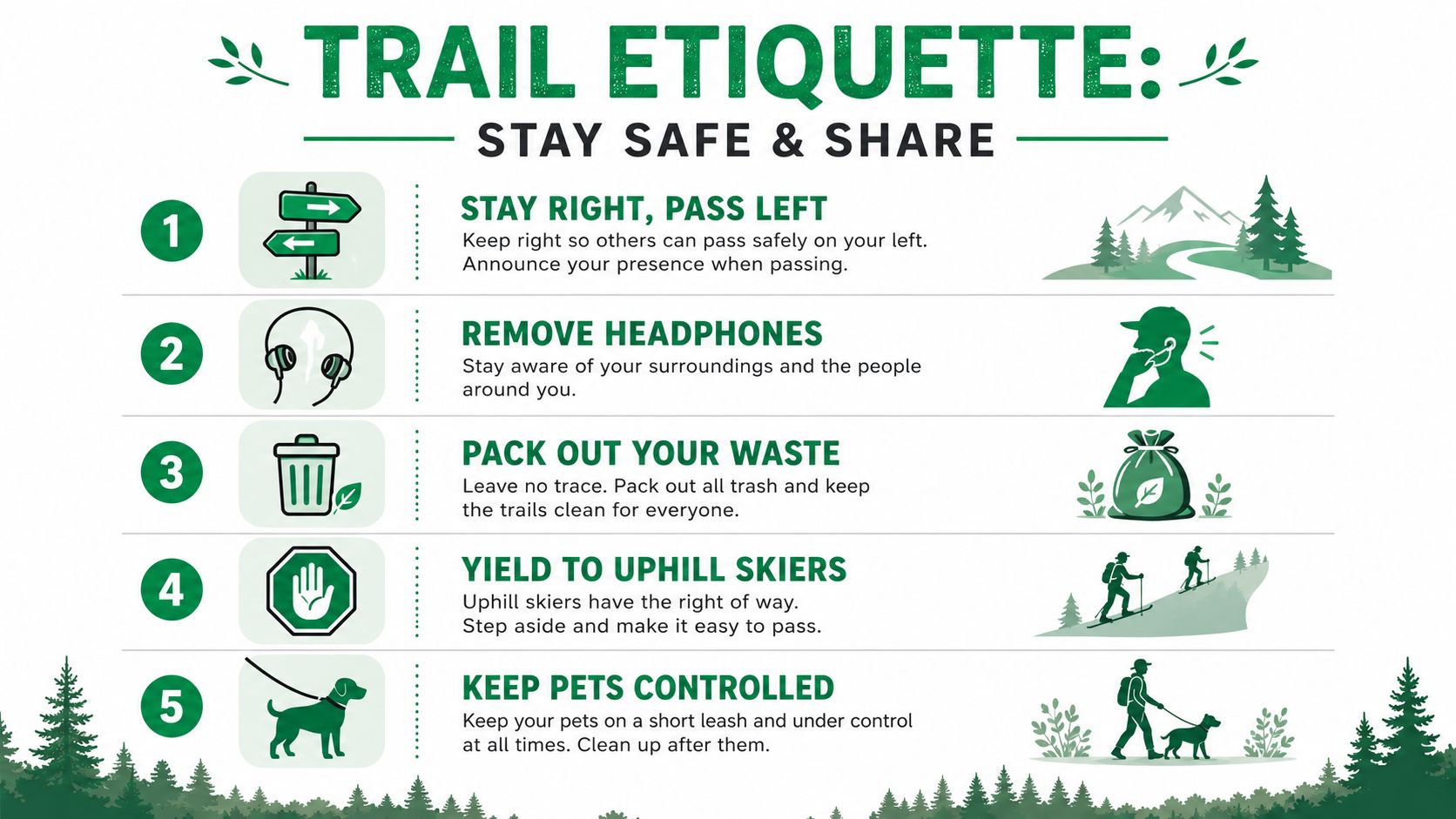
Shared groomed trails are where beginners can get flustered, because the skiing part is only half the story. The rest is courtesy, spacing, and knowing where your skis belong. The formal FIS trail etiquette rules are simple but important. On double and multiple tracks, skiers stay in the right-hand track. Groups ski one after the other, not side by side. Overtaking can happen on either side if it's safe, and when traffic comes toward you, both sides move to the right (Snowtrex).
The rules that save embarrassment
The practical version is even simpler. Stay out of the way when you stop, keep your skis where they belong, and don't guess your way through crowded sections. Beginner guidance also warns against stopping in the tracks at the bottom of hills, skating or walking over classic tracks, and going faster than you can control, which is exactly the kind of thing that causes avoidable near-misses on busy snow.
Memorable checklist: right track, single file, pass safely, keep moving when others need space.
That's especially relevant near Bled and the broader Triglav area, where winter visitors often share narrow, groomed terrain. People arrive in a holiday mood, not in racing mode, which means a small lapse in etiquette can affect everyone around them. The difference between a relaxed outing and a tense one is often just one skier stopping in the wrong place.
If you remember only one thing, remember this. The trail is not your private training lane. It's a shared winter route, and good behaviour makes the whole day smoother for everyone, including you.
Fitness Reality and Simple Prep
You don't need to arrive as an athlete, but a little preparation makes the first session feel better. Cross-country skiing is itself a strong full-body workout, and the sport's energy cost is one reason it feels satisfying even at a beginner pace. One comparison in the research notes that about 2.5 hours of alpine skiing are needed to match the energy expenditure of 1 hour of cross-country skiing (INTERSPORT Rent).
What to do before your trip
A sensible prep plan is simple. Go for a few short aerobic sessions, add two rounds of bodyweight squats and lunges, and take one brisk walk on hilly ground before your ski day. That's enough to wake up the legs, hips, and lungs without pretending you're training for a race.
If you already use a general conditioning plan, a resource such as this guide to increase endurance fast can help you think about pacing and steady effort in a broader way. For most travellers, though, the true answer is not intense training. It's showing up with a little leg awareness and a willingness to move steadily.
What fitness actually feels like on snow
Cross-country skiing rewards rhythm more than brute force. A moderately active traveller who walks, hikes, cycles, or does occasional gym work can usually handle a first session if the pace stays controlled. The big mistake is starting too hard, getting breathless quickly, and deciding the sport is the problem instead of the speed.
A better first-day approach is calm and repeatable. Start with short glides, pause often, and keep your effort below the point where your shoulders tighten. That leaves enough energy to enjoy the snow instead of surviving it.
Beginner-Friendly Routes Around Bled and Triglav
Route choice matters more than most beginners expect. A flat or lightly rolling track builds confidence quickly, while a route with too much slope can turn a first day into a survival exercise. Around Bled, the safest strategy is to start near the lake or on very gentle terrain, then move up to the lower Pokljuka plateau when the basic glide feels comfortable.
| Beginner XC Routes Around Lake Bled | Terrain | Why It Suits Beginners |
|---|---|---|
| Lake Bled loop | Flat and easy | Good for first balance work and simple gliding |
| Lower Pokljuka plateau | Gentle climb and rolling sections | Helps you practise traction and downhill control |
| Deeper Triglav National Park sections | More varied terrain | Better saved for a second or third outing |
Picking the right first outing
The lake-side option is the cleanest starting point because the terrain stays simple and the scenery keeps the mood light. The lower Pokljuka trails add just enough change in level to teach climbing and descending without overwhelming you. More remote Triglav stages are beautiful, but they make more sense once the diagonal stride and trail etiquette already feel familiar.
Start easy, then earn the next step.
If you like planning outdoor days in a structured way, a general guide for outdoor adventures can be useful as a mindset tool, because winter sports go more smoothly when you think ahead about logistics, weather, and pacing. For a more direct local option, the Triglav National Park adventures page shows how the wider region fits into a bigger winter outing.
For travellers who want to learn with less friction, Outdoor Slovenia Activities runs guided beginner sessions from the Bled base, with hotel pick-up, equipment, and patient instruction included as part of the experience. That kind of setup removes a lot of the uncertainty from the first day, which is exactly what many first-timers need. If you want your first glide to feel calm, local, and properly supported, book a winter outing with Outdoor Slovenia Activities and step onto the snow with a guide who knows how to turn a wobble into a confident first tour.