
Your first ski day usually begins the same way. You're standing in stiff boots that feel a bit too serious, holding equipment that seems to belong to someone more graceful, and wondering whether everyone else has secretly been skiing since childhood. That's normal. The win on day one isn't looking stylish, it's leaving the slope with your confidence intact and your boots properly fitted.
Slovenia is a smart place to start because the ski culture is built for beginners, not just show-offs chasing steep terrain. The national tourism board treats winter sports as one of the country's strongest alpine draws, and places like Kranjska Gora and the wider Julian Alps are known as beginner gateways. Slovenia also has 10+ established ski centres spread across the Alps and Pohorje, which means you've got options instead of one intimidating mega-resort. If you're staying near Lake Bled, several well-known ski areas are reachable in roughly 30 to 60 minutes by road as noted in the Slovenian beginner ski context. That compact setup changes the mood of the whole day. It feels manageable.
Table of Contents
- What Your First Day on Snow Really Feels Like
- What to Wear and Pack Before You Leave the Hotel
- Stance and the Wedge Stop
- Using Lifts Without Losing Your Skis
- What to Practise in Your First Lesson
- Falling, Getting Up, and the Leaning-Back Trap
- Your Pre-Trip and First-Day Checklist
What Your First Day on Snow Really Feels Like
The first surprise is emotional. You click into the bindings, shuffle to the top, look down at a beginner run, and your brain briefly tells you this is a bad idea. Then your instructor gives you the only sensible order for day one, stand still, breathe, and point your skis where they need to go, not where your nerves want them to go.
That reaction matters because preparation beats talent on day one. Slovenia is easier on nervous beginners than big, sprawling alpine resorts because the learning zones are compact, the transfers are short, and the setup pushes you toward a lesson-first approach instead of a solo wander into the unknown. If you are staying near Lake Bled, the short road transfer to beginner areas means you reach the snow less drained and less frazzled, which helps when you are already dealing with boots, bindings, and snow for the first time. If you want help choosing a sensible base, these beginner-friendly ski resorts in Slovenia are the right place to start. For a first-timer, that calm start matters more than fancy terrain.
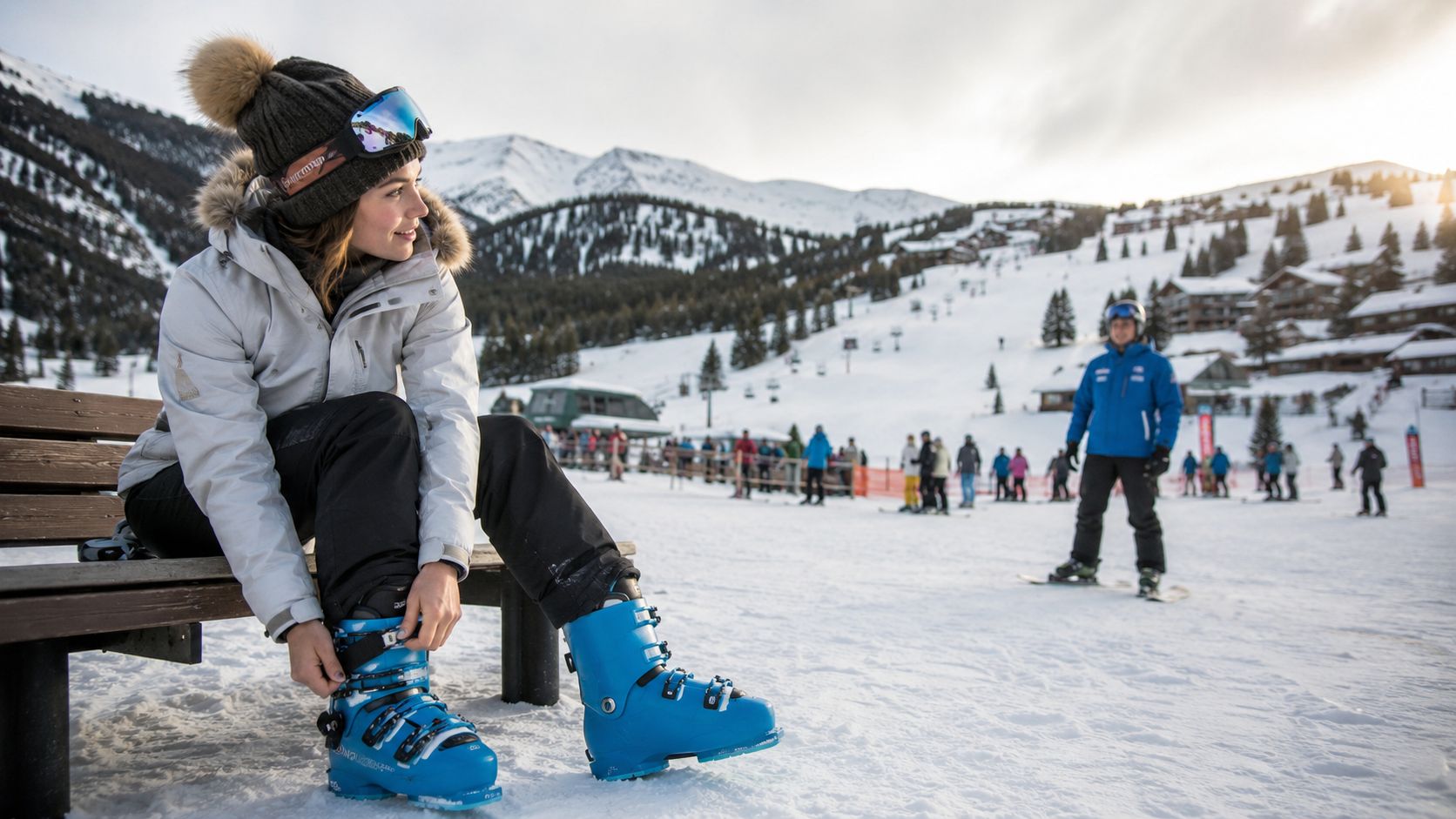
The tiredness comes early
Do not be surprised if your legs complain faster than you expected. Even a green run asks a lot from muscles that do not usually spend the morning balancing, braking, and catching you when you wobble. A few runs in, many first-timers are more surprised by the constant micro-adjustment than by the speed.
Practical rule: if you feel awkward, you are probably on schedule.
The cleanest first-day mindset is simple. Stay on beginner terrain, take the lesson seriously, and treat every small success, standing still, stopping, gliding, as progress. You are not there to prove anything. You are there to get competent enough to enjoy the mountain.
And if you want something warm to throw on after skiing, The Apres Ski Cardigan works as a cosy off-slope layer, not ski gear.
What to Wear and Pack Before You Leave the Hotel
Start with the layer that touches your skin. A moisture-wicking base layer is the difference between feeling dry and feeling like you're wearing a cold sponge. Cotton is the wrong choice, because it holds moisture and makes you colder once you start sweating or sitting in snow as explained in beginner ski clothing guidance and in broader ski trip advice.
Dress for movement, not for photos
Your middle layer should trap heat without turning you into a brick. A fleece, hoodie, or slim insulated layer works well, and a waterproof outer shell keeps wind and snow where they belong, outside your clothes. Add a helmet, gloves, goggles or sunglasses, and ski socks that sit properly in the boot. If you want a cosy non-ski layer for après-ski or the transfer back to the hotel, something like The Apres Ski Cardigan can be a comfortable off-slope extra, but it's not ski gear and it shouldn't replace proper layers.
Keep boots snug, not painful. If your feet slide around, you lose control.
The little items matter more than beginners think. Put sunscreen, lip balm, and a lift-pass pocket on the packing list, because snow reflects light and you'll spend more time fiddling with gear than you expect. If you want a fuller winter checklist, our cold-weather gear guide covers the basics in one place.
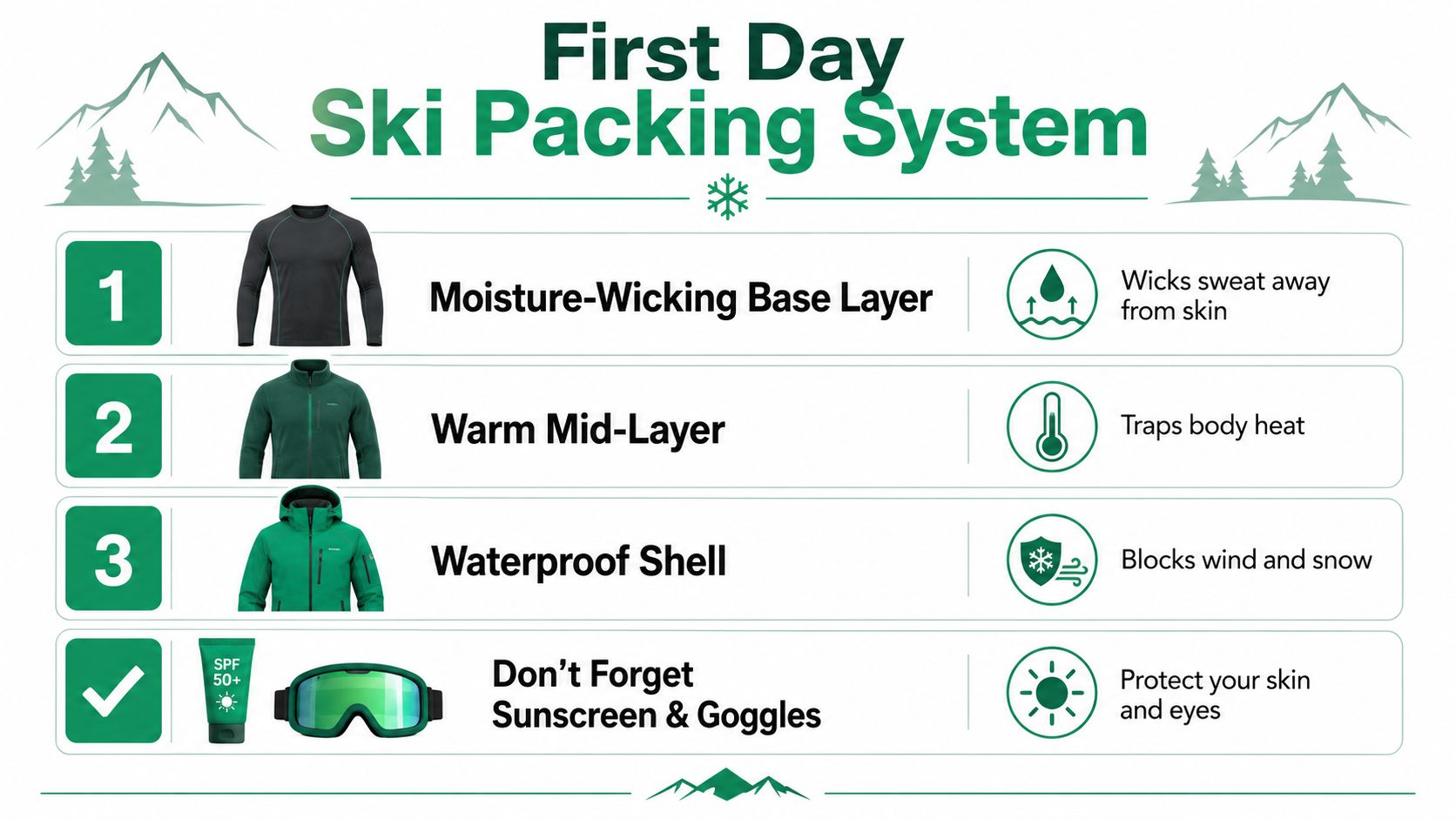
Here's the short version I tell nervous beginners: pack the night before, wear fewer bulky layers than you think, and make sure your gloves let you grip poles and lift rails properly. Thin, functional gloves beat clumsy bulk every time. If you forget everything else, don't forget sunscreen and goggles.
Stance and the Wedge Stop
The whole first day hangs off one position, the athletic stance. Stand with your feet shoulder-width apart, knees soft, shins pressing lightly into the front of the boots, and your weight centred over both feet. That posture gives you balance, and it gives the skis a chance to work for you instead of fighting you.
Why the wedge comes first
The wedge, or pizza, is not a glamorous move. It's the beginner's brake. Push the heels outward while the tips stay closer together, and you create enough friction to slow down on a gentle slope. REI's beginner instruction emphasises the same core idea, centred weight, shins forward, and learning to stop in a wedge on easy terrain REI beginner ski guidance.
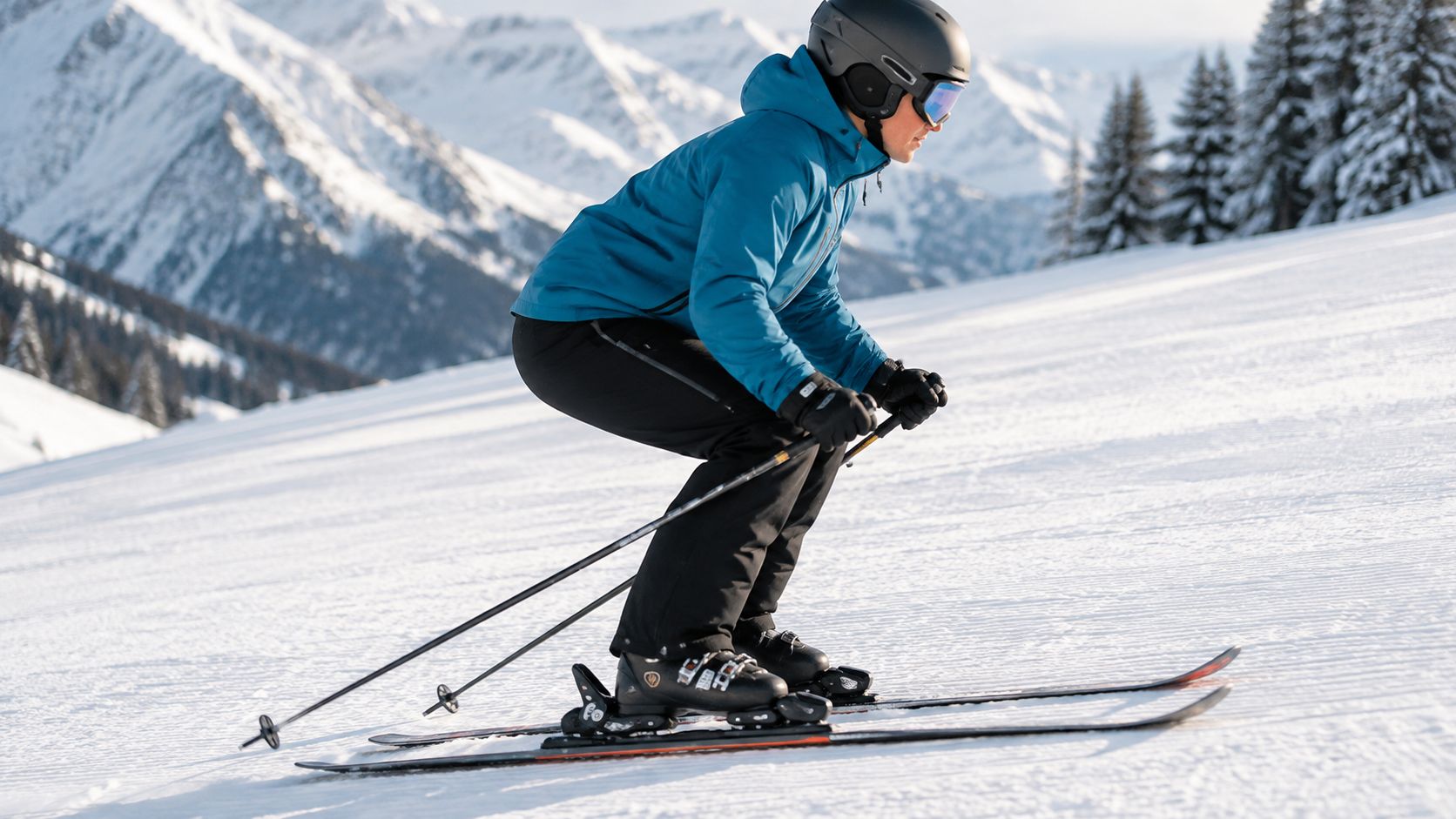
The most useful cue is the one instructors repeat endlessly because it works, shins forward, hands forward, weight centred. If you lean back, the tips get light and steering gets messy. Harvard's first-time skier advice flags that rearward balance as a common beginner error because it takes pressure off the ski tips and makes control harder Harvard's first-time skier notes.
The real win on day one
Don't obsess over turning first. Learn to stop cleanly. A skier who can stop on command has a safe, usable first-day skill, and that builds confidence faster than a messy run down the hill ever will. Green terrain is the right place for that work, because the slope stays friendly while your body learns the new balance pattern.
Instructor's standard: if you can wedge to a stop without panic, you're ready for the next drill.
Using Lifts Without Losing Your Skis
Lift anxiety is usually bigger in your head than on the hill. Magic carpets, drag lifts, and chairlifts are three different skills, not one vague “getting up the mountain” problem, and each one rewards a calm, simple approach. Once beginners understand that, the panic drops fast.
Magic carpets and drag lifts
A magic carpet is the easiest place to start. Stand relaxed, keep your ski tips slightly up, hold your poles steady, and let the conveyor do the work. A drag lift, whether it's a button lift or a platter, takes a little more balance. You grab the disc, stand tall, and let it pull you rather than sitting back and fighting it the beginner lift flow is also reflected in the user-facing safety notes from Stio.
Chairlift manners that matter
Chairlifts are mostly etiquette plus timing. Scoot forward when the operator signals, let the bar down only when it's appropriate, and keep your skis parallel so you don't tangle yourself or your neighbour. At the top, move away quickly if someone behind you is unloading, because the safest thing you can do for the group is keep the exit clear.
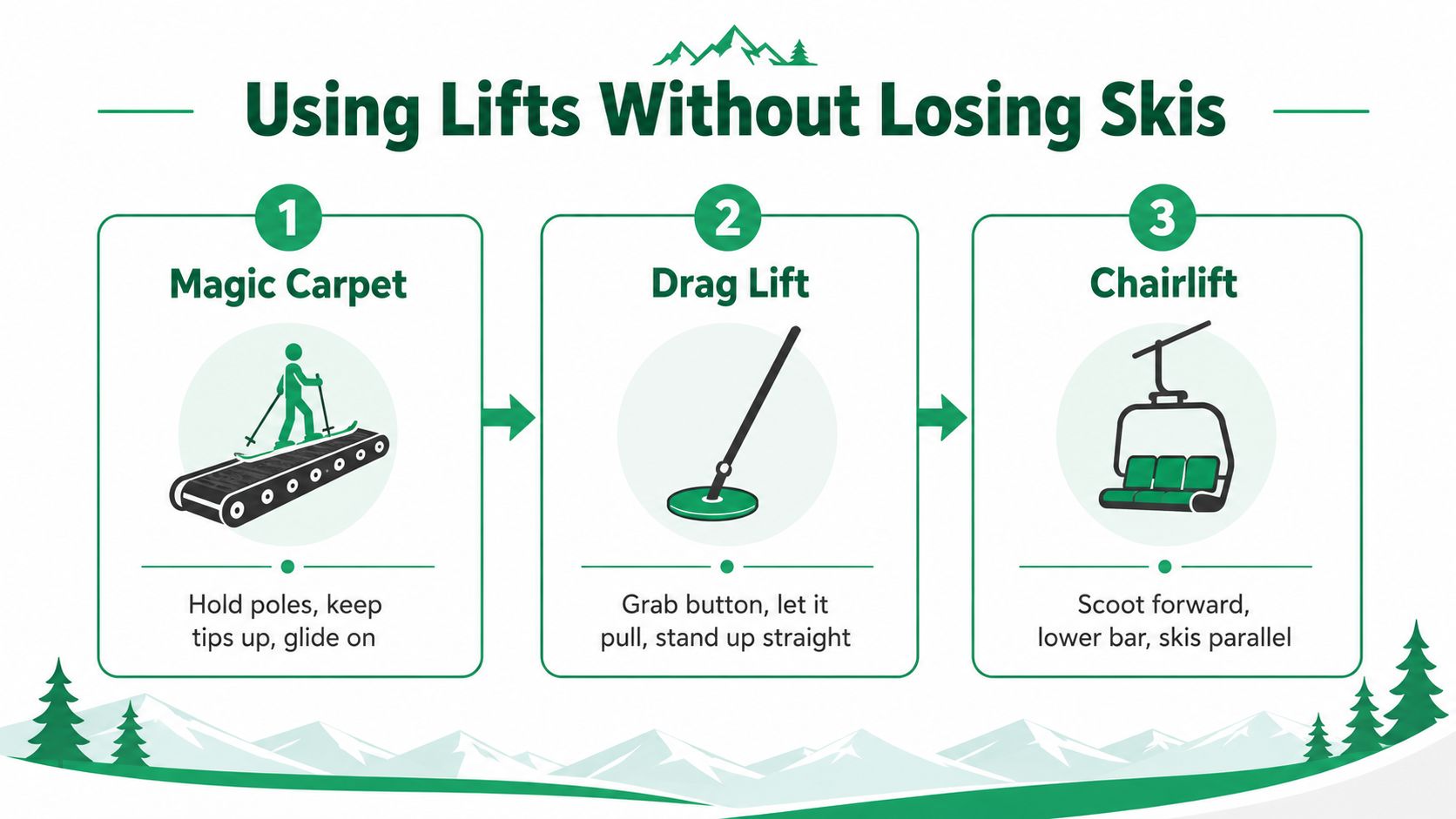
If you fall on a drag lift, don't wrestle with the equipment. Get yourself clear, stand up, and reset. The lift will still be there for the next try.
The goal is not to look smooth on the first attempt. The goal is to load, ride, and unload without creating drama. Once that becomes familiar, lifts stop feeling like obstacles and start feeling like part of the rhythm of the day.
What to Practise in Your First Lesson
A good first lesson has a clear sequence, and you should ask for it. Start on flat terrain, stand in the right stance, then practise the wedge stop until it feels boring. After that, move into straight runs and linked wedge turns on the gentlest marked terrain, not on anything steeper. Slovenia's beginner-friendly ski areas make that easy because the marked green runs are where you should stay at the start.
Ask for these drills
Tell the instructor you want three things drilled properly, not rushed.
- Flat-terrain balance: you learn to stand, glide a little, and reset without pressure.
- Wedge control: stop, start, and regulate speed without panic.
- Linked turns on easy greens: once the stop works, start joining turns together without letting the skis drift apart.
If you're booking lessons near Kranjska Gora, a structured school like Outdoor Slovenia's Kranjska Gora ski school can match that progression to beginner terrain and keep the session focused on usable skills rather than random mileage.
What progress actually looks like
Progress doesn't mean carving hard or skiing fast. It means you can stop when you want, turn without your skis splaying everywhere, and come down a green run without falling apart mentally. A half-day lesson is usually enough to set the foundation, but the key value is that the body learns the pattern early and the rest of the season becomes easier.
A successful first lesson ends with control, not exhaustion from bravado.
Falling, Getting Up, and the Leaning-Back Trap
Most first-time skiers panic less about falling than about being stuck. That's why the recovery sequence matters so much. Turn the skis perpendicular to the fall line, push up with your hands, then transfer your weight onto the downhill ski to stand. It's a clean, repeatable method, and it beats flailing around in soft snow every time Stio's beginner recovery guidance.
Why leaning back is a bad habit
Leaning back feels safe, but it steals control. When your weight moves behind your feet, the ski tips get lighter, steering gets sluggish, and the wedge starts to behave badly. The fix is not to force yourself upright like a soldier. It's to keep your weight centred and your shins pressing forward so the boot tongue can support you.
That's why falling correctly is useful. It teaches balance through feedback. Your body instantly feels the difference between centred pressure and rearward panic, and that lesson sticks faster than any lecture.
A simple reset drill
On any flat patch, do this once or twice before you move off.
- Stand in the athletic stance.
- Lean just enough to feel the ski tips engage.
- Sink into a soft wedge and stop.
- If you go down, reset by getting the skis across the slope first.
Falling well is a confidence skill. A skier who knows how to recover stays calmer, and a calmer skier learns faster.
Many beginners change fast. They stop treating a fall like proof they're bad at skiing, and start treating it like part of the skill set. That shift matters more than you might realise.
Your Pre-Trip and First-Day Checklist
Pack the layers the night before. Book a half-day lesson for your arrival window. Pick one beginner zone and stay there until you can stop, start, and turn without guessing. That's the whole game on day one.
If you're heading to Slovenia, the country's compact ski setup helps a lot. The short transfers, teaching-oriented terrain, and multiple ski centres spread across the Alps and Pohorje all favour a slow, confident start rather than an overambitious one. That's why first-timers do so well here when they keep the plan simple and trust the lesson structure.
Screenshot this
- Wear proper layers: base, mid, shell, plus gloves, goggles, helmet, and socks that fit the boot correctly.
- Choose beginner terrain: stay on green runs until stopping and turning feel reliable.
- Use the lesson well: ask for stance, wedge stop, and linked turns, not random free skiing.
- Expect fatigue: a short session can feel surprisingly full, and that's normal.
If the boots fit, the lesson is booked, and the first run is green, you're ready.
Outdoor Slovenia Activities runs beginner-friendly ski and snowboard lessons in Slovenian resorts, with certified instructors, clear structure, and the kind of practical support first-timers need on day one. If you want a calm first ski experience in Lake Bled's winter region, visit Outdoor Slovenia Activities and book the lesson that fits your pace.
Outdoor Slovenia Activities gives first-time skiers a simple way in, with lessons built around beginner terrain, clear instruction, and a safe pace that suits nervous beginners. If you're planning your first snow day in Slovenia, check Outdoor Slovenia Activities and choose the start that makes sense for you.