
The first light usually hits the high ridges before it reaches the valley, and for a few minutes the Julian Alps look almost unreal from the Bled side. That's often the moment visitors understand that Slovenia's mountains aren't just a backdrop. They shape the whole experience of being here.
Table of Contents
- Welcome to Slovenia's Mountain Paradise
- Find Your Perfect Mountain How to Choose by Difficulty
- Top Hikes and Viewpoints Accessible from Lake Bled
- Experience the Mountains Differently Guided Adventures
- A Mountain for All Seasons Planning Your Visit
- Essential Safety Gear and Mountain Rules
- Frequently Asked Questions About Slovenia's Mountains
Welcome to Slovenia's Mountain Paradise
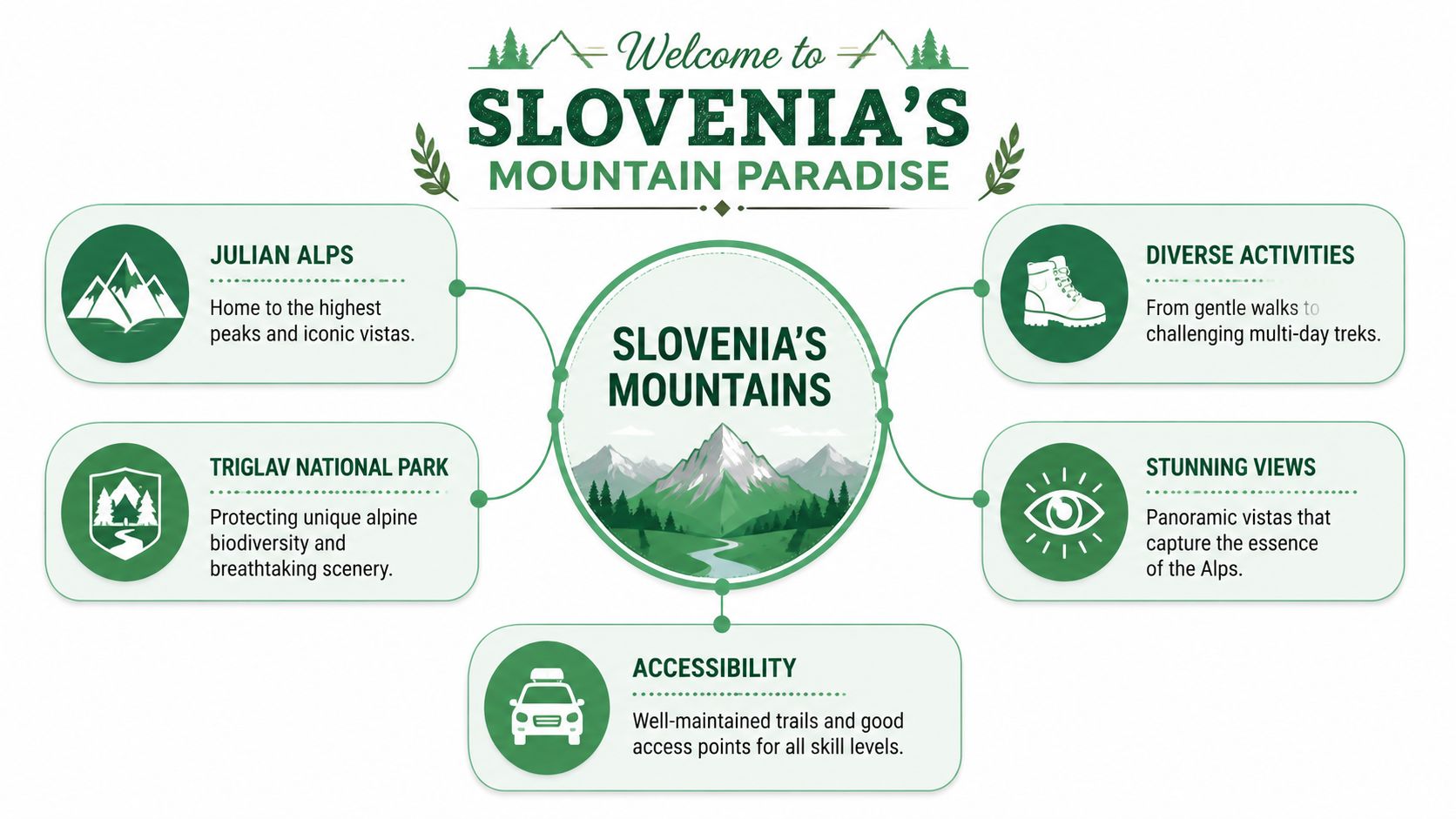
Gore v Sloveniji evokes more than just a list of peaks. They're looking for the feeling of alpine Slovenia. Sharp limestone walls, forested slopes, high meadows, huts, viewpoints, and those sudden openings where a whole valley appears under your feet.
That feeling is backed by real scale. Official Slovenian tourism information notes more than 10,000 km of marked hiking trails, more than 5,000 km of mountain trails, and states that the country has over 300 peaks above 2,000 metres, with Triglav at 2,864 m as the highest summit and Škrlatica at 2,740 m as the next highest peak in the country's mountain hierarchy, as outlined by Slovenia's official mountain and hill guide.
Why Gore v Sloveniji matters
For travellers, that density changes everything. In some countries, mountain hiking means long drives and a narrow choice of routes. In Slovenia, you can stay near a popular base like Bled and still have access to gentle walks, scenic viewpoints, serious alpine hikes, river canyons, and hut-to-hut possibilities without feeling like the mountains are far away.
That's why Slovenia keeps appearing in broader hiking inspiration roundups like this ultimate 2025 hiking bucket list. It fits both kinds of visitor. The one who wants an easy viewpoint before breakfast, and the one who wants a full mountain day with real effort and real reward.
Practical rule: In Slovenia, “close to the mountains” usually means you can reach very different terrain in the same day. Don't choose your trip only by distance. Choose it by difficulty, weather, and your confidence on marked trails.
The mountain map that helps visitors
A simple mental map helps. Slovenia's best-known mountain areas are usually grouped into the Julian Alps, the Kamnik-Savinja Alps, and the Karawanks. Visitors often hear these names quickly and then blur them together, but the distinction matters.
The Julian Alps are the range most international visitors picture first. They hold Triglav, much of the country's classic alpine scenery, and the features most closely tied to Lake Bled, Bohinj, Kranjska Gora, and Triglav National Park. They're also the range that has shaped Slovenia's mountain identity most strongly.
One Slovenian mountain overview notes that 31 of Slovenia's 35 highest peaks are in the Julian Alps, while another notes that the 10 highest mountains are all there, as shown in this overview of Slovenia's highest peaks. For a visitor, that explains something important. If you're staying around Bled and dreaming of dramatic ridges, scree slopes, exposed summits, or classic alpine day trips, you're already near the heart of it.
The Kamnik-Savinja Alps and the Karawanks deserve attention too. They offer beautiful terrain, quieter corners, and excellent hiking. But if you want the most iconic concentration of high alpine Slovenia, the Julian side is usually where the conversation begins.
Find Your Perfect Mountain How to Choose by Difficulty
The biggest mistake visitors make isn't choosing an ugly mountain. There are very few of those here. The mistake is choosing a route by photo alone.
A lake viewpoint, a full mountain trail, and an exposed alpine ascent can all look equally inviting on social media. On the ground, they ask for very different things from your legs, your head, and your judgement.
Three honest hiker profiles
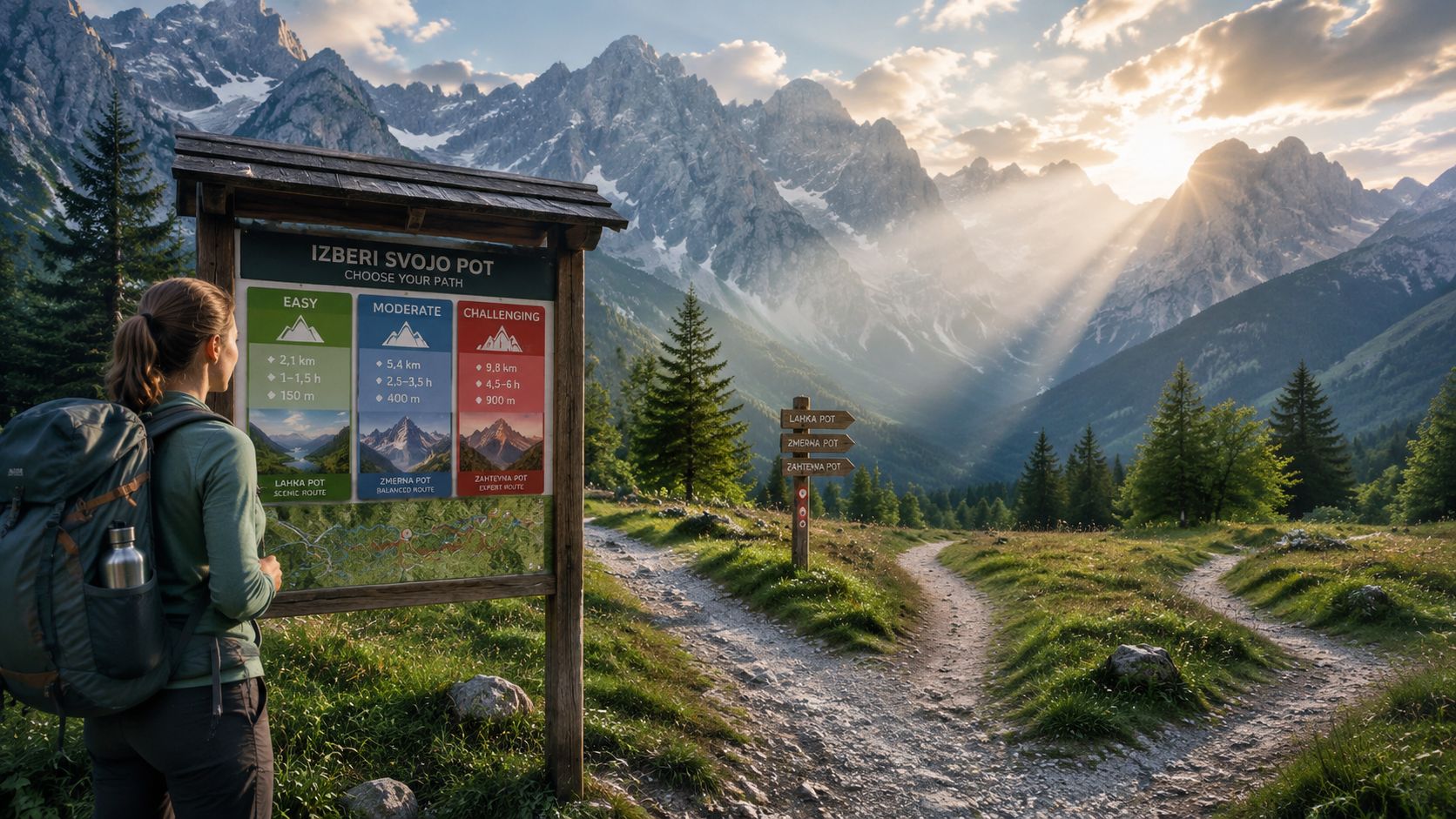
A good way to choose is to place yourself in one of these profiles. Not the version of you from your fittest summer. The version of you arriving after travel, changing weather, and a real mountain day.
| Profile | Best fit | What it usually feels like | Good choices |
|---|---|---|---|
| The Casual Explorer | Families, photographers, relaxed travellers | Short uphill sections, clear paths, easy turn-back options | Viewpoints above Bled, valley walks, plateau strolls |
| The Passionate Hiker | Active walkers who enjoy a full day out | Sustained climbing on marked trails, uneven terrain, longer descents | Classic day hikes, hut lunches, longer ridge or summit outings |
| The Aspiring Mountaineer | Experienced hikers comfortable with exposure | Hands-on sections, steep ground, route focus, specialist gear in some cases | Exposed alpine peaks, via ferrata, serious summit objectives |
If you're travelling with children or mixed fitness levels, keep your plans slightly easier than you think you need. Slovenia rewards modest choices. A shorter walk with energy left for swimming, lunch, and photos often becomes the day everyone remembers fondly.
If you're a strong day hiker, marked mountain trails can be a great fit. But strong fitness isn't the same as mountain skill. Many visitors are surprised by loose rock, exposure, and how tiring steep descents can be.
What demanding really means in Slovenia
Some mountains become famous because they're beautiful. That doesn't make them suitable for beginners. Independent Slovene mountaineering coverage points out that Jalovec may be one of the country's most striking peaks, but it involves a very demanding marked route, a B/C via ferrata, with a 5-hour ascent, as described in this guide to beautiful but demanding Slovenian mountains. The same coverage singles out Široka peč as one of the most technically demanding mountains in Slovenia because of exposed ridges and difficulty.
That's the gap many travellers don't see until too late. A peak can be famous, marked, and still be completely wrong for your first alpine day.
If a route includes exposure, fixed protection, or any point where a stumble would have serious consequences, don't treat it as “just a hike”.
A few questions help you choose thoughtfully:
- How do you handle exposure? If steep drop-offs make you freeze, avoid routes with ridges, scrambling, or ferrata sections.
- How steady are your feet on loose ground? Forest paths and alpine rubble are not the same thing.
- Can you stay focused on the descent? Many problems happen when people relax too early.
- Are you carrying the right kit? Trainers and a half-litre of water are fine for a promenade, not for a summit day.
For anything beyond your confident comfort zone, a mountain guide isn't a luxury. It's often the safest and smartest choice. A guide helps with route judgement, pace, timing, weather decisions, and that hard but necessary call to turn around when conditions or energy say no.
Top Hikes and Viewpoints Accessible from Lake Bled
Bled is one of those rare places where you don't need a huge expedition plan to get a rewarding mountain day. Some of the most satisfying outings start close to town, finish before late afternoon, and still leave you with that unmistakable alpine feeling.
Short outings with a big payoff
Ojstrica is the classic first answer if someone asks for a short climb with a famous view. It's steep enough that you'll feel you've earned it, but short enough to fit around the rest of your day. Go early if you want softer light and fewer people standing at the viewpoint.
Mala Osojnica adds a bit more effort and gives a wider perspective over the lake and surrounding hills. If you enjoy viewpoints rather than long distance, this is often a more satisfying choice than forcing a bigger hike you're not prepared for.
Then there's the Vrata Valley. This is a different mood entirely. Less about a quick photo, more about walking into a glacial terrain and feeling the walls of the Julian Alps rise around you. It's a good option on a warm day, for visitors who want mountain atmosphere without committing to an exposed summit.
How to pick the right one for your day
Some visitors do best by matching the outing to the mood of the trip rather than chasing the most famous name.
- For sunrise lovers: Choose Ojstrica, but start with a torch and proper footwear because the short climb still needs care in dim light.
- For relaxed travellers: Walk around the lake first, then decide if you still want a hill. The viewpoints feel better when you're not rushing.
- For families with mixed energy: Keep a valley or plateau option in reserve. A good family day works because everyone finishes happy, not because you forced a summit.
- For visitors wanting a fuller mountain context: Consider a proper day route in the park with route planning and local advice through this Triglav National Park hiking guide.
Pokljuka is another strong card near Bled. The plateau feels spacious and calmer than the sharper valleys, and it's useful when lower areas are busy or when you want forest, pasture, and gentler walking terrain.
The smartest Bled hiking day often starts with one question. Do you want a viewpoint, a mountain feeling, or a full hiking effort? They're not always the same outing.
Experience the Mountains Differently Guided Adventures
Not every mountain memory comes from standing on a summit. In Slovenia, some of the most vivid alpine experiences happen lower down, where water runs through gorges, rivers cut through the valleys, and winter snow reshapes the whole terrain.
That matters for travellers who want mountain scenery without committing to a long hike. It also matters for groups with mixed interests. One person wants a view, another wants movement, and a third wants something fun but beginner-friendly. The mountain world around Bled can meet all three.
The mountain from the waterline
Canyoning lets you experience the mountain from inside it. Instead of looking at cliffs and streams from a path, you move through narrow rock passages, pools, small waterfalls, and hidden terrain that many hikers never see. For many first-timers, that's the surprise. It feels adventurous, but the setting is also intimate and quiet in a way that a busy trail often isn't.
Rafting and sit-on-top kayaking shift the perspective again. Rivers like the Sava Dolinka carry the mountain story downhill. You see the same environment in motion. Forested banks, cold clear water, and mountain walls further off, but now the day has a playful rhythm rather than a hiking pace.
For travellers interested in protected climbing routes rather than water, it helps to understand what they involve before booking or setting out. A practical starting point is this overview of via ferrata routes in Slovenia, which gives a clearer sense of where specialist equipment and experience matter.
Winter changes the rhythm
Winter softens some places and sharpens others. Around Slovenian mountain resorts, the focus shifts from trail markings and dry rock to snow conditions, clothing, visibility, and controlled progression. That's where instruction matters more than bravado.
For skiing and snowboarding, beginners usually learn faster when someone handles the practical side early. Boots fitted properly, simple drills, a slope that matches confidence, and calm correction at the right moment. That's a much better start than spending the morning tense and overfaced.
One factual option in this context is Outdoor Slovenia Activities, a Lake Bled based provider offering guided outdoor experiences including canyoning, rafting, kayaking, hiking, and winter ski and snowboard instruction, with technical equipment and transport included according to the company's published activity information. If you prefer another guide, the same principle still applies. For activities that involve current, ropework, snow technique, or exposed terrain, local guiding reduces confusion and helps people enjoy the setting rather than worry through it.
A Mountain for All Seasons Planning Your Visit
Timing changes everything in Slovenia. The same route can feel welcoming in one month and completely wrong in another. Visitors sometimes assume that if the valley is green, the mountains must be ready too. That's one of the easiest ways to misjudge a trip.
A better approach is to choose the season for the kind of day you want. Not every month is for high summits. Not every month is for water sports. And not every traveller wants the same pace.
Spring and summer conditions
Spring is beautiful, but it asks for restraint. Valleys wake up first. Lower trails can be lovely, rivers are lively, and the whole environment feels fresh. Higher routes may still hold snow, wet ground, and winter-like conditions long after the towns feel mild.
That's why spring suits flexible travellers well. If you're happy with valley walks, viewpoints, river-based activities, and lower forest routes, it can be a rewarding time to visit. If your only goal is a big exposed summit, you may need backup plans.
Summer is the broadest season for mountain travel. Huts are active, long days help with early starts, and it's easier to combine hiking with swimming, rafting, or canyoning. But summer also exposes weak planning. Heat in the valleys, storms in the afternoon, and crowded access points can all change the feel of the day.
A few summer habits make a big difference:
- Start early: Morning light is better, temperatures are easier, and you leave space for delays.
- Separate valley heat from mountain weather: A warm breakfast in Bled doesn't tell you what the ridge will feel like.
- Keep a second plan: If storms build, choose a lower walk, a lake day, or a guided water activity instead.
Autumn and winter moods
Autumn is often the season experienced walkers fall in love with. The light is gentler, many days feel calmer, and lower and mid-altitude hiking can be especially satisfying. You still need to think about shorter days and changing temperatures, but the pace is often more relaxed than high summer.
This is also a good time for travellers who want a thoughtful trip rather than a checklist. If you're preparing for an international journey and want a practical overview of documents, packing, and travel basics before arrival, this guide to Translate AI international travel advice is a useful companion.
Winter turns the mountains into a different country. Some hiking routes become snow travel. Some roads and trailheads feel much more remote. And even easy-looking walks can be slippery, cold, or poorly suited to casual trainers.
Winter is ideal if you want snowy scenery, ski or snowboard lessons, or shorter outings with warm stops in between. It's not the season to improvise on big alpine objectives unless you already understand winter mountain travel.
If you're staying in the capital before heading to the mountains, this practical route from Ljubljana to Bled helps with the travel side so you can plan your mountain days more clearly once you arrive.
Essential Safety Gear and Mountain Rules
A Slovenian mountain day can change character fast. You start in mild air near the valley, hear cowbells on a forest path, and an hour later you are on wet rock with wind on your face and a much bigger day than you expected. That shift catches visitors who choose a route by photo instead of by skill level.
Trail markings help, but they are not a guarantee. A marked route can still be steep, exposed, slippery, or tiring late in the day. That matters most for travellers deciding between a relaxed viewpoint, a longer hill walk, or a serious alpine ascent. The right choice is the one you can finish calmly, with enough energy and daylight left.
What to carry and what to watch for
On mountain trails in Slovenia, you will often see the Knafelc blaze, the red and white circle that marks many official routes. It works like a breadcrumb trail, but only if you keep looking for the next mark instead of assuming the path in front of you is still correct. Wrong turns often happen in fog, at rocky junctions, or when tired walkers follow the person ahead.
Carry these basics every time you head uphill:
- Proper footwear: Shoes with grip and support matter on stone, roots, and loose descent paths.
- Layers: Mountain weather shifts quickly. A warm valley does not tell you what a ridge or summit will feel like.
- Water and food: Pack for the full outing, plus a little extra in case the return takes longer than planned.
- Phone and plan: Save 112 for emergencies, charge your phone, and tell someone your route and expected return time.
- Rain and sun protection: A light waterproof layer, sunglasses, and sunscreen solve very common problems before they become serious ones.
Small choices matter here. A family heading to a low viewpoint might need snacks, water, and stable shoes. Someone attempting a long alpine route needs the same basics, just with stricter judgement about timing, weather, and turnaround points.
Turning back is good mountain judgement.
When to turn back and when to hire a guide
Three warning signs deserve an immediate pause. Clouds are building and visibility is dropping. The route feels more exposed than you expected from the description. Your legs are tiring enough that foot placement takes real concentration.
Turn back while the choice is still easy. Early decisions give you options. Late decisions often happen when people are cold, rushed, embarrassed, or too tired to think clearly.
A licensed guide is a smart choice for exposed scrambling, via ferrata, uncertain conditions, snow, or any route that feels like a big step up from what you have done before. This is especially true if you are deciding between "ambitious but realistic" and "probably too much." A guide does more than show the path. They judge pace, check conditions, choose safe timing, and adjust the plan if the mountain is not giving you the day you hoped for.
Mountain rules are simple, and they matter. Stay on marked paths where required, keep gates and pasture areas respected, carry out all rubbish, and keep noise low. Rescue in the mountains can take time, so self-awareness is part of safety too.
Frequently Asked Questions About Slovenia's Mountains
A lot of visitors arrive with the same practical doubts. That's normal. Slovenia looks compact on a map, but mountain travel still needs thoughtful choices.
Common planning questions
Do I need a permit to hike in Triglav National Park?
General hiking doesn't usually start with a permit question for most visitors, but park rules and route-specific expectations still matter. Stay on marked paths where required, respect the environment, and check local guidance for the area you plan to visit.
Can a beginner climb Triglav?
For most beginners, Triglav shouldn't be treated as an impulsive first summit. It's a serious alpine goal. The final sections involve exposure and mountain judgement, and many first-timers are better off hiring a guide rather than guessing what “marked route” will feel like at height.
Are Slovenian mountain huts worth using?
Yes, if you like longer days or want a more traditional alpine rhythm. Huts can make early starts, multi-stage routes, and sunrise or sunset experiences much more realistic. Just don't assume hut access makes a route easy.
Questions about beginners and families
Are the trails suitable for children?
Some are, absolutely. Around Bled, shorter viewpoints, lakeside walks, valley routes, and plateau areas can work very well. The key is choosing for attention span, confidence on uneven ground, and weather, not just distance on a map.
How do I know if a route is too difficult for me?
If you're unsure about exposure, scrambling, route-finding, or steep descents, treat that uncertainty as useful information. Choose the easier option, or go with a guide. Mountains will still be here tomorrow.
What if the weather changes during the day?
Lower your ambition quickly. A short safe walk, a meal with a view, or a change to a valley plan is a smart mountain day. Sticking stubbornly to a summit objective because it looked good in the morning is how people get caught out.
Is Lake Bled enough as a base for mountain adventures?
For many travellers, yes. It gives access to viewpoints, park scenery, rivers, and a wide menu of mountain-style days. If you want remote, highly technical, or hut-based alpine objectives, you may branch out further, but Bled is still a very practical starting point.
If you'd like help turning all of this into a realistic day plan, take a look at Outdoor Slovenia Activities. It's a useful starting point for guided outdoor options around Bled, whether you want an easy introduction to the natural environment or a more active mountain-based adventure with local support.