
The bus from Ljubljana to Bled runs frequently, takes 60 to 80 minutes, and usually costs €6.30 one way on weekdays. For most travellers heading to the lake or an activity meeting point, it’s the simplest and most practical way to get there.
If you’re in Ljubljana right now, you’re probably close to having the day sorted. The coffee is easy. Choosing between a slow morning in the city and a quick jump to Bled is easy too. The only part that tends to create hesitation is the bus timetable, especially when you’re trying to line it up with rafting, canyoning, kayaking, or a hotel pick-up.
That’s where local knowledge matters. Around Bled, the bus isn’t just public transport. It’s often the first part of your adventure day. When travellers get stuck, it’s usually not because the route is difficult. It’s because they’re unsure which departure gives them enough buffer, which Bled stop they need, or whether they should buy a flexible return.
Used well, the ljubljana bled bus timetable makes the day feel easy. Used badly, it can leave you standing at the wrong stop with wet shoes, a missed meeting point, and a phone full of screenshots that don’t quite match.
Table of Contents
- Your Adventure from Ljubljana to Lake Bled Starts Here
- Ljubljana to Bled Bus Travel at a Glance
- Decoding the Ljubljana Bled Bus Timetable
- Navigating Ljubljana and Bled Bus Stations
- Your Guide to Buying Bus Tickets
- Planning Your Adventure with the Bus Timetable
- Comparing Travel Options from Ljubljana to Bled
- Frequently Asked Questions about the Bus to Bled
Your Adventure from Ljubljana to Lake Bled Starts Here
You leave Ljubljana in the morning with a rafting or canyoning booking set for 10 AM. The bus ride itself is easy. The part that decides whether the day feels relaxed or rushed is choosing a departure that gives you enough margin for the station, the arrival stop, and the transfer to your activity meeting point.
From a guide’s perspective, the Ljubljana to Bled route works best when you treat it as part of the day’s logistics, not just the ride between two places. A bus that gets you to Bled early can mean time for coffee by the lake or a calm walk to meet your group. A later bus can still work for a lake day, but it gives you less room if you are heading onward to rafting, canyoning, or another activity with a fixed start time.
Why the bus works so well for Bled
The route is short, direct, and practical for a day trip from the capital. It suits travellers who want to spend a full day around Bled without dealing with parking, and it also works well for guests joining outdoor activities in the wider area.
That directness helps most when the lake is only one part of the plan. If you need to be at a rafting base, a canyoning pick-up, or another organised meeting point at a set hour, the right bus choice gives you breathing room. The wrong one turns a simple travel day into a clock-watching exercise.
Practical rule: If your day includes an organised outdoor activity, choose the bus for the activity first, then fit sightseeing around it.
What tends to catch people out
The route itself is simple. The small details are what change the day:
- Stop names: Timetables may show Bled or Bled Union, and those stops suit different onward plans.
- Journey type: Some buses run more directly, while others take longer because they serve additional stops.
- Return timing: After a morning on the river or in a canyon, you may finish later than expected, so the return bus deserves the same attention as the outbound one.
A useful ljubljana bled bus timetable guide should help you answer practical questions. Which bus gets you to a 10 AM activity without stress? How much buffer is sensible in summer? Which return still works if your trip finishes a bit late? That is how locals plan the route, and it is the approach that usually leads to the smoothest day in Bled.
Ljubljana to Bled Bus Travel at a Glance
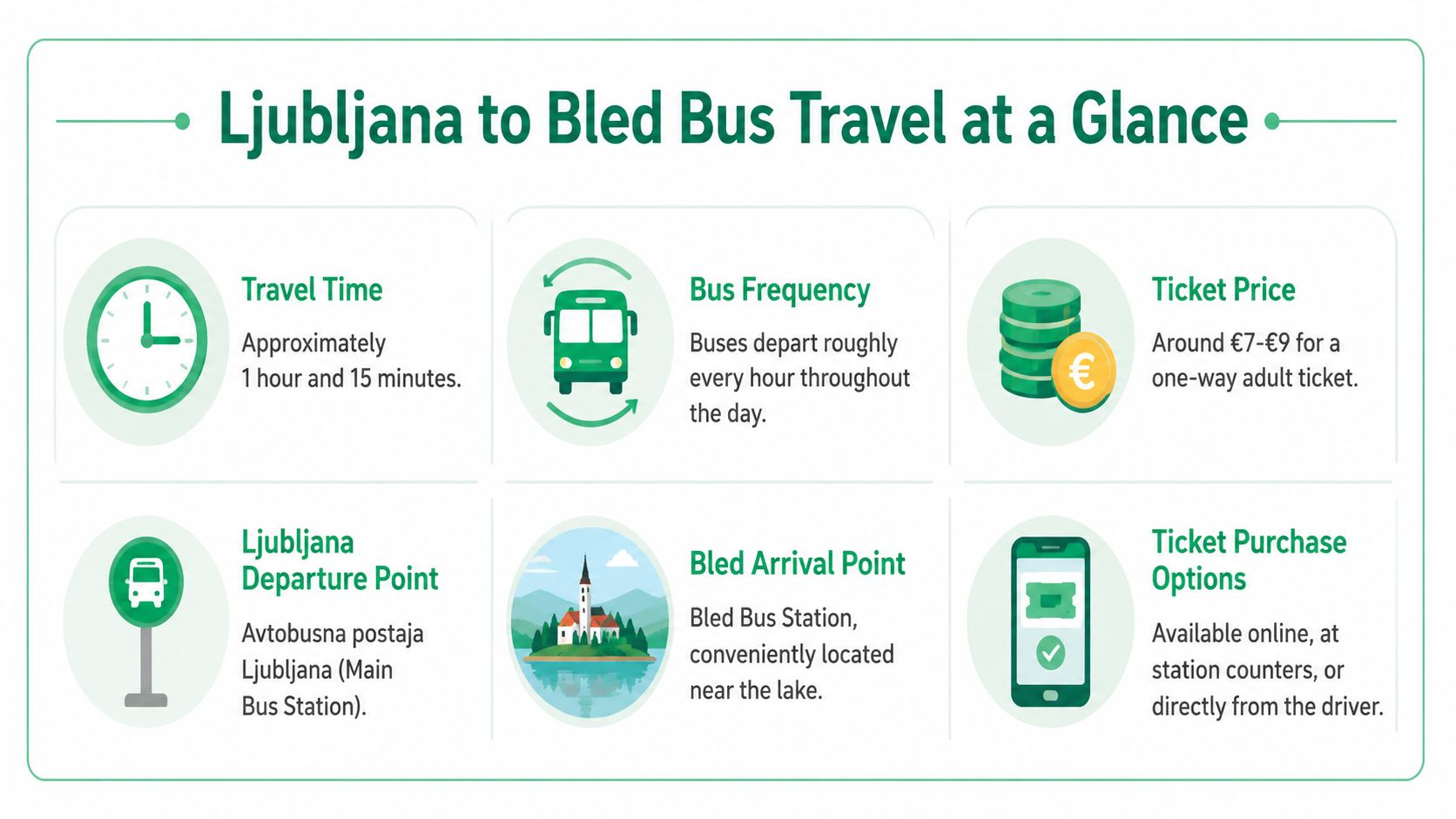
You are in Ljubljana at 7:30, your rafting check-in near Bled is at 10:00, and the bus choice decides whether the morning feels easy or rushed. On this route, the basics are straightforward. Know roughly how long the ride takes, where you get on, and which ticket type gives you enough room if the day shifts.
The quick facts that matter
- Distance: It is a short intercity run between Ljubljana and Bled.
- Journey time: The ride usually takes about an hour, sometimes longer if the service makes more stops.
- Tickets: Single tickets are fine for simple one-way plans. Return options are more useful if you expect to come back the same day.
- Operator: Arriva is the name most travellers will see on this route.
- Buying options: Tickets are commonly bought at the station or, on some departures, from the driver.
- Service pattern: You usually have multiple departures across the day rather than one narrow travel window.
Why this matters for activity days
These details directly impact your planning for activity days.
For a lakeside walk or a café stop, you can be fairly relaxed. For rafting, canyoning, a guided hike, or any trip with a fixed meeting time, the bus becomes part of the booking plan. I always advise leaving buffer on the outbound leg, especially in summer, because arriving 30 to 40 minutes early is far better than starting your day by apologising to a guide.
The return matters just as much. River trips can finish a little later. Groups get delayed while changing, showering, or waiting for transfers back from the activity base. In that situation, a return ticket or a later bus option gives you breathing room and usually makes for a much calmer day.
The best bus plan is the one that still works if your activity finishes later than expected.
Decoding the Ljubljana Bled Bus Timetable
You book a 10 AM rafting or canyoning trip near Bled, leave Ljubljana with what looks like plenty of time, and then realise too late that the bus pattern is not the same on every day of the week. I see this regularly with visitors who check one departure, but not the shape of the full day.
The ljubljana bled bus timetable is frequent enough for flexible sightseeing, but activity days need a stricter read. Weekdays usually give you the widest choice. Weekends still work well, yet the first departures and the evening return window can be tighter. This distinction is important because outdoor bookings run on meeting times, not on transport optimism.
Weekday rhythm
From Monday to Friday, buses start early and continue into the evening, with regular departures spread through the day. For most travellers, that means enough choice to build around a fixed booking rather than the other way around.
For an active day, the useful question is not, “Is there a bus?” It is, “Which bus gets me there with enough margin to find the meeting point, grab a coffee, or deal with a small delay?” For a 10 AM start, I would usually aim for an arrival in Bled at least 30 minutes early, and longer if you still need a local transfer or a walk to your pickup point.
Mid-morning is usually forgiving. Early evening is less so.
Weekend changes
Saturday and Sunday remain practical for Bled, but they require a bit more discipline. I often see travellers assume the late-day options will mirror Friday, then find the return choices thinner than expected after a long day outside.
That matters most for guided activities. A lakeside stroll can end whenever you like. Rafting, canyoning, and longer tours often finish on guide time, with gear return, changing, and transfers adding a little drift at the end. If you are travelling on a weekend, read the return first and build the day backwards from there.
Weekend fares can also differ from weekday pricing, so check the current fare when you buy rather than relying on an old screenshot or blog note.
How to read the schedule like a local
The official route listing from AP Ljubljana's Bled timetable page is best read as a pattern, not just a single departure board. You will usually see stronger choice in the main daytime hours and more gaps later on. Missing a mid-morning bus is often manageable. Missing a late one can force a complete rethink of the day.
Two details make the biggest difference.
- Check the journey duration, not only the departure time. Some buses are more direct. Others take longer because they serve more places on the way.
- Read outbound and return together. A good morning bus is only half a plan if your activity finishes close to the last convenient return.
For adventure days, the right bus is the one that still works if your start point is a little hard to find or your trip runs 20 minutes late.
If you are connecting from a flight or arriving in the city the same morning, it helps to understand how the main station fits into the wider transport setup. Our guide to the Ljubljana airport bus connection and station setup makes that part easier to judge.
One final local tip. Do not choose the tightest possible connection just because it looks efficient on paper. On a café day, that is fine. On a rafting or canyoning day, it is how people miss check-in, rush across Bled with a daypack, and start the morning stressed. A little buffer usually buys you a much better day.
Navigating Ljubljana and Bled Bus Stations
You get off the bus in Bled at 9:20, your rafting check-in is at 10:00, and that final 10 minutes suddenly matters. The station side of the trip is where a well-timed bus day either stays easy or starts getting tight.
Finding your departure in Ljubljana
Ljubljana’s main bus station is central and straightforward once you are there, but it helps to arrive with a few spare minutes. In practice, the small delays happen before boarding. Finding the right platform, checking the screen again after a change, or buying a ticket at the counter can all eat into your buffer.
For the Bled route, travellers commonly depart from platform 7, but always confirm on the station board on the day. Platforms can change, and the screen matters more than any blog or saved screenshot.
If you are coming in from the airport or trying to understand how the station connects with the rest of the city, our guide to the Ljubljana airport bus connection and station layout gives the wider setup clearly.
Understanding Bled and Bled Union
From experience, many travellers lose time in Bled not because the bus was late, but because they got off at the stop that did not fit the rest of their day. The common point of confusion is the difference between Bled and Bled Union. The Bled tourism transport page notes that Bled Union is a short walk from the lake.
That can be useful or inconvenient, depending on your plan.
If your guesthouse is near the lake, Bled Union may save you a bit of walking. If you are meeting an activity provider, collecting gear, or trying to reach a pickup point quickly, the better stop depends on where that meeting point is. For rafting and canyoning days, I always recommend checking the exact stop name your organiser expects, not just assuming that any Bled stop is close enough.
A simple rule helps:
- For activity mornings: match your bus stop to the pickup or check-in location.
- For lakeside accommodation: Bled Union is often the more convenient arrival point.
- For first visits: read the stop name carefully and do not treat all Bled stops as interchangeable.
If you’re coordinating a fixed meeting time, choosing the right stop is as critical as choosing the right departure time.
The distance between stops is usually manageable. The main issue is arriving in the wrong place, then spending your buffer on orientation instead of starting the day relaxed.
Your Guide to Buying Bus Tickets
A lot of bus days go wrong before the journey even starts. Someone joins the wrong queue, assumes card payment will work everywhere, or leaves the return ticket decision until they are tired, wet, and trying to get back after rafting.
Buying at the station
If you want the least stressful option, buy at the station counter in Ljubljana. It gives you a chance to confirm the departure time, check the stop name one more time, and ask for the return ticket while you are still thinking clearly.
I usually recommend this for travellers with bags, families, or anyone heading to a fixed activity start. If you need to be in Bled on time for a morning meeting point, removing small points of friction early helps more than people expect.
Buying from the driver or on the app
Driver purchase works well for simple one-way trips, especially if you arrive at the station late and already know which bus you need. The trade-off is speed and payment flexibility. It is smart to have cash ready and not rely on a last-minute card option.
The app suits travellers who like to sort everything on their phone before they reach the platform. That can be handy on active travel days, because your ticket is already dealt with and you can focus on the bus, your bag, and your timing.
A practical rule:
- Use the station counter if you want confirmation and fewer surprises.
- Use the app if you prefer to organise the trip in advance.
- Use the driver option if you are travelling light, know your route, and have payment ready.
If Bled is only one part of your trip, it helps to map ticket choices against the rest of the day. Our guide to how to visit Bled from Ljubljana is useful for that broader planning.
For longer or flexible plans, an open return can be the sensible choice. It gives you room if your canyoning, hiking, or lake day runs longer than expected. That matters more than saving a minute at the ticket desk.
If you like keeping all trip details in one place, these 12 ultimate planning tools can help you track bus times, activity bookings, and return options without scrambling through screenshots.
Planning Your Adventure with the Bus Timetable
You book a 10 AM rafting trip, leave Ljubljana with a backpack and a towel, and the bus timing suddenly matters more than the timetable itself. The right departure gives you enough time to reach Bled, find your meeting point, and start the day calm instead of rushed.
The ljubljana bled bus timetable works best as an adventure planning tool. For active days around Bled, the main question is simple. Which bus gets you there with enough margin for the kind of morning you have booked?
The bus that works for a 10 AM start
For morning activities, an express departure from Ljubljana is often the smart choice because it cuts down dead time without making the schedule too tight. As noted earlier, one of the useful morning options is the 09:15 AM express service, which suits travellers heading to a 10:00 AM rafting meet-up in Bled.
That specific timing matters because outdoor bookings usually run on group schedules. If your guide is waiting on eight people, the trip starts when the group is ready, not when your bus finally pulls in. A bus that looks fine on paper can still feel stressful if it leaves you no time for a wrong platform, a slow coffee stop, or a quick change into river clothes.
I usually suggest treating the activity start time as your latest arrival target, not your meeting time.
Building in enough margin
The practical trade-off is speed versus comfort. A later bus may still get you into Bled, but it can turn the first part of the day into a rush. An earlier one gives you breathing room, which is often worth more than an extra half hour in Ljubljana.
That matters even more for rafting, canyoning, kayaking, or any guided day with transport included after check-in.
A simple way to plan it:
- Work backwards from your activity time. If your trip starts at 10 AM, aim to be in Bled early enough to walk to the meeting point and sort your gear.
- Allow for the final transfer. Some activities meet near the lake, others closer to pick-up points or partner offices.
- Keep the return flexible if the day includes water or weather. River conditions, group pacing, and post-trip transport can all shift your finish time.
If you are shaping a fuller day around the lake as well as an activity, our guide to visiting Bled in Slovenia helps you match bus timing with viewpoints, short walks, and a realistic return plan.
Tools that make planning easier
Live departure information is useful on activity days because fixed bookings leave less room for guessing. A quick check before you leave for the station can save a lot of unnecessary stress.
For broader trip organisation, some travellers prefer to keep their bus times, booking confirmations, and return options in one place. If that sounds like you, these 12 ultimate planning tools are useful for keeping transport and day plans aligned.
Outdoor Slovenia Activities is one of the local operators running guided rafting, canyoning, kayaking, winter lessons, and pick-up based adventures around Bled. The practical point is straightforward. Guided trips often have fixed start slots, so the best bus is the one that fits the activity, not just the first one you see.
Comparing Travel Options from Ljubljana to Bled
You land in Ljubljana with a rafting or canyoning booking in Bled, and the transport choice starts shaping the whole day. Some options give you more freedom once you arrive. Others create extra steps before the adventure even begins.
Bus versus train versus car
| Option | What it does well | Main trade-off |
|---|---|---|
| Bus | Direct arrival in Bled, easy to match with lake plans and fixed activity start times | You need to keep an eye on the return timetable, especially later in the day |
| Train | Comfortable ride if you prefer rail travel | You arrive at Lesce-Bled rather than in Bled itself, so the day includes one more transfer |
| Car | Full control over departure time, stops, and gear | Parking, traffic, and driving home all add effort to what could otherwise be a relaxed day |
In my experience guiding active travellers around Bled, the bus gives the cleanest balance for most day trips. It drops you closer to where people want to be, whether that is the lake, a meeting point, or a local pick-up for an outdoor trip. The train is fine if you enjoy the journey itself and do not mind adding local transport at the end. A car makes more sense if you are combining Bled with other stops, carrying a lot of equipment, or travelling on a schedule that does not fit public transport well.
That difference matters more on activity days than on sightseeing days.
If your booking starts in the morning, the bus is usually the easiest option to build around because there are fewer moving parts. You are not solving the extra Lesce-Bled transfer, and you are not dealing with parking before you even get changed and checked in. For travellers heading to Outdoor Slovenia activities or similar adventure departures, that simplicity is often what keeps the day calm.
A car still has its place. It works well for photographers chasing sunrise or sunset, families with a lot of bags, or travellers continuing into the Bohinj area after Bled. The trade-off is that you stay responsible for the whole chain of logistics, including the drive back after a long day outside.
If you’re comparing coach-style travel systems in other places before or after Slovenia, broader examples like Oz Coach Hire for Canberra buses can be useful for seeing how route choice, stop structure, and booking style affect regional bus planning elsewhere too.
For a route-specific breakdown with more local context, see our guide to Ljubljana to Lake Bled travel options.
For visitors going straight to the lake or to an activity meeting point, the bus usually asks for the least effort while keeping the day flexible enough to enjoy.
Frequently Asked Questions about the Bus to Bled
A few practical questions come up again and again, especially from first-time visitors trying to combine public transport with an active day.
Can I bring luggage or sports gear
In most cases, yes. Daypacks are rarely a problem, and normal travel luggage is usually manageable if you’re travelling sensibly. The practical issue is less about permission and more about convenience. If you’re carrying bulky gear, boarding feels easier when you arrive at the station with enough time and don’t need to make a last-second platform change.
For organised activities in Bled, many travellers don’t need to bring technical equipment at all because guides typically provide the specialist items on the activity itself. That makes bus travel much easier than people expect.
What if I miss my bus
Don’t panic first. Check the next departure and then decide whether your day needs adjustment or a later arrival. On this route, the service pattern is frequent enough through much of the day that one missed bus doesn’t automatically ruin the plan.
The bigger risk comes if you miss a departure tied to a fixed booking. In that case, contact the activity provider or accommodation quickly so they know your revised arrival.
Is the bus suitable for families and mobility needs
For families, the route is generally one of the easier public transport journeys in Slovenia because it is so established and so commonly used. If you’re travelling with children, the main thing is building in extra time at the station and keeping stop names clear.
Mobility needs are more individual. Because station layouts, bus types, and boarding conditions can vary, it’s wise to confirm specifics directly when planning the trip. If accessibility is central to the day, pre-checking the exact service is the safest approach.
Are Wi-Fi and toilets guaranteed
Treat these as possible comforts, not assumptions. Some travellers expect every coach-style bus to offer the same onboard facilities, but the smarter approach is to prepare as if you may not want to depend on them. Use the station before departure, keep essentials in your daypack, and charge your phone in advance.
That way, the journey stays easy whether the extra amenities are there or not.
Which stop should I choose in Bled
If your priority is the lakefront, Bled Union may suit you well. If your priority is a meeting point, transfer, or organised pick-up, check the exact stop name with the person or company you’re meeting. This is the one decision that causes more confusion than any other.
If you’re heading to Bled for more than the view, take a look at Outdoor Slovenia Activities. You’ll find guided rafting, canyoning, kayaking, combo days, and winter experiences around Lake Bled and beyond, with practical information that helps you match your bus arrival to a real adventure plan.