
You’re standing near the water in Bled, looking at the lake, the mountains, and the river trip you booked for tomorrow. Your clothes seem sorted. Swimsuit, towel, maybe a fleece for later. Then the annoying question appears right at the end. What am I supposed to wear on my feet?
That question matters more than most first-time visitors expect. The wrong footwear can turn a fun day into a careful shuffle over slippery rocks, sore toes, or a pair of shoes that stay soaked for the rest of your holiday. In Slovenia, that problem shows up fast because our water adventures don’t happen on smooth pool decks. They happen on riverbanks, in canyons, on wet stones, and on mountain paths that often lead straight into the water.
Locally, you’ll hear the phrase obutev za v vodo. It sounds simple. In practice, it covers a wide range of footwear, from soft neoprene shoes to tougher boots built for canyoning. If you’re not sure what you need, that’s normal. Most guests aren’t trying to become gear experts. They just want to feel steady, comfortable, and ready to enjoy the day.
That’s exactly where good advice helps. Around Lake Bled, people often arrive with trainers, sandals, or hiking boots and assume one of those will do. Sometimes they’re close. Often they’re not. The details matter.
Table of Contents
- Your First Step to an Unforgettable Slovenian Adventure
- What Does 'Obutev za v vodo' Actually Mean
- Critical Features for Your Slovenian Water Adventure
- Matching Your Footwear to Your Chosen Activity
- Renting vs Buying Water Shoes for Your Trip
- How to Care for and Pack Your Water Footwear
- Safety First Advice from Our Professional Guides
- Your Water Footwear Questions Answered
Your First Step to an Unforgettable Slovenian Adventure
A lot of people only think about footwear after they’ve planned everything else. They’ve chosen the canyoning trip, checked the weather, and imagined the photos. Then they look down at their feet and realise that casual trainers or holiday sandals might not be the best match for an alpine river.
That moment is familiar. A guest arrives confident because they brought “sports shoes”, but those shoes have smooth soles, hold water, and feel heavy after the first few minutes in the river. Another guest worries they need expensive specialist kit when, in reality, they just need the right kind of fit, grip, and protection for the activity they chose.
In Slovenia, footwear isn’t a side issue. It shapes how secure you feel on wet stone, how comfortable you are during a longer descent, and how much you enjoy the day once the water gets cold and the ground gets uneven.
Good obutev za v vodo doesn’t make the adventure less wild. It makes you confident enough to enjoy it properly.
The best choice depends on where you’re going. A calm paddle is different from a rocky river entry. A family rafting day is different from a canyon with repeated walking sections and sharp rock underfoot. When people get this part right, the whole trip feels easier from the first step.
What Does 'Obutev za v vodo' Actually Mean
Obutev za v vodo means footwear made to be worn in and around water, but that plain translation misses the important part. It isn’t just “a shoe you don’t mind getting wet”. It’s footwear designed to stay useful after it gets wet.
Not every shoe that gets wet is a water shoe
Flip-flops are easy to pack, but they slide, twist, and leave your toes exposed. Standard trainers often feel fine at the start, then turn heavy and sloppy once they soak through. Waterproof hiking boots have the opposite problem. They’re excellent for keeping water out on a trail, but when water comes in over the top, they trap it.
That’s the key distinction. Real water footwear expects full contact with water. It drains, grips, and keeps its shape.
A useful way to think about it is this:
| Footwear type | What usually happens in Slovenian water terrain | Good choice |
|---|---|---|
| Flip-flops | Slip off, poor grip, no protection | No |
| Casual sandals | Better than flip-flops, but often too open for rocky rivers | Usually no |
| Trainers | Heavy when wet, slow to dry, weak toe protection for rock impact | Sometimes, but rarely ideal |
| Waterproof hiking boots | Hold water once flooded, slow and awkward in water | No |
| Purpose-built water shoes | Drain, grip, and stay secure | Yes |
| Canyoning boots | Best for rougher descents and technical terrain | Yes |
A broad category with very different jobs
Water footwear sits on a spectrum. At one end, you have light shoes for easy paddling, beach launches, or warm-weather use where flexibility matters most. At the other, you have sturdier boots for repeated contact with rock, uneven landings, and longer time on foot.
That idea isn’t new. The history of water-resistant footwear goes back a long way. The oldest known Dutch wooden clog dates to 1230, and its development from practical footwear for wet, muddy terrain into a cultural icon shows how long people have been adapting shoes to harsh, water-heavy environments, as noted by the Arboretum Volčji Potok page on wooden clogs.
That historical example matters because the basic problem hasn’t changed. Wet ground punishes bad footwear. People have always needed shoes that match the terrain.
Practical rule: if a shoe only sounds good because you won’t mind ruining it, it probably isn’t the right shoe.
For Slovenian adventures, obutev za v vodo usually means one of three things:
- Light water shoes for easy access, warm weather, and simple river use.
- Neoprene-style shoes or booties for colder water and a snug fit inside activity gear.
- Protective water boots for canyoning and rougher river terrain where support matters.
The name on the label matters less than the function. Secure fit, grippy sole, decent protection, and fast drainage beat “fashionable” every time.
Critical Features for Your Slovenian Water Adventure
A good water shoe doesn’t need to be fancy. It needs to work when the rock is slick, the path is uneven, and your foot is wet for hours rather than minutes.
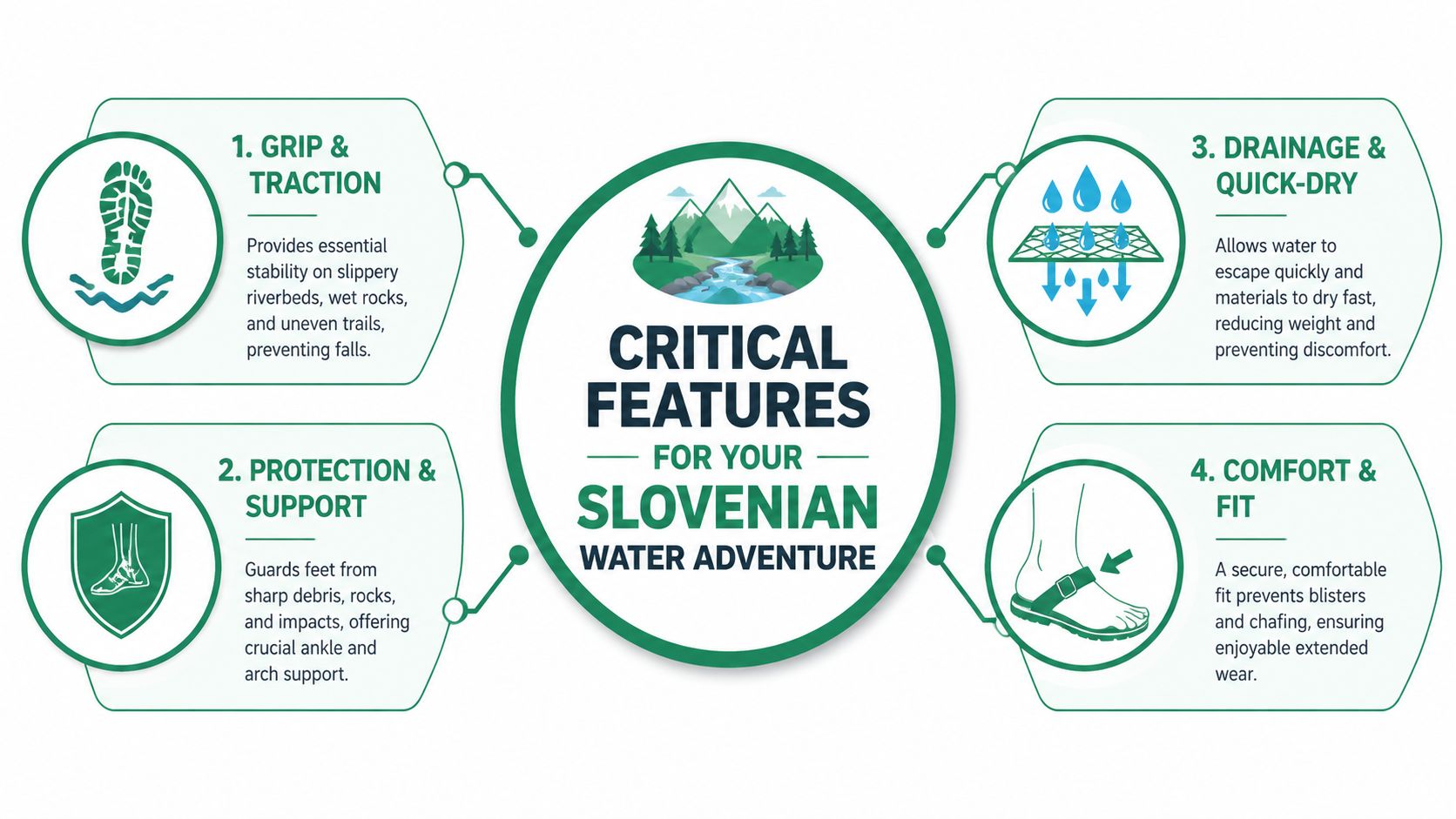
The easiest mistake is shopping by appearance. People squeeze the shoe, check whether it looks sporty, and stop there. In practice, four features decide whether a pair is useful or annoying.
Grip that works on wet rock
Slovenian river terrain asks a lot from a sole. Wet stones on a riverbank are one thing. Polished rock in a canyon is another. You want a sole that stays predictable when you shift your weight sideways, step down into shallow current, or climb out over wet slabs.
A sole with visible tread is a start, but tread alone doesn’t guarantee grip. Some rubbers feel fine on dry ground and disappoint badly on slick rock. The sole should also stay flexible enough to keep surface contact rather than feeling like a hard plastic plate under your foot.
Lightweight fashion water shoes often fall short in practical use. They can look fine online, but once the terrain turns slippery, they feel vague underfoot.
Protection and structure
Sharp edges, submerged stones, and repeated knocks punish soft footwear. Toe protection matters more than many beginners expect. One hard hit into hidden rock is enough to change your mood for the rest of the day.
Ankle structure becomes more important as soon as the activity includes walking in current, descending over uneven ground, or landing awkwardly after small jumps. You don’t always need a high boot, but you do need the shoe to hold your foot securely so it doesn’t twist inside when the ground moves underneath you.
The engineering behind modern adventure footwear has deep roots. The Norwegian M77 military boot was introduced in 1977 after a ten-year development cycle, with requirements focused on water resistance, durability, comfort, ease of maintenance, and thermal performance, according to the Slovenian overview of military boots. That kind of development shows why reliable wet-condition footwear is hard to get right.
Drainage and comfort under load
A shoe for water must let water out. That sounds obvious, but many first-time buyers still choose footwear that traps it. Once that happens, every step feels heavier.
Look for drainage points, mesh that doesn’t turn soggy and slack, and a construction that won’t rub badly when wet. The fit should be snug without crushing your toes. In water, loose shoes become unstable fast.
A few comfort checks matter:
- Heel hold: your heel shouldn’t lift excessively when you step uphill or out of current.
- Toe room: enough space to avoid jamming forward, but not so much that your foot slides around.
- Closure system: laces, straps, or fasteners should stay secure when wet.
- Inner feel: rough seams become much more noticeable after long use in water.
A comfortable dry fit can still become a bad wet fit. Water changes how materials move and how your foot sits inside the shoe.
Matching Your Footwear to Your Chosen Activity
General advice is no longer sufficient. The right obutev za v vodo for one activity can be a poor choice for another. Slovenia’s terrain makes that especially clear.
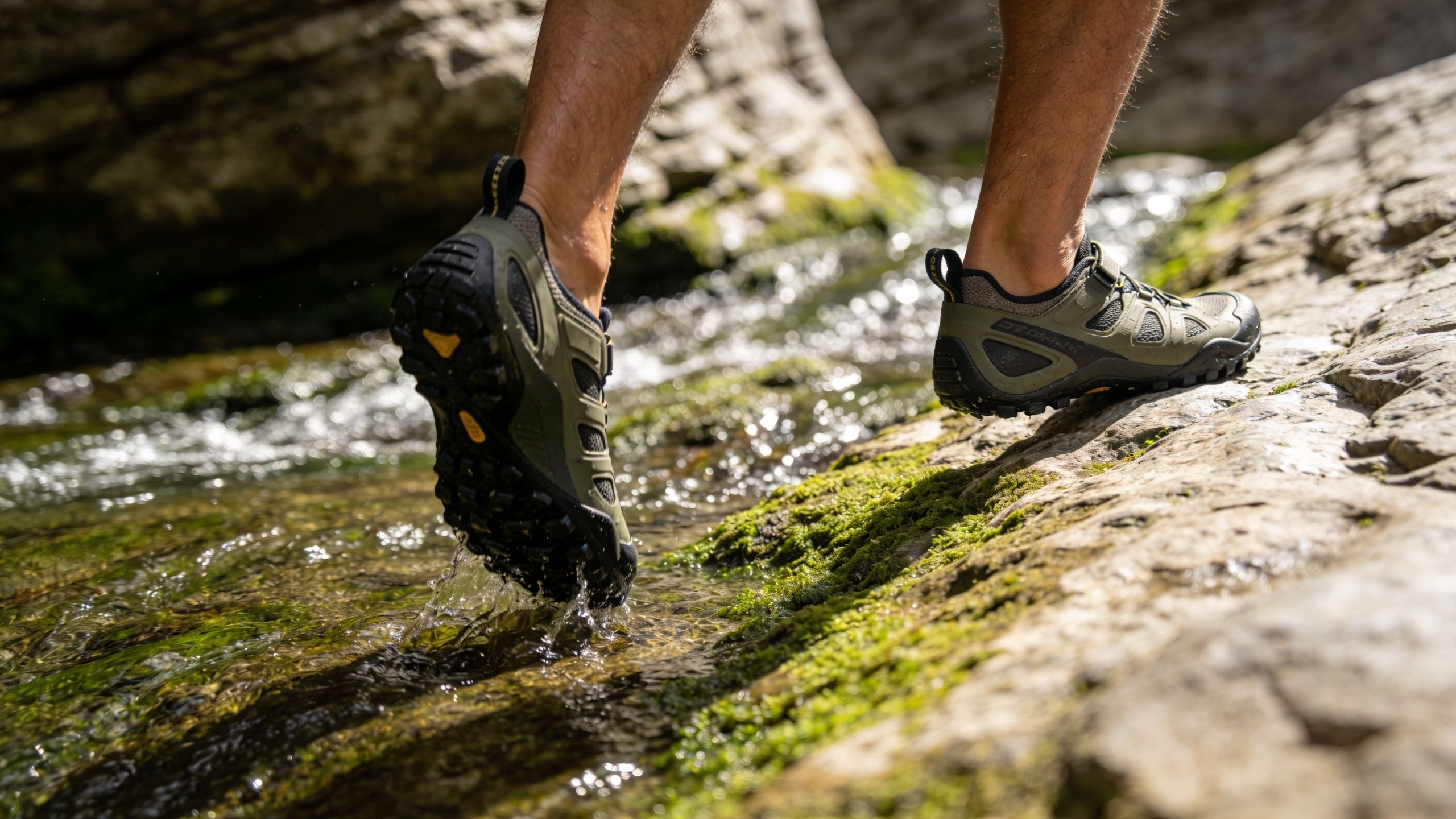
Generic shop listings often group everything together under “water shoes”, but that lumps easy paddling, rough riverbank access, and canyon descents into one basket. That doesn’t help much on local ground. A 2025 Triglav National Park visitor survey noted that 68% of user queries from the Bled area involved footwear durability, with many reporting tears on sharp Triglav limestone, as described in Decathlon Slovenia’s water footwear category context.
Canyoning
For canyoning, the best choice is a protective boot-style water shoe or canyoning boot. This is the category where people most often underestimate the terrain.
You’re not just walking into water and floating. You’re stepping down wet rock, balancing on uneven surfaces, moving through flowing water, and sometimes landing on rough ground. A soft beach shoe or thin aqua sock won’t give enough protection or support.
What works best:
- Higher-cut design: extra support around the ankle helps on uneven descents.
- Strong toe box: hidden rocks and direct impacts are common.
- Secure sole attachment: canyoning punishes weak glue and light construction.
- Firm fit: your foot can’t slide inside the boot during descents.
What usually doesn’t work:
- Open sandals: too exposed for sharp rock.
- Old trainers: they absorb water and often lose shape.
- Cheap slip-on water shoes: they can roll under the foot on side steps.
If you’ve packed for other waterfall destinations before, some principles carry across. The TryThisFit tips for Niagara Falls packing are useful for understanding how spray, wet surfaces, and comfort interact over a full day, even though canyoning in Slovenia asks for tougher protection than a sightseeing setting.
Rafting
Rafting needs a different balance. You still want grip and security, but you usually don’t need the same level of ankle structure as canyoning. The focus shifts toward quick drainage, decent sole grip, and a shoe that stays on no matter how often it gets submerged.
The weak point on rafting days is often the approach and exit. People imagine the raft as the main environment, then forget the slippery bank, the muddy launch point, or the short walk carrying gear. That’s where poor footwear shows itself.
A good rafting shoe should feel light once wet. It should also be easy to tighten so it doesn’t loosen during the trip.
A practical comparison looks like this:
| For rafting | Better choice | Worse choice |
|---|---|---|
| River entry and exit | Closed water shoe with grip | Flip-flops |
| Repeated soaking | Fast-draining material | Thick cotton trainers |
| Foot security in current | Laces or secure closure | Loose slip-ons |
| Cold-water comfort | Neoprene-friendly fit | Barefoot in sandals |
Kayaking
Kayaking creates its own set of demands because the movement is smaller, but the exposure to water is constant. For sit-on-top kayaking or shorter recreational paddles, many people do well in a lighter water shoe or snug neoprene-style option, provided the sole still has decent grip for getting in and out.
You don’t need a bulky boot in every kayaking situation. In fact, too much shoe can feel clumsy in the boat. Flexibility matters more here than in canyoning, especially if you want natural foot movement while seated.
The moments that matter are the simple ones:
- stepping from shore into shallow water
- walking the boat over stones
- standing on a wet launch point
- getting out with tired legs at the end
For travellers planning a paddling day, it also helps to think beyond the boat itself. If you’re organising an outing and want to see what a local rental day looks like, renting a kayak in Bled gives you a realistic sense of how shore access and lake conditions shape what works on your feet.
Family trips and mixed-activity days
Families often need the most versatile answer. Children splash more, step less carefully, and don’t always tell you when a shoe is rubbing until it becomes a problem. Adults on mixed-activity days usually want one pair that can manage a riverbank, short walk, some water time, and a relaxed stop afterwards.
In those cases, the sweet spot is usually a closed, secure, easy-draining water shoe with enough sole for rocky ground. Not the lightest possible option. Not the heaviest.
For family use, prioritise these points:
- Easy fastening: children need shoes that adults can tighten quickly.
- Toe coverage: kids kick stones, miss steps, and charge ahead.
- Simple drainage: shoes that hold puddles get uncomfortable fast.
- No loose heel: a shoe that half-slips off becomes frustrating within minutes.
Parents often ask whether one cheap pair each is enough for everyone. It can be, if the pair is secure, closed, and built for rough wet ground rather than just poolside use.
The main thing is matching the shoe to the roughest part of the day, not the easiest part. If the itinerary includes even one rocky river entry or slippery bank, buy or rent for that moment.
Renting vs Buying Water Shoes for Your Trip
For most travellers, this isn’t just a gear question. It’s a holiday question. Do you want to pack one more specialist item, or would you rather use suitable equipment on the day and leave luggage space for other things?
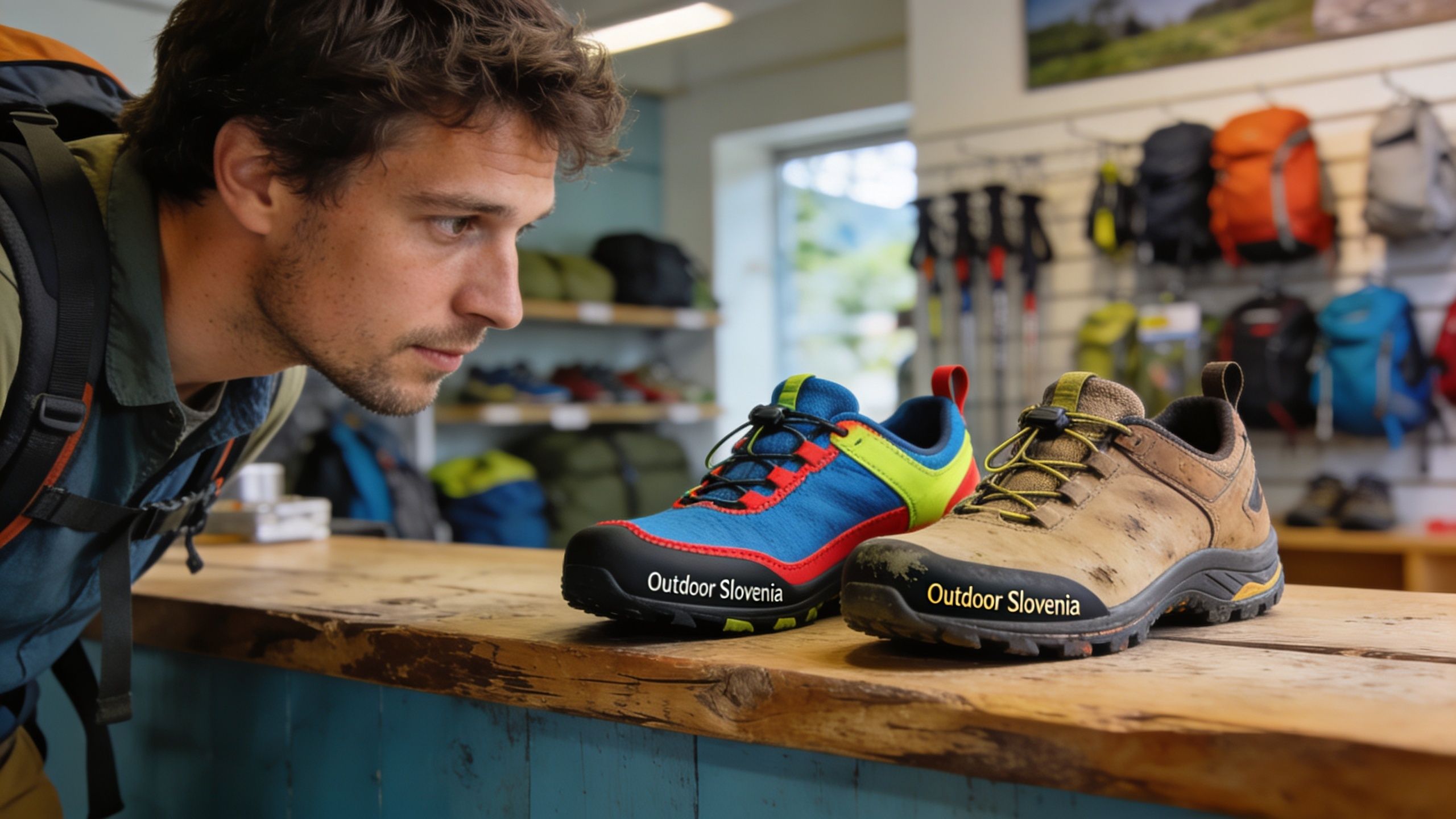
When renting makes more sense
Renting is often the sensible option if you’re visiting Slovenia for a short trip, trying canyoning or rafting for the first time, or don’t want wet shoes in your suitcase afterwards. It removes the guesswork.
A rental pair that’s chosen for the activity usually beats a personally owned pair that’s wrong for the terrain. That matters most for people who only do water activities occasionally.
Renting also helps if your trip includes several different plans and you don’t want to commit to one very specific shoe. A solid activity-ready pair on the day is often more practical than buying something in a hurry before flying out.
When buying is worth it
Buying makes sense if you do water sports often, care a lot about getting a personalised fit, or know that a certain shoe shape suits your foot much better than general rental options. People with sensitive heels, a very narrow foot, or a history of blisters often appreciate having their own pair broken in properly.
It can also be the better route if your holiday includes repeated independent use around rivers, lakes, and coastal stops.
Sustainability is part of the decision now too. In Slovenia, demand for eco-friendlier gear is growing. EKOŠOLE reports a 40% increase in the adoption of biodegradable equipment in Slovenian outdoor programmes since 2025, and that shift matters more in protected natural areas, as noted in the Leskovec conference publication hosted by Ekošola.
A balanced way to decide:
- Rent if: this is a one-off adventure, you’re packing light, or you want activity-specific gear without buying specialist footwear.
- Buy if: you’ll use the shoes repeatedly, you know your fit needs, or you want to choose materials more carefully.
- Think about materials: traditional neoprene can be practical, but many travellers now also look at lower-impact options where available.
How to Care for and Pack Your Water Footwear
A good pair of water shoes can last well if you treat it properly after the trip. Most damage doesn’t come from one river day. It comes from being left damp, sandy, and crumpled in a bag.
Simple care after the activity
Start with a rinse in clean water. That matters if your shoes picked up grit, mud, or fine sand from the riverbank. Small particles trapped inside the shoe keep rubbing the fabric and lining long after the trip ends.
Then dry them properly. Not on a radiator, not in direct aggressive heat, and not forgotten in the boot of a car. Open them wide, loosen the laces or straps, remove any insole if possible, and let air do the work.
A short checklist helps:
- Rinse first: remove grit before it dries into the fabric.
- Open the shoe up: trapped folds stay damp longest.
- Dry in airflow: shade and ventilation are better than harsh heat.
- Store fully dry: that’s the simplest way to avoid odour.
Packing without soaking the rest of your bag
When you’re moving between hotels or continuing your trip, water shoes need their own little system. Don’t push them straight in with clean clothes.
Use a separate bag, ideally one that keeps moisture contained but still lets the shoes breathe once you unpack. If they’re still damp, wrap them loosely rather than sealing them tight for too long. That keeps the rest of your luggage cleaner and makes the shoes easier to dry later.
Wet gear ages faster when it stays compressed and airless after the fun part is over.
Safety First Advice from Our Professional Guides
The safest footwear is the pair that fits the terrain and stays secure when wet. Brand matters far less than people think. Fit, grip, and protection matter far more.
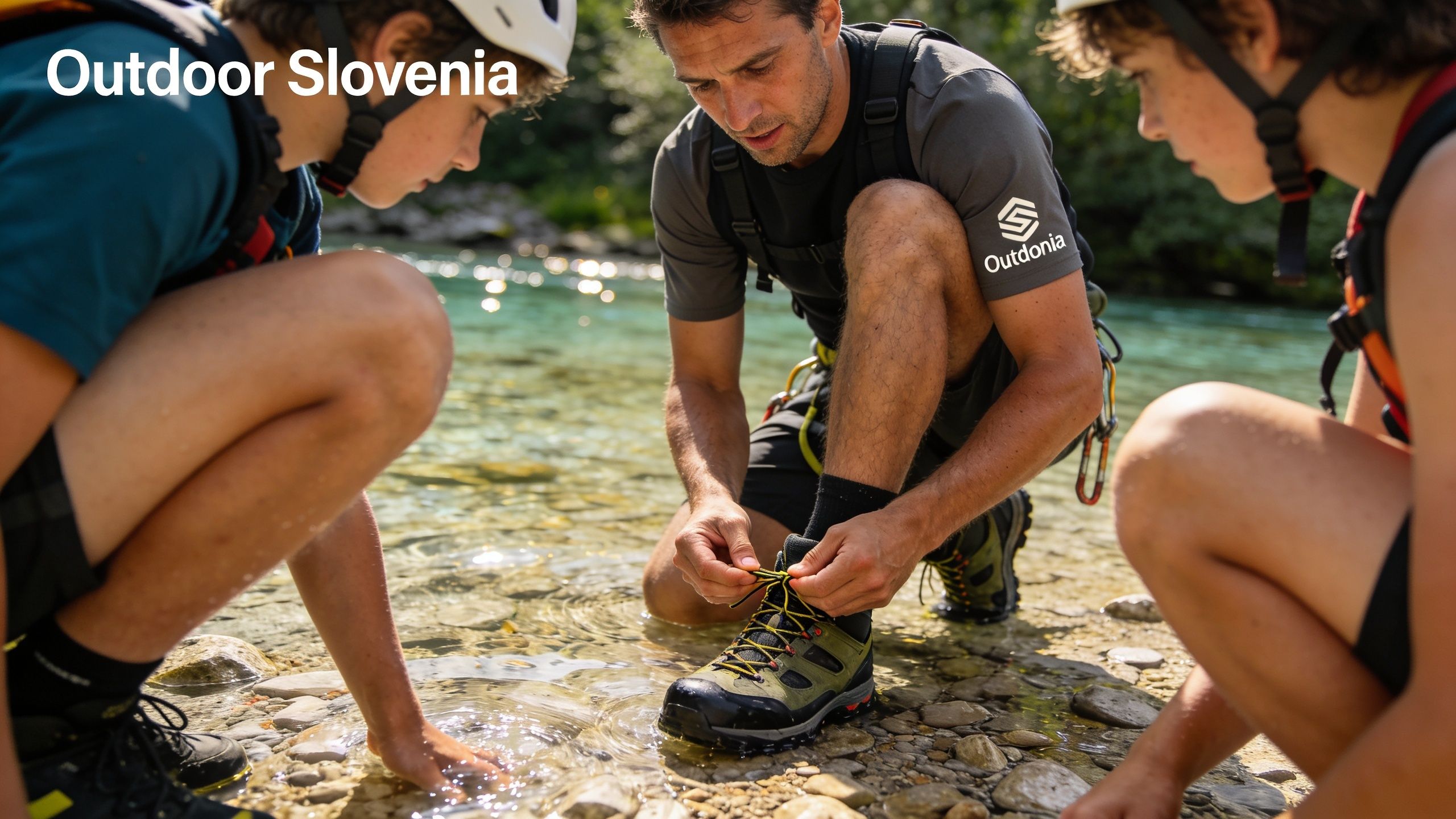
Fit matters more than brand
If your heel lifts too much, the shoe will feel unstable on descents. If your toes jam forward, you’ll start bracing awkwardly on every downhill step. If the closure loosens when wet, you’ll spend the day adjusting instead of enjoying.
A few guide-level habits make a difference:
- Try them wet-minded: a shoe that feels slightly loose when dry will feel looser in action.
- Skip cotton socks for water activities: they stay wet and rub.
- Check closures before starting: don’t assume they’ll hold if they were tied casually.
Listen to the guide when terrain changes
Even excellent obutev za v vodo has limits. On river trips, the terrain changes quickly. One section may be easy gravel, the next polished rock, the next a muddy bank with roots.
That’s why following movement instructions matters. When a guide tells you where to place your feet, how to enter the water, or how to step out on a bank, it isn’t just about group order. It’s about using the terrain safely with the footwear you’ve got. On more dynamic routes like rafting on the Soča River, that combination of proper gear and clear instruction makes all the difference.
The best footwear choice is always part of a bigger safety system. Good grip helps, but good decisions help more.
Your Water Footwear Questions Answered
Can I wear waterproof hiking boots
For water activities, usually no. They’re designed to keep outside water out during normal hiking. Once river water enters from the top, they often become heavy and slow to drain. They’re great for trails. They’re poor obutev za v vodo.
Do I need socks
Sometimes. It depends on the shoe and the activity. Neoprene socks or similar close-fitting options can improve comfort in colder conditions. Ordinary cotton socks are a bad match because they stay wet and increase friction.
Are sandals enough
Open sandals can work for very light, low-risk summer use near calm water, but they’re rarely the best answer for Slovenian adventure terrain. Rocky riverbanks, submerged stones, and slippery exits usually reward a closed shoe with better toe protection and a more secure hold.
Should children wear the same style as adults
The same principles apply, but children often need simpler fastening and stronger toe coverage. They move less carefully and are more likely to kick rocks, drag toes, or step into shallow gaps without noticing.
Can I just use old trainers
You can, but “can” and “should” aren’t the same thing. Old trainers often become heavy, stay wet for ages, and don’t grip well on slick surfaces. They’re a common compromise, not a strong solution.
Do expensive shoes always perform better
No. Some expensive pairs are excellent. Some are overpriced for their function. A modest pair with secure fit, decent grip, and good drainage will outperform a premium-looking pair that loosens, rubs, or slides on wet rock.
If you want help choosing the right footwear for your trip, or you’d rather book an adventure where the technical equipment is already sorted, Outdoor Slovenia Activities makes it easy to get onto the river, into the canyon, or out on the lake with confidence.