
You’re standing below the rock, helmet in hand, looking up at a line of steel cable that seems to climb straight into the mountain. Part of you is excited. Part of you is wondering whether this is really for beginners, or only for people who already know climbing.
That feeling is normal. Most first-timers don’t struggle with courage first. They struggle with the gear. The harness looks complicated, the carabiners feel unfamiliar, and the whole set via ferrata can seem more technical than it really is.
The good news is that via ferrata was built to make steep mountain terrain more accessible. The idea itself has deep roots in our alpine world. Via ferrata emerged during World War I, when armies built equipped routes in the Dolomites to move troops. After the war, alpinists began restoring these routes for recreational climbing, laying the foundation for the adventure sport we know today, as outlined in the history of via ferrata.
If you’re visiting Slovenia and already dreaming about mountain days, routes, ridgelines, and dramatic limestone scenery, a day exploring the region around Triglav National Park often sparks exactly this kind of curiosity. You see the mountains and start asking a simple question. Could I do this?
Yes, you can. But confidence starts with understanding the equipment.
Table of Contents
- Your Adventure on the 'Iron Way' Begins
- Deconstructing the Gear What's in a Via Ferrata Set?
- The Physics of Safety How a Via Ferrata Set Works
- Choosing Your Set and Essential On-Route Safety
- Renting vs Buying A Practical Guide for Travellers
- Your First Climb Beginner Routes Near Lake Bled and Triglav
Your Adventure on the 'Iron Way' Begins
A first via ferrata often starts with a quiet pause. You adjust your gloves, look up, and notice the cable disappearing around a corner in the rock. The route looks dramatic from below, but once you clip in and take the first few moves, it begins to feel more logical than mysterious.
That’s one of the reasons people love it. Via ferrata gives you a way into terrain that would otherwise belong only to experienced climbers. You’re not free-climbing a wall. You’re moving along a protected route with fixed steel equipment, using a dedicated safety system designed for exactly this environment.
In our part of Europe, that experience also carries a sense of history. The “iron way” was not invented as a leisure activity. It began in wartime mountain terrain and later became part of alpine adventure culture. Knowing that doesn’t make the sport feel old-fashioned. It makes it feel connected to the mountains in a very direct way.
You don’t need to become a climber first. You need to understand the system, move calmly, and respect the route.
For beginners, the biggest shift is mental. People often assume the hardest part is strength. Usually it isn’t. The harder part is trusting the process. You learn how the set via ferrata connects you to the cable, how to move one carabiner at a time past anchors, and how to keep your body balanced on the rock.
Once that clicks, the whole experience changes. The route stops looking like a vertical puzzle and starts feeling like a guided path through the mountain.
Deconstructing the Gear What's in a Via Ferrata Set?
On a guided route above Lake Bled, I often see the same change happen. At the start, a guest looks at the harness, lanyard, and carabiners as three separate things. Ten minutes later, once we name each part and show how they work together, the equipment stops feeling technical and starts feeling dependable.
That shift matters. A set via ferrata is one connected safety system, and each piece has a specific job.
A simple comparison that helps
The system works a bit like the safety features in a car. One part keeps you connected, one part reduces the force if you fall, and one part lets you attach and move along the route in a controlled way.
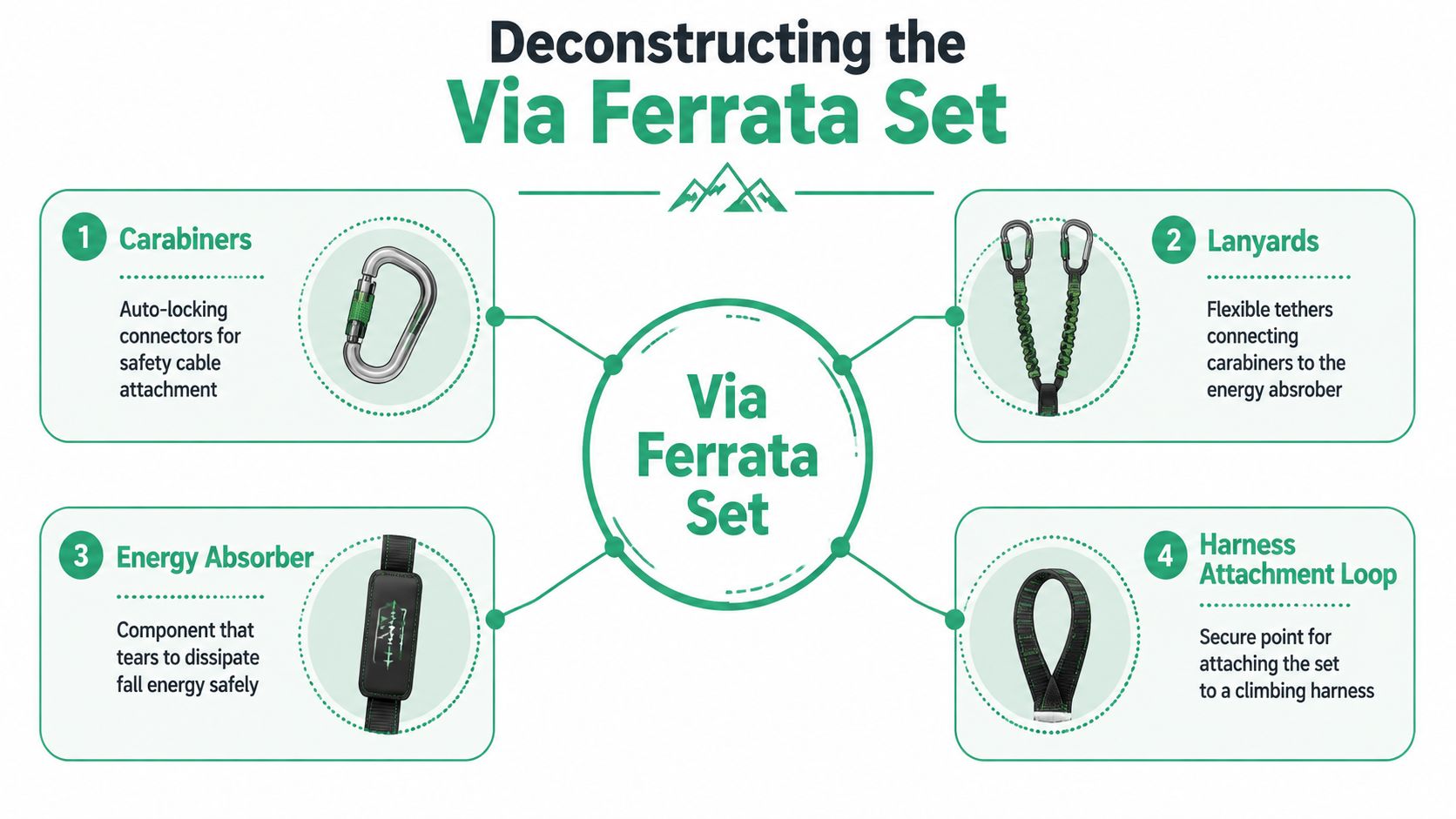
On a via ferrata, those jobs belong to your harness, your lanyard with energy absorber, and your two carabiners. Together they keep you attached to the steel cable while you move from step to step and pass anchor points safely.
If you’re also interested in the broader basics of choosing your climbing gear, it can help to see how via ferrata equipment fits into the wider mountain gear picture. The principles are similar. Fit, compatibility, and safe use matter more than flashy design.
The three parts you need to know
Harness
The harness is the foundation of everything else. It wraps around your waist and legs and gives the rest of the system a secure place to connect. If the fit is poor, the whole setup feels less stable, even before you climb.
For first-timers, I explain it this way. A good harness should feel like a firm handshake, secure, clear, and not crushing. On family and beginner tours, Outdoor Slovenia chooses harnesses that are easy to adjust because guests often arrive wearing different layers, and a guide needs to check fit quickly and correctly without guesswork.
Lanyard and energy absorber
This is the part many people mean when they say "set via ferrata." Modern sets usually use a Y-shape with elasticated arms and two via ferrata carabiners, as described in this guide to modern via ferrata set design.
The Y shape solves a simple problem. When you reach an anchor, you need to move past it while staying attached to the cable. One arm stays clipped in first. Then you move the other. For beginners, that sequence is much easier to learn when the system is tidy and the lanyards shorten slightly instead of hanging loosely around the knees.
From a guide’s perspective, the energy absorber is the part we never treat as a small detail. Outdoor Slovenia prefers modern sets rated for a broad user range, including lighter users from 40 kg, because guided groups near Bled often include teenagers and smaller adults. That choice is not about better-looking specifications. It is about giving families and first-timers equipment that matches the people joining the tour.
Carabiners
These are the parts you handle all day, so their shape and action matter more than many beginners expect. Via ferrata carabiners are larger than standard climbing carabiners and built for frequent clipping on thick steel cable.
What matters on the route is clarity. You want a carabiner that opens cleanly with one hand, closes positively, and feels predictable even when your forearms are a little tired. That is another place where a guide company makes deliberate choices. Outdoor Slovenia selects carabiners that are easier for beginners to operate because smooth handling reduces fumbling at anchors, and less fumbling usually means more calm, more confidence, and better decisions on the wall.
People also ask about the elastic arms. They do make the set feel neater, but the bigger benefit is movement. On ladders, traverses, and short steep sections, the lanyards stay closer to the body, so the system is less likely to snag or swing around awkwardly.
Practical rule: If you can name each part and explain its job in one sentence, the gear will feel much less intimidating.
The Physics of Safety How a Via Ferrata Set Works
When people first hear the words “fall arrest”, they imagine the equipment merely catching them. That’s only part of the story. A good via ferrata set doesn’t just stop a fall. It reduces how violently that stop happens.
Why a hard stop is dangerous
If a rope, strap, or cable stopped you instantly, the force on your body would be severe. That’s why modern via ferrata systems are built to dissipate energy, not just hold weight. The idea is similar to a crumple zone in a car. Controlled deformation makes the impact less abrupt.
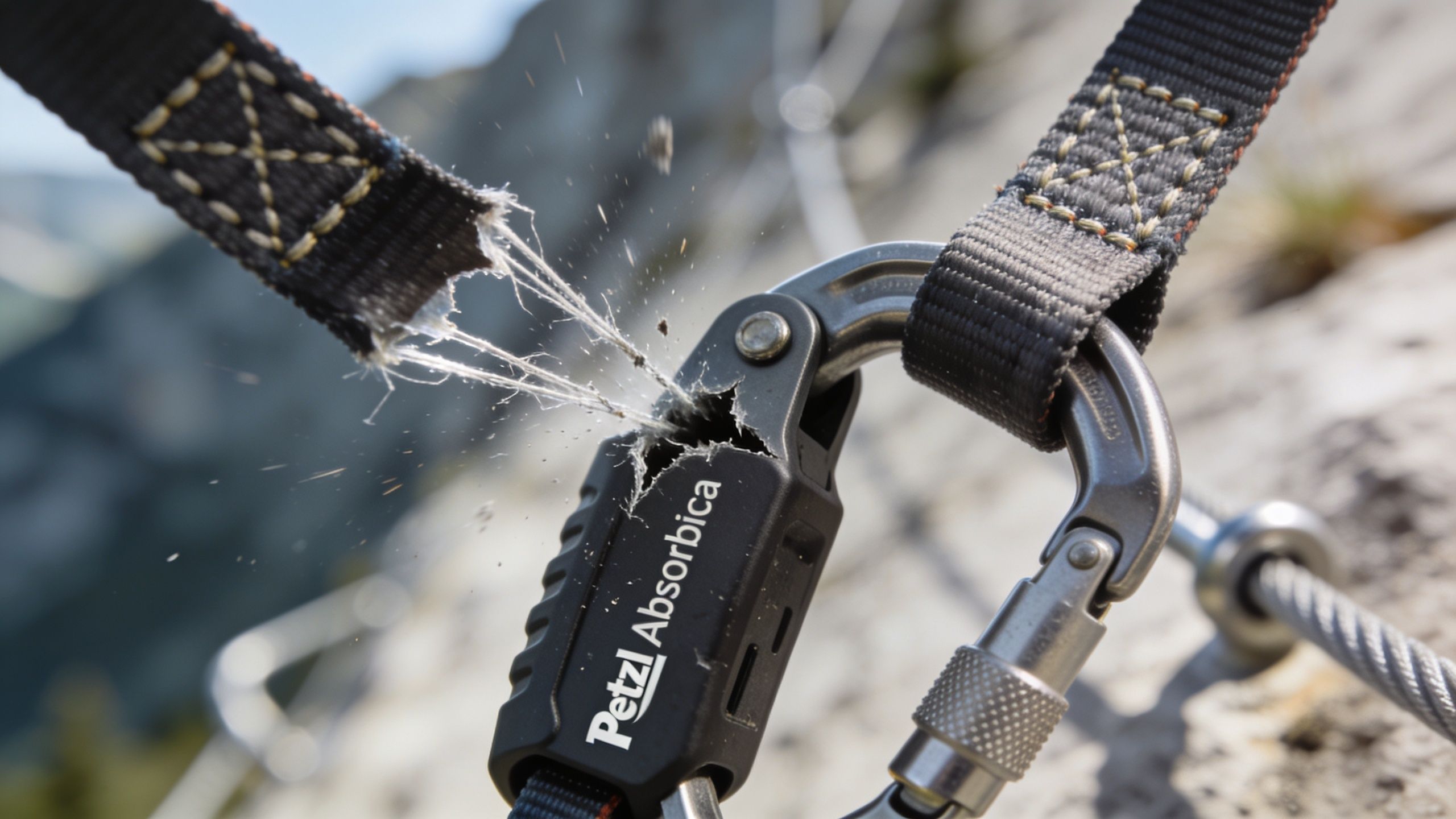
The key component is the energy absorber. In modern certified sets, it is usually a packet of stitched webbing designed to tear in a controlled way during a fall. That tearing process is deliberate. The equipment is sacrificing part of itself so your body doesn’t take the full shock all at once.
What happens inside the absorber
Modern EN 958:2017 certified sets are designed for a 40 to 120 kg user range. In a fall, the webbing-based absorber progressively tears and can extend up to 2.2 metres to dissipate energy while keeping impact force below 6 kN, as explained in this overview of EN 958:2017 via ferrata absorbers.
That single fact answers several beginner questions at once.
- Why can’t I use any random old set? Because the absorber’s design and certified weight range matter.
- Why do guides check body weight and equipment fit so carefully? Because the absorber has to work for the actual person wearing it.
- Why must a triggered absorber be replaced? Because once the stitched webbing has torn, it has already done its job.
There’s another point many newcomers miss. If a climber is below the minimum working weight for the set, the absorber may not activate as intended. For families and mixed groups, that matters a lot. A lighter adult or a child should never be assumed to fit safely into a system chosen for heavier users.
After any real fall that deploys the absorber, treat the set as used. It isn’t a “maybe it’s still fine” situation.
This is why experienced guides look at gear with a practical eye, not just a technical one. The safest set isn’t the one with the fanciest label. It’s the one that matches the user, is in proper condition, and is used correctly on the route.
Choosing Your Set and Essential On-Route Safety
You can have excellent equipment and still make poor decisions with it. On a via ferrata, safe movement depends on both. The first decision happens before the climb. The second happens every few seconds while you’re on the cable.
Choose for the lightest person who will use it
If you remember one equipment rule, make it this one. The set must match the user’s weight range.
For beginner groups, especially families, this is not a small detail. It’s central. A set that doesn’t suit the climber may not manage fall forces as intended. That’s why many professional operators prefer modern systems that are rated from 40 kg, especially when they guide mixed-ability groups with smaller adults or younger participants, as discussed earlier in the technical standards section.
When people ask me what matters most during equipment fitting, I look at these points first:
- Body weight with clothing and kit: The set must suit the actual load being carried that day.
- Harness fit: A correct harness should stay secure when you stand, bend, and sit back slightly.
- Easy carabiner handling: If a person struggles to open and clip the carabiners on the ground, that becomes harder on exposed terrain.
The rules on the cable that matter most
Once you start climbing, route discipline becomes essential. Beginners often focus on footwork and forget the safety rhythm. The rhythm is simple, but it must be consistent.
Always keep at least one carabiner attached to the cable.
When you pass an anchor, move one carabiner, then the other. Never unclip both at once.Move one person at a time through sensitive sections.
Ladders, steeper walls, and sections between anchor points need spacing. Crowding creates pressure and poor decisions.Don’t rush transitions.
Most fumbling happens not on the climbing itself, but at anchor points when people feel hurried.
If you’re curious about what a guided route in Slovenia looks like in practice, the Mangart via ferrata experience gives a good sense of the terrain and atmosphere without needing to guess what “alpine exposure” means on paper.
Calm clipping beats fast clipping. Smooth movements are safer than hurried ones.
A via ferrata rewards steady habits. Good gear gives you protection. Good habits let that protection work.
Renting vs Buying A Practical Guide for Travellers
Most travellers visiting Slovenia for a short holiday don’t need to buy a set via ferrata before the trip. That surprises some people, especially those who like arriving fully prepared. But mountain gear isn’t like buying a water bottle or a fleece. It needs to fit, match the route, and be inspected properly.
When renting makes the most sense
If this is your first ferrata, renting is usually the practical choice. You avoid travelling with bulky gear, you don’t have to guess which model suits your body and route, and you don’t take on maintenance responsibility afterwards.
That last point matters more than many people realise. General gear advice often reminds users that an energy absorber must be replaced after a trigger event, but there’s little clear public guidance on long-term fleet economics or regional replacement patterns for commercial operations. That gap is noted in this overview of via ferrata gear considerations. For an occasional traveller, that’s one more reason not to rush into a purchase.
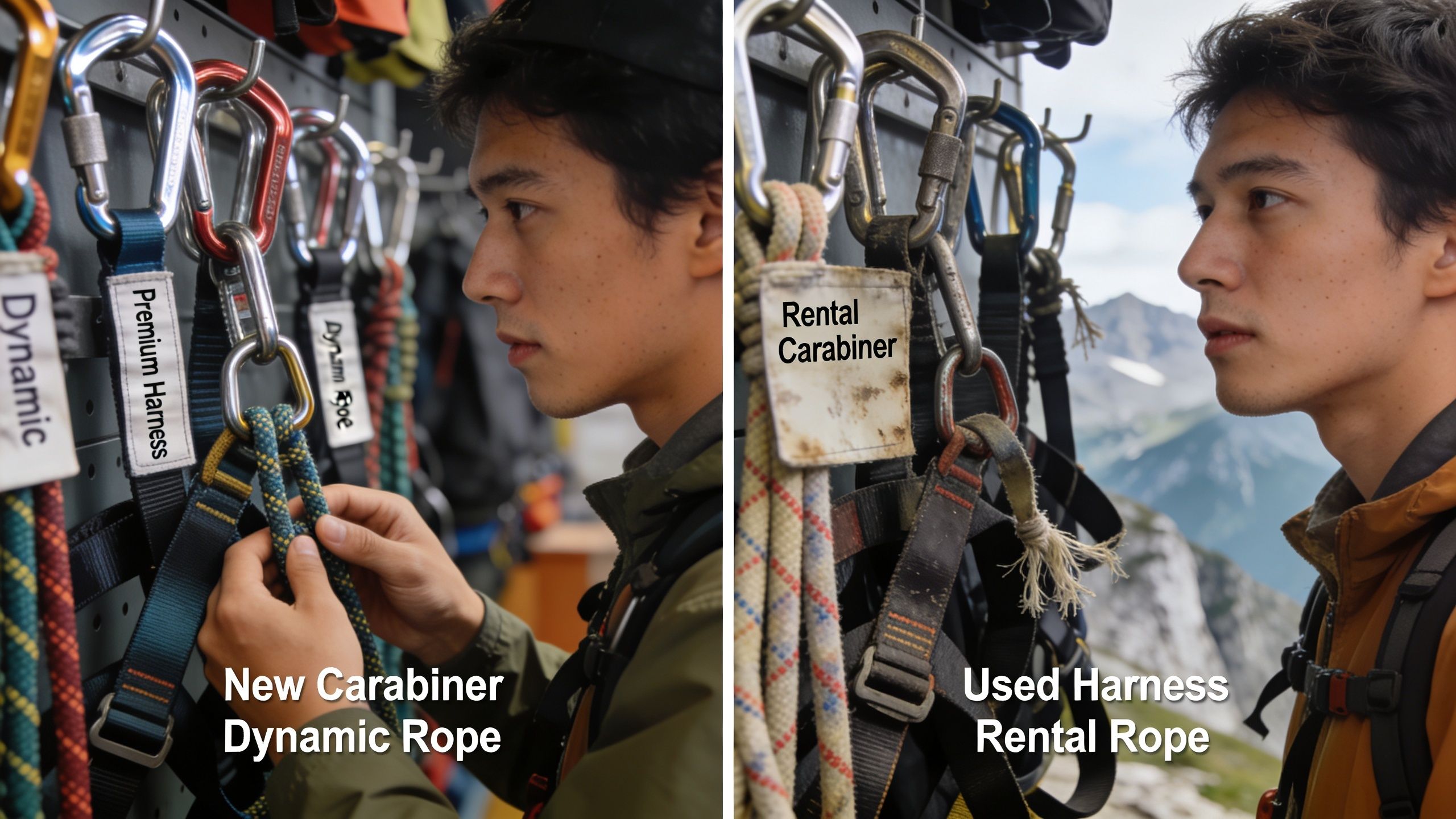
Buying starts to make more sense if you expect to use the gear often, already understand fit and standards, and are willing to monitor condition carefully. If not, professional rental is simpler and often safer.
Renting vs. Buying a Via Ferrata Set
| Consideration | Renting Gear (e.g., with a Guided Tour) | Buying Your Own Gear |
|---|---|---|
| First trip convenience | Easy. No need to research every component before travelling. | Slower. You need to choose, fit, and learn the system yourself. |
| Suitability for beginners | Strong option. Staff can match gear to your size and route. | Fine if you already know what to buy and how it should fit. |
| Travel logistics | Lighter luggage and fewer airport worries. | You carry everything with you. |
| Maintenance responsibility | Handled by the provider. | Fully your job. You must inspect, store, and replace gear when needed. |
| Long-term value | Best for occasional use. | Better for regular personal use. |
| Confidence on the day | Helpful if you want in-person fitting and a gear check before starting. | Good if you’re already comfortable with your own setup. |
For most holidaymakers, the decision is simple. If you’re trying via ferrata once or twice on a trip, rent. If this is becoming part of your mountain life, buy carefully.
Your First Climb Beginner Routes Near Lake Bled and Triglav
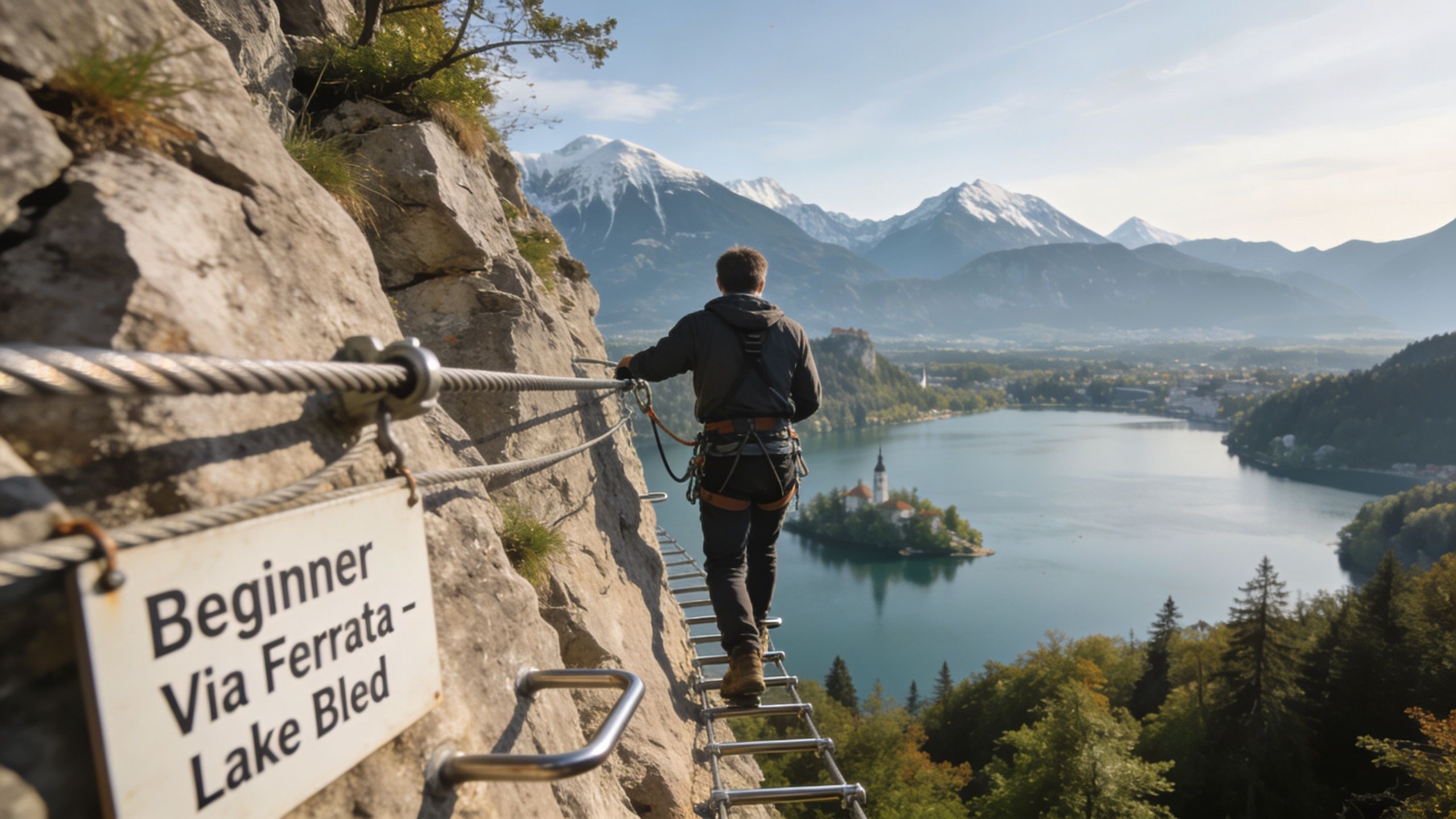
The best way to make all this equipment knowledge feel real is to imagine where you’ll use it. Around Lake Bled and the Julian Alps, beginner-friendly ferrata days can feel adventurous without needing a full mountaineering background.
Ferata Jermn
One approachable introduction is Ferata Jermn. It’s the kind of route where a beginner can focus on the rhythm of clipping, stepping, and breathing without feeling swallowed by a huge alpine objective.
The appeal is not just the climbing. It’s the setting. Forest below, rock in front of you, and that satisfying moment when you realise your feet are more reliable than your nerves first suggested. Many first-timers finish a route like this with the same reaction. They expected fear. They found concentration, then enjoyment.
Mangart via ferrata
Mangart feels bigger. The mountain scenery opens up, and the whole outing carries more of that high-alpine atmosphere people travel to Slovenia to experience. It isn’t just about clipping onto a cable. It’s about moving through an environment that feels vast and sharply defined.
For a beginner, that can be very memorable. The rock feels more dramatic, the views stretch further, and every short pause gives you another look across ridges and limestone walls. At the top, or even at a good rest point along the route, you get that rare combination of effort and perspective. You’ve done something active, technical, and scenic all at once.
The first ferrata people remember most fondly is usually not the hardest one. It’s the one where they felt safe enough to enjoy the mountains.
That’s why beginner routes matter. They don’t just teach movement. They create trust. Once you trust the system, the guide, and your own ability to move carefully on the rock, the mountains open up in a new way.
If you’d like to try via ferrata near Lake Bled with professional instruction, quality equipment, and a beginner-friendly approach, Outdoor Slovenia Activities offers guided mountain adventures that help first-timers learn safely and enjoy the experience from the first clip to the final view.