
You're probably here because winter in Slovenia looks beautiful, but cross-country skiing still feels slightly mysterious. You may have seen neat tracks through a snowy meadow near Bled, watched people glide past with surprising ease, and wondered whether that could be you by tomorrow morning.
It can.
Around Lake Bled and the Triglav region, tek na smučeh feels less like a niche sport and more like a natural way to move through winter. It's quieter than downhill skiing, easier to approach than many visitors expect, and tied to the rhythm of Slovenian mountain life. If you enjoy walking, fresh air, and the kind of scenery that makes you stop mid-step just to look around, you're already halfway there.
Table of Contents
- Experience Winter in Slovenia Like Never Before
- What Exactly Is Cross-Country Skiing
- Classic vs Skate The Two Styles of Skiing
- Your Essential Gear and First Techniques
- Best Beginner Trails Near Bled and Triglav
- Safety Tips and Trail Etiquette for a Great Day
- Start Your Slovenian Ski Adventure Here
Experience Winter in Slovenia Like Never Before
A clear winter morning near Bled has its own sound. Or rather, its lack of sound. Snow softens the fields, the forest holds still, and the mountains seem even closer in the cold air. You step out, your breath turns white, and the whole area feels calm in a way that's hard to find in busier ski resorts.
That's where tek na smučeh begins to make sense.
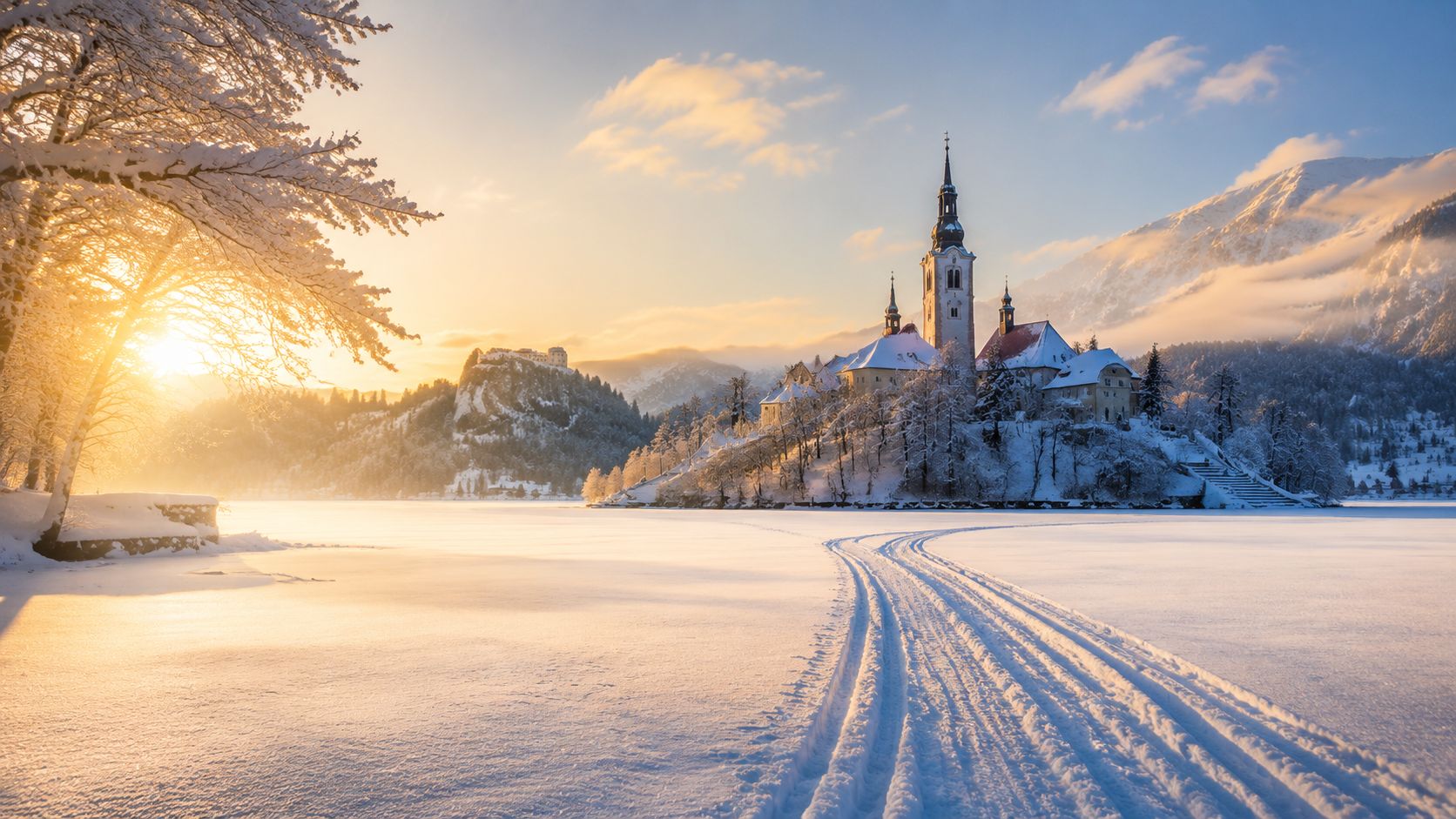
Instead of queueing for lifts or pointing skis down a steep piste, you move under your own power. You follow a trail through meadow edges, spruce forest, or a broad alpine plateau. The pace can be gentle. The reward arrives immediately. You're immersed in the natural surroundings, not just viewing them from a café terrace.
Why it appeals to so many visitors
Cross-country skiing in Slovenia has become a very accessible winter activity. Over 12,000 visitors engage annually in Nordic skiing activities across the country's 12 main centres, and a significant portion are beginners, according to Slovenia Outdoor's overview of top cross-country destinations. That matters if you're hesitating. You won't be the only newcomer.
A few groups tend to fall in love with it quickly:
- Families who want a relaxed snow day without the intensity of alpine skiing.
- Solo travellers who like quiet movement and scenic exercise.
- Couples and friends who want winter adventure without needing advanced skills on day one.
Cross-country skiing often surprises first-timers because it feels familiar. If you can walk with rhythm and stay relaxed, you already understand the basics of movement.
The local way to enjoy winter
In Slovenia, this isn't only a sport for racers. It's part of how people enjoy the colder months. Locals head to nearby centres after fresh snow, children learn on easy loops, and visitors discover that winter here can be active without being frantic.
If Bled is your base, it helps to know how much there is to do in the colder months beyond the postcard views. This guide to winter around Lake Bled gives a good sense of how naturally cross-country skiing fits into the season.
What Exactly Is Cross-Country Skiing
Cross-country skiing is best understood as hiking on skis. You're travelling across snow-covered terrain by gliding forward rather than walking through it. The movement is smooth, repetitive, and surprisingly satisfying once the skis start to slide under you.
That simple idea clears up the biggest confusion beginners have. This is not the same as alpine skiing.
How it differs from downhill skiing
Downhill skiing revolves around lifts, descents, steeper slopes, and turning technique. Cross-country skiing works the other way round. You create your own movement. The skis are lighter, the boots are more flexible, and the terrain is usually gentler.
A quick comparison helps:
| Feature | Cross-country skiing | Alpine skiing |
|---|---|---|
| Main movement | Self-propelled gliding | Lift-assisted descending |
| Terrain | Rolling trails, valleys, plateaus | Ski pistes and steeper slopes |
| Boot feel | Light and flexible | Rigid and supportive |
| Typical experience | Quiet touring and steady exercise | Speed, turning, resort skiing |
The point isn't that one is better. They offer different kinds of winter days.
What it feels like on the trail
The first few minutes often feel wobbly. Then something clicks. Your stride settles, your poles start helping, and the skis carry you farther than expected. Beginners often think they'll be fighting the equipment all day, but on a flat or gently rolling trail, the motion becomes natural quite quickly.
Some people come for the exercise. Others come for the calm.
Practical insight: If downhill skiing feels intimidating, cross-country skiing is often the friendlier first step into snow sports.
Why people keep coming back
Three things make tek na smučeh especially appealing for travellers:
- It slows winter down. You notice the trees, the light, the weather, and the texture of the snow.
- It uses the whole body. Legs do the gliding, arms support the rhythm, and your core helps with balance.
- It suits different ambitions. One person can treat it as a peaceful outing. Another can turn the same trail into a strong fitness session.
That flexibility is one reason so many visitors near Bled and Triglav end up trying it even if they hadn't planned to.
Classic vs Skate The Two Styles of Skiing
When people say tek na smučeh, they usually mean one of two techniques. Classic and skate. Both use lightweight skis and poles, but they feel very different from the first step.
For beginners, this is the choice that shapes the whole day.
Classic skiing feels natural fast
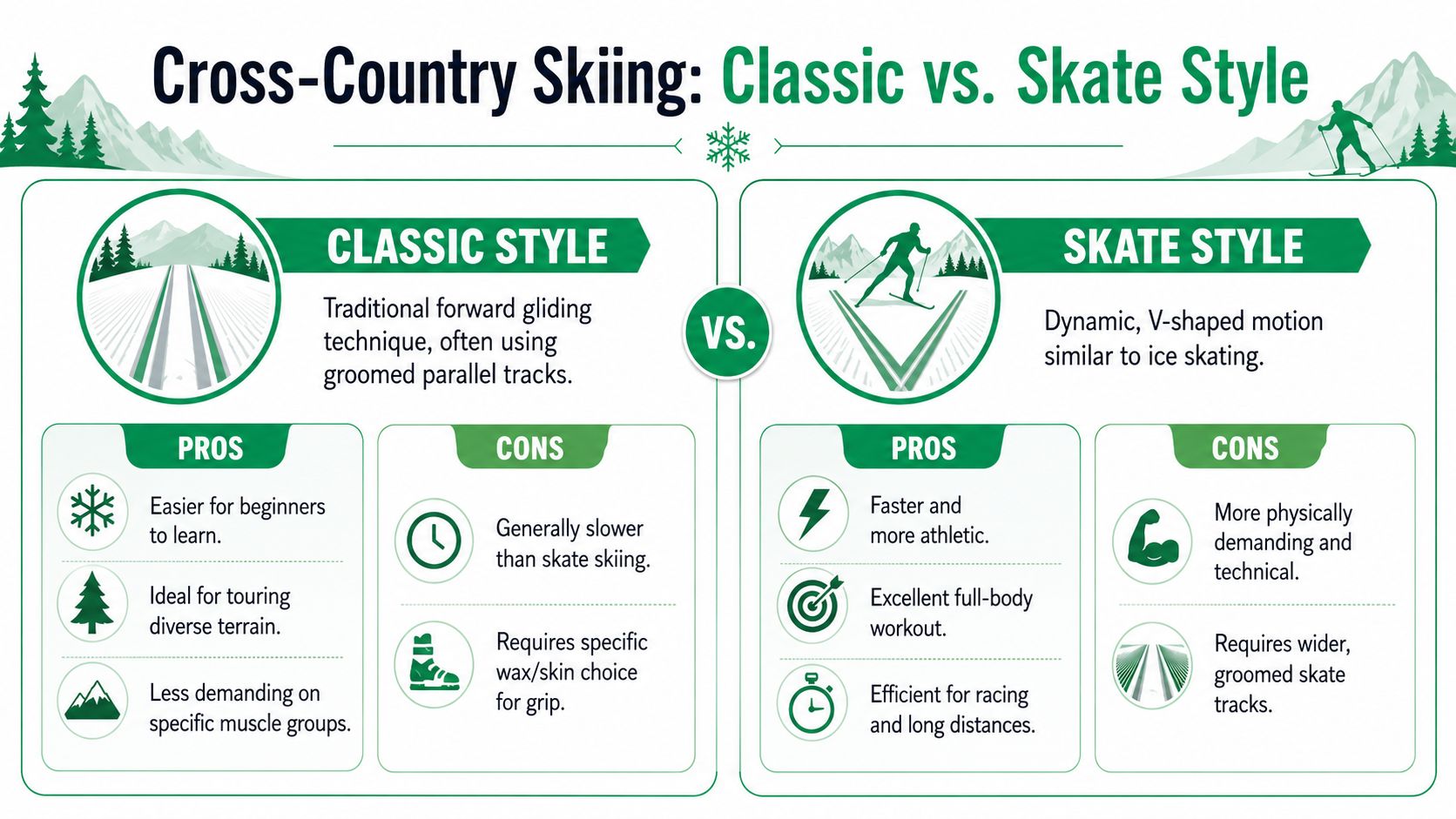
Classic technique uses a forward glide in parallel tracks. The motion resembles walking or shuffling, only smoother. One ski slides ahead, then the other, and the poles help with timing and momentum.
If you've never skied before, classic usually makes the most sense because it gives you a narrow lane to follow and a movement pattern your body already recognises. You can concentrate on balance and rhythm without also worrying about sideways push-offs.
People often enjoy classic when they want:
- A scenic outing through forests, meadows, and easy rolling terrain
- A family-friendly pace that allows stops, chats, and photos
- A low-pressure first lesson where technique grows gradually
Skate skiing feels more athletic
Skate skiing uses a V-shaped push, similar to ice skating or rollerblading. Instead of staying in narrow tracks, you move across a wider groomed lane. It's faster, more dynamic, and more demanding on coordination.
For fit travellers, skate skiing can be addictive. It has a lively rhythm and a strong training feel. But it asks more from your balance and timing right away. That's why many first-timers try classic first, then explore skate later if they love the sport.
Which style should you choose
This is usually the easiest way to decide:
| If you want… | Better choice |
|---|---|
| A calm first experience | Classic |
| A family outing | Classic |
| Touring through varied terrain | Classic |
| A sportier workout | Skate |
| Higher speed on wide groomed trails | Skate |
Many visitors think skate skiing must be the “real” or more advanced version. It isn't the only serious style. Classic is a complete discipline on its own, and for many people it remains the most enjoyable one.
A simple local recommendation
Around Bled and the Triglav area, classic tends to suit beginners especially well because many first outings focus on enjoying the setting, learning control, and building confidence. Once you know you like the sensation of gliding on snow, trying skate skiing becomes much easier and much more fun.
Your Essential Gear and First Techniques
Beginner gear advice often gets too technical too quickly. What matters most is matching the setup to your goal for the day. Are you looking for an easy family outing? A first lesson? Or a stronger fitness session on prepared trails?
That answer tells you what to ask for in a rental shop.
Start with the right style of ski
For first-timers, classic gear is usually the best place to begin. A Slovenian guide from Hervis recommends classic for beginners because it's easier to learn and carries a lower injury risk, and it gives clear length guidelines too: classic skis are about your height + 20 cm, while skate skis are about your height to +10 cm. The same guide notes that heavier skiers generally need stiffer or longer skis, and it also recommends starting preseason conditioning by early autumn with endurance, balance, and stretching work in their cross-country skiing guide.
For a visitor renting for a day, the key takeaway is simple. Tell the staff whether you want classic or skate, your height, and whether your priority is stability or speed.
Gear choices by goal
A beginner who wants a relaxed experience doesn't need the same setup as someone chasing a hard workout.
For absolute beginners
Ask for classic skis with a notched or waxless base. These are often the easiest option because they help with grip when you push forward. They're especially good for mixed-skill groups and families who want less fuss.For fitness-oriented skiers
If you already have good balance and want a more athletic session, ask whether a skate setup suits the day's trail conditions and your ability. The boots are more supportive, and the movement is more powerful.For uncertain first-timers
Choose the setup that favours stability over glide. A very fast ski sounds exciting, but beginners learn better when the ski feels predictable.
The pieces that matter most
You don't need to memorise every equipment detail. Focus on these:
| Gear | What to look for |
|---|---|
| Skis | Length matched to style and body size |
| Boots | Comfortable fit, warm toes, secure heel |
| Poles | Correct height for the chosen technique |
| Bindings | Compatible with the boots, fitted properly |
Comfort matters more than people expect. If boots pinch or feel loose at the heel, your balance suffers immediately.
First movements that make the day easier
Before you try to ski properly, do three simple things on flat snow:
Stand and feel the skis slide
Keep knees soft and weight centred. Don't lean back.Walk without worrying about elegance
Small steps are fine. The goal is to trust the skis.Add poles later
Many beginners improve faster when they first understand leg balance, then bring the poles into the rhythm.
A first lesson in a beginner-friendly resort can speed this up a lot. If you're also considering downhill instruction during your stay, this Kranjska Gora ski school option is useful for travellers who want guided winter learning in a supportive setting.
Best Beginner Trails Near Bled and Triglav
The best place to try tek na smučeh isn't always the most famous one. Beginners usually enjoy a trail more when it offers calm surroundings, straightforward terrain, and easy logistics. Around Bled and Triglav, several areas do that exceptionally well.
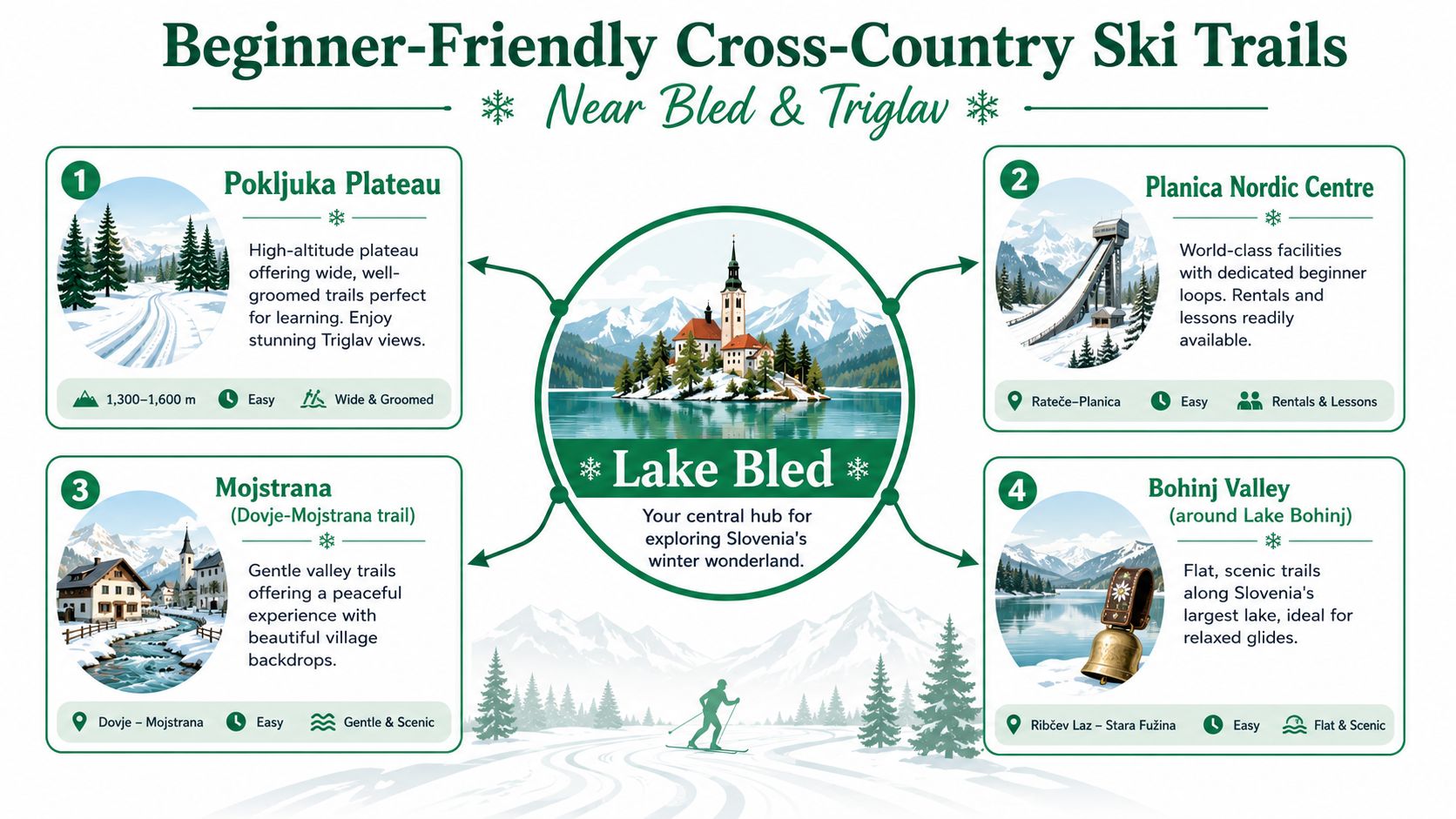
Pokljuka for that true alpine forest feeling
Pokljuka sits on a high plateau above Bled, wrapped in dark spruce forest and open snowy clearings. For many visitors, Slovenia's winter atmosphere feels strongest in this setting. The air is colder, the snow often feels more settled, and the trails have that clean, quiet look people imagine when they think about Nordic skiing.
For beginners, Pokljuka is appealing because the setting itself slows you down. You don't feel rushed. You focus on gliding, breathing, and finding your rhythm among the trees.
Bohinj for wide space and scenic confidence
Bohinj gives a different mood. The valley opens up, the views feel broader, and the whole outing can feel gentler and more spacious. Slovenia's official tourism portal notes that the country has 12 official Nordic centres, and in the Lake Bled area, Bohinj offers over 70 km of groomed trails in optimal snow conditions in its guide to unforgettable cross-country experiences.
That scale matters because it means choice. A beginner can stay on easier sections and still enjoy a memorable day. A more confident skier can gradually explore farther.
Bohinj is excellent for people who want the reward of mountain scenery without the feeling of being pushed into a difficult route.
If you're planning a Bohinj winter day more broadly, this page on Vogel and the Ukanc Bohinj area helps place the region in context.
Planica for easy access and polished facilities
Planica feels more structured. The Nordic centre is well known, the facilities are organised, and beginners often appreciate that sense of order. If you want rentals, marked areas, and a straightforward start, Planica is often one of the easiest places to feel looked after from the moment you arrive.
The atmosphere is different from a quiet valley trail. It's more purposeful. For many first-timers, that's reassuring.
Mojstrana and nearby valley routes for a softer first outing
If your ideal first day involves less pressure and more gentle movement, valley routes near Mojstrana can be a lovely choice. The setting feels local and lived-in, with villages, fields, and mountain backdrops rather than a big sports-centre atmosphere.
These routes suit travellers who want to learn at their own pace and stop often.
- Choose Pokljuka if forest scenery is your dream setting.
- Choose Bohinj if you want variety and broad open views.
- Choose Planica if you value clear services and an easy rental setup.
- Choose Mojstrana if you want a peaceful introduction away from busier hubs.
Safety Tips and Trail Etiquette for a Great Day
A good cross-country day usually looks effortless from the outside. The reason is simple. The skier prepared well before stepping onto the trail. Safety here isn't about drama. It's about staying warm, moving comfortably, and avoiding small mistakes that can spoil an otherwise beautiful day.
What to do before you start
Clothing matters more than fancy gear. Dress in layers you can adjust as you warm up. Avoid cotton because once it gets damp, it stops being comfortable fast. Bring water, a small snack, and gloves that let you hold poles easily.
A few habits make a big difference:
- Check local conditions before leaving. Weather can change quickly in alpine regions.
- Tell someone your plan if you're heading out independently.
- Start shorter than you think for your first session. It's better to finish wanting more than to spend the final stretch exhausted.
How to behave on groomed trails
Trail etiquette is one of those things no beginner wants to get wrong. Fortunately, the basics are simple.
In classic skiing, stay in the prepared tracks unless you need to move aside. Skate skiers use the wider groomed lane next to the tracks. If you stop, step off the trail so others don't have to break rhythm around you.
When passing, communicate clearly and early. A calm “Track” or “On your left” is usually enough. The point isn't to sound formal. It's to avoid surprise.
Move predictably, leave space, and treat the trail like a shared path rather than a race course.
The beginner mindset that keeps you safer
Many small falls happen because people tense up and rush. Relaxed skiing is safer skiing. Keep your knees soft, look ahead rather than down at your skis, and accept that awkward moments are part of learning.
If the terrain suddenly feels steeper than expected, there's no shame in slowing down, stepping out of the track, or even walking a short section. Good judgement always looks better than forced confidence.
Start Your Slovenian Ski Adventure Here
Getting started with tek na smučeh can seem complicated until you break it into one simple plan. Choose a beginner-friendly location, rent the right gear, and learn the basic movement on easy terrain. That's enough for a very good first day.
The other piece that reassures many travellers is cost. At Planica, for the 2025/2026 season, daily cross-country access is listed at €8 for adults, €4 for children aged 6 to 12, and €6 for organised groups of 10+. A full rental set of skis, boots, and poles costs €19 per day for adults and €15 per day for children, according to Planica Nordic Centre pricing. For someone testing the sport, that's a practical way to start without buying equipment.
Why beginners do better with guidance
The first hour matters a lot. A small correction in posture, balance, or timing can save you a full day of frustration. That's why guided instruction helps so much with cross-country skiing. You learn faster, feel safer, and usually enjoy the scenery more because you're not constantly second-guessing every movement.
A good beginner day often includes:
- Properly fitted rental gear so the skis match your goals
- A suitable trail choice instead of a route that's too demanding
- Simple technique coaching focused on balance, stopping, and turning
- Local judgement about snow conditions and where to ski that day
A winter activity that stays with you
The lovely thing about cross-country skiing in Slovenia is that it doesn't need to become a grand personal project. It can just be one unforgettable morning near Bled. Then another. And often, that first glide through a quiet snowy expanse ends up becoming one of the most vivid memories of the whole trip.
If you're visiting in winter, this is one of the most natural ways to meet the country on its own terms. Calm, active, scenic, and welcoming.
If you'd like an easy, beginner-friendly way into Slovenia's winter trails, take a look at Outdoor Slovenia Activities. They're based near Lake Bled and organise guided outdoor experiences with professional instruction, equipment, and smooth logistics, which makes a first day on snow feel much less complicated.