
Bled recorded 499,659 tourist arrivals and 1,216,324 overnight stays in 2025, with an average stay of 2.4 days, so the best things to do in Lake Bled with kids are the ones you can pack into a half-day or a day without wearing everyone out. For most families, the right choice depends on the children's ages, water confidence, energy, and the weather, younger children usually do best with the lake, island, and easy walks, while older children and teenagers may be ready for guided kayaking, rafting, or canyoning.
That short stay pattern matters in practice. Bled is busy, compact, and easy to over-plan, especially if you try to fit in too many activities between naps, meals, and changing conditions on the water. I work with families who want the day to feel calm rather than rushed, and the biggest difference usually comes from choosing the right pace, not the most attractions.
The list below is built around those real family decisions. Some options are gentle and flexible, some need stronger legs or better water confidence, and some work best when the weather is settled and the guide can adjust the plan to current conditions. OUTdoor Slovenia is based in Bled and runs guided outdoor experiences that fit that kind of planning, especially when families want to keep logistics simple and avoid wasting time between activities.
Table of Contents
- 1. Sit-On-Top Kayaking on Lake Bled
- 2. Canyoning for Families and Teenagers
- 3. Lake Bled Exploration and Boat Tours
- 4. Bled Island Church Visit and Wishing Bell Tradition
- 5. Hiking Around Lake Bled and Nearby Trails
- 6. Rafting on the Sava Dolinka River
- 7. Triglav National Park Day Excursions and Scenic Drives
- 8. Combination Adventure Days
- Lake Bled with Kids: 8-Activity Comparison
- Build a Day Your Family Can Actually Enjoy
1. Sit-On-Top Kayaking on Lake Bled
Sit-on-top kayaking gives families an easy way onto the water. The boat feels stable, the paddling is simple to learn, and children can stay close to an adult while still doing something active. On a calm morning, it works well as a first lake experience for younger children or anyone who is unsure about open water.
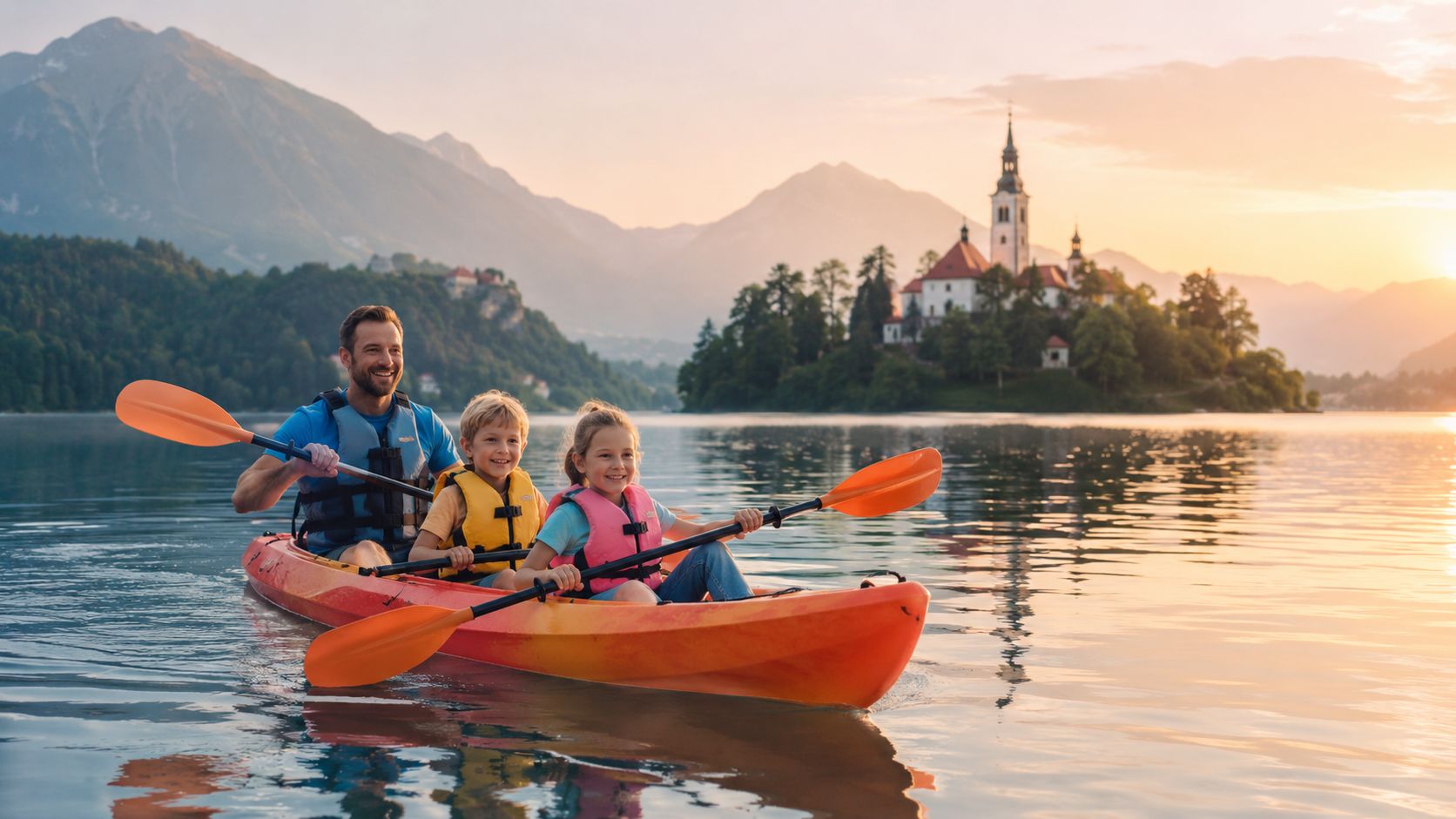
Water confidence matters here. Children who are relaxed in a life jacket and happy to follow simple instructions usually settle in quickly, while nervous kids may need a shorter outing and a calmer launch spot. That is why a guided start helps. It gives children a few minutes to learn paddle control, balance, and how to correct the boat if it drifts, and it gives parents a clearer read on whether the setup suits their child.
Practical rule: start with a shorter paddle and treat it as a test run, not a performance. A child who enjoys twenty calm minutes on the lake is easier to build on later than one who gets cold or tired halfway through a longer trip.
A few practical habits make the outing easier:
- Choose a calm morning. The water is usually less crowded and easier for children to handle.
- Fit life jackets properly. A loose jacket makes kids feel insecure before the boat even moves.
- Pack sunscreen and water. Open water and reflected light burn faster than many families expect.
- Use a waterproof bag. Phones, snacks, and spare clothes stay dry and within reach.
Physical demand is moderate, but it still adds up if children are not used to sitting and paddling. That makes sit-on-top kayaks a better fit for families who want light activity without committing to a long, technical trip. Before booking, check best kayaks for families and choose the setup that matches your group, then look at OUTdoor Slovenia's kayak rental option if you want a flexible way to get on the lake without a full tour.
2. Canyoning for Families and Teenagers
Canyoning is a better fit for older children and teenagers than for small kids, because it asks for real attention, coordination, and a willingness to get wet, climb, and sometimes jump. Done well, it's not a stunt day, it's a guided progression through a canyon where the group moves together and the guide chooses the safest line based on conditions. For families with teens, that mix of challenge and structure often lands well.
What makes it work for the right age group
The best family canyoning experience starts before anyone gets in the water. Children need a clear picture of what's coming, walking through shallow water, climbing around rock, sliding, and possibly rappelling, so they're not surprised by the first obstacle. Once kids know that they don't have to be fearless, just willing and attentive, the atmosphere changes quickly.
That's also where a local guide matters most. Water levels, grip on the rock, and the group's confidence all affect what's sensible on the day, so the route should fit the family rather than the other way around. A guide who reads those conditions well can keep the outing adventurous without making it messy or unsafe.
Families usually enjoy canyoning most when the child sees it as a shared challenge, not as a test. The best moments are often the quiet ones between the bigger moves, when everyone catches their breath and realises they've handled more than they expected.
Helpful prep is straightforward:
- Explain the movements in advance. Climbing, jumping, and wading are easier to accept when they're not a surprise.
- Use grippy footwear. Slipping is what makes children tense up.
- Bring dry clothes. After a wet canyon, comfort matters as much as the activity itself.
- Start with an easier route. That keeps the first outing positive and leaves room for harder days later.
If your family is considering a guided trip, OUTdoor Slovenia's canyoning page is the right place to check current options. That's especially useful if you're comparing a more relaxed Bled holiday with a day built around one serious outdoor activity.
3. Lake Bled Exploration and Boat Tours
A boat trip works well when you want Lake Bled without a lot of walking or planning pressure. Children stay engaged because the scenery keeps changing, and parents get a clear view of the island and castle from the water. The trade-off is simple, you give up flexibility on shore, but you gain an outing that feels easy to pace and easy to finish.
The pletna service is part of the lake's living heritage, with a tradition dating back to 1590 and 23 pletna boats operating from pick-up points around the shore. Each boat carries up to 18 passengers, so it suits families who want to stay together rather than split into smaller groups. The official boarding points are in front of Park Hotel, in Mlino, and at Velika Zaka, which makes the logistics straightforward once you decide where to start.
Timing shapes the experience more than most families expect. Earlier departures are usually calmer, with less crowding at the boarding points and less waiting before the boat leaves. Later in the day can still work, but you may spend more time standing around, especially if your children are already tired or impatient.
The ride itself is the main event. Children can watch swans, follow other boats across the lake, and settle into the rhythm without needing much instruction. On warm days, that matters, because the outing stays comfortable even when a shore walk would feel too long.
A few practical points help:
- Choose your start point before you arrive. It saves time and cuts down on last-minute decisions.
- Keep snacks and water ready. Short waits feel longer with hungry children.
- Treat the trip as the activity, not just transport. That makes the boat ride feel worthwhile even if you keep the rest of the day light.
- Pair it with a lakeside walk from a different side of the shore. That gives the day more variety without adding much pressure.
For current family planning, the official Bled boat line information is the most useful starting point.
4. Bled Island Church Visit and Wishing Bell Tradition
Bled Island gives families a clear, contained outing. The boat ride gets you there, the church visit gives the visit a purpose, and the return trip closes the loop without turning the day into a long commitment. For children, that matters. They get a beginning, a middle, and an end, so the experience feels easy to follow.
The draw is the ritual at the church. Ringing the wishing bell gives children a physical moment to remember, and that simple action often matters more than the architecture itself. The tower, stone paths, and church interior add variety, but the bell is what children usually talk about later.
The visit also has a stronger historical feel than a standard lake stop. The church interior is part of that, and so is the climb up to it. If your family likes stories attached to places, Bled Island gives you that without needing a long explanation from the adults.
How to make the island visit work well
Go in with a clear plan. The island is easiest when children know they are heading for a short visit, a bell, and then the boat back. That keeps the outing focused and helps avoid drifting around once the novelty wears off.
The climb to the tower is the main physical factor. It is manageable for many families, but it asks more than a flat lakeside stroll. If your child enjoys steps and small challenges, the climb becomes part of the fun. If they are already tired, cold, or restless, the effort can feel bigger than the reward.
A few simple habits help:
- Prepare children for the steps. The climb is part of the visit, not an extra surprise.
- Bring comfortable shoes. Stone surfaces can be awkward, especially after rain.
- Keep the visit focused. A shorter island stop usually works better than lingering.
- Let children ring the bell themselves. That moment often gives the visit its emotional payoff.
For many families, the island works best as a cultural highlight inside a broader lake day. It suits children who like a clear goal and a small sense of ceremony, and it gives parents a calm, memorable stop without much planning overhead.
5. Hiking Around Lake Bled and Nearby Trails
The simplest family walk around Bled is often the one that works best. The lakeside circuit gives children space to move, lets adults control the pace, and keeps the scenery changing enough that kids don't feel trapped on a single trail. For families with toddlers or children who fade quickly, you don't need to complete the whole loop for the outing to count.
The broader area around the lake also gives you more options than people expect. There are flat sections for easier walking and hillier paths for older children who want a bit more challenge. That makes Bled unusually useful as a base, because you can tailor the route to the child instead of forcing the child to fit the route.
Make the walk work for the age you've got
With younger children, the goal is usually rhythm, not distance. Short breaks, ducks, playground-style pauses, and café stops matter more than checking off the full circuit. Older children and teenagers may enjoy the longer loop or a hill segment because they can connect the walk with views and a clearer sense of achievement.
The official caution here is simple, keep the outing realistic. Families often underestimate how much time gets lost to snacks, photos, and rest stops, so even an easy walk can stretch longer than expected if the children are young. That's normal, and planning for it saves a lot of frustration.
A few practical habits help:
- Start early or later in the day. Midday heat and crowds make the walk feel longer.
- Break it into sections. You don't need to finish the loop.
- Use proper footwear. Uneven ground is harder for tired children.
- Bring water and a snack. Little resets keep the pace steady.
If you want an easy family add-on after the walk, the Grow With Me scavenger hunt guide is a good reminder of how much better children walk when they have a small mission. Around Bled, that same idea works even without a formal game.
6. Rafting on the Sava Dolinka River
Rafting is a stronger fit for children who already like movement, water, and a bit of unpredictability. Unlike canyoning, it doesn't ask each person to climb or rappel individually, so the technical load is lower even though the experience still feels adventurous. That makes it a good bridge activity for families with teenagers who want something more active than a boat ride but less complex than a canyon.
The key is to be honest about the water. Children handle rafting better when they know the boat will move, the guide will give instructions, and they'll need to paddle together rather than sit passively. Once they understand that, the nervous energy tends to settle into focus.
What families usually get right
The most successful rafting trips are the ones where parents don't oversell the experience. If a child expects gentle sightseeing and gets bounced around by current instead, the mood changes fast. If they know it'll be wet, physical, and guided, they're more likely to enjoy the challenge.
Professional guiding matters here because it reduces the guesswork around conditions and route choice. That's especially important for mixed-experience families, where one child may be eager and another may be unsure. A guide can keep that balance under control without making the trip feel over-managed.
Practical rule: put the nervous child closer to the guide if the raft setup allows it. Being able to hear instructions clearly often matters more than bravado.
For a smooth day, keep these basics in mind:
- Wear properly fitted gear. Comfort affects confidence fast.
- Teach the paddle motion early. A short practice run helps.
- Expect to get wet. Dry clothes after the trip make a huge difference.
- Plan a proper meal afterwards. Kids tend to come off the river hungry.
If rafting is on your list, OUTdoor Slovenia's rafting page is the most useful place to check what's currently available. That keeps the focus on the right river day rather than on general assumptions.
7. Triglav National Park Day Excursions and Scenic Drives
Triglav National Park is the obvious next step for families who want more scenery without committing to an overnight mountain stay. The park has no general entrance fee, and it gives you the kind of alpine backdrop that makes a day around Bled feel much bigger than a single lake town. For families, the best use of the park is usually a scenic drive paired with one accessible stop rather than trying to pack in too many long hikes.
The main rule in the park is to stay flexible. Weather changes quickly at altitude, and children feel those changes faster than adults do. If you leave early, keep layers in the car, and choose one or two sensible stops, the day stays enjoyable. If you try to squeeze too much in, you spend the afternoon managing tired legs and cold hands instead of enjoying the scenery.
The park also gives you a useful range of options for mixed-age families. Younger children can handle a short scenic stop or an easy riverside walk, while older children may be ready for a longer outing, especially if the route includes something active and visible like a river or waterfall. The point is not to “do the park” in one go, but to use it in a way the family can absorb.
A few planning habits matter:
- Check weather before you leave. Conditions shift fast in the mountains.
- Start early. Mornings are often calmer and less crowded.
- Bring layers. It can feel much cooler as you gain height.
- Pack food. Limited facilities make snacks essential.
The official family-friendly pricing around Bled also shows why the park works well as part of a broader day. For example, Vintgar Gorge charges children 6–15 just €2, and children under 6 pay €1, which makes it easier to build a lower-cost outing around a park day rather than treating every stop as a major expense. If you want a structured way into the area, OUTdoor Slovenia's Triglav National Park hiking page is a sensible place to look.
8. Combination Adventure Days
Combination days work best for older children and teenagers who still have energy after one activity and want a second challenge. They're less useful for preschoolers, who usually need recovery time after even a gentle outing, but they're excellent for families that want one focused day instead of spreading things thin across the whole trip. The strength of a combination day is pacing, not just variety.
A good family combo is usually built from easier to harder. Starting with rafting or kayaking, then moving to canyoning later in the day, gives children a chance to settle into movement before they face a more technical section. That progression matters because confidence rises when the first part of the day feels manageable.
What makes a combo day succeed
The best versions avoid dead time and unnecessary transfers. Guides coordinate the equipment, timing, and transition so the family isn't constantly packing and unpacking gear or deciding what comes next. That keeps the energy pointed at the experience rather than the logistics.
It also helps when families talk openly about stamina before they book. If one child hates cold water or gets tired quickly, a combo day can turn into a long recovery exercise rather than a fun adventure. On the other hand, teenagers who want momentum often enjoy the feeling of stacking two activities into one day.
Keep the day practical:
- Start with the easier activity. Warm-ups build confidence.
- Bring spare dry clothes. You may change more than once.
- Pack filling snacks. Kids burn through energy quickly when they're active all day.
- Leave space between sessions. Rest is part of the plan, not wasted time.
If you want to see how a multi-activity day might fit together, the Simsima trip packs show the kind of structure families sometimes look for when they want variety without planning every transition themselves. Around Bled, the same logic applies even more strongly because short stays reward clean, simple scheduling.
Lake Bled with Kids: 8-Activity Comparison
| Activity | Implementation complexity | Resource requirements | Expected outcomes | Ideal use cases | Key advantages |
|---|---|---|---|---|---|
| Sit-On-Top Kayaking on Lake Bled | Low, simple booking and basic instruction | Sit-on-top kayaks, life jackets, short time window, optional guide | Gentle exercise, water confidence, scenic exploration | Families with young children, beginners, mixed-ability groups | Stable, low-risk, easy supervision |
| Canyoning for Families and Teenagers | Moderate, guided routes and safety briefings required | Harnesses, ropes, helmets, wetsuits, professional guide, 3–4 hrs | Confidence, teamwork, physical challenge, memorable adventure | Teenagers and fit families seeking active challenge | Immersive natural setting; guides adapt difficulty |
| Lake Bled Exploration and Boat Tours | Very low, bookable tours, minimal planning | Boat operator (pletna or motorized), tickets, 1–2 hrs | Relaxation, cultural context, iconic views and photos | Families with infants/elderly, rest days, photography | Inclusive, educational, iconic local experience |
| Bled Island Church Visit and Wishing Bell Tradition | Low, requires boat transfer and brief walking/stairs | Boat transfer, short shore visit, bell tower (99 steps) | Cultural ritual, panoramic views, memorable family moment | Families wanting cultural highlights and short activities | Unique tradition, manageable time, strong photo opportunities |
| Hiking Around Lake Bled and Nearby Trails | Low–Moderate, select route based on ability | Comfortable shoes, water/snacks, variable time (short to full loop) | Exercise, nature education, flexible scenic views | Families of varied fitness, budget travelers, flexible schedules | Flexible distances, free or low-cost, adaptable for all ages |
| Rafting on the Sava Dolinka River | Moderate, guided trips tailored to water class | Rafts, paddles, helmets, life jackets, wetsuits, guides, 2–3 hrs on water | Teamwork, adrenaline, improved water skills | Families with older children (8+), groups seeking excitement | Adjustable difficulty, high excitement with professional safety |
| Triglav National Park Day Excursions & Scenic Drives | Low–Moderate, planning for routes and weather | Transport, optional guided hikes, picnic supplies, full-day option | Exposure to alpine ecosystems, education, varied vistas | Families wanting scenic day trips and nature learning | Diverse activities in one area; combine drives, hikes, water sports |
| Combination Adventure Days (Rafting + Canyoning + Others) | High, multi-activity logistics and timing | Multiple activity equipment, long day (6–8 hrs), guides, transport | Broad skill-building, sustained engagement, varied experiences | Active families/teenagers with limited time wanting variety | Maximizes variety and value; guided progression across activities |
Build a Day Your Family Can Actually Enjoy
The best family day in Bled isn't the one with the longest list. It's the one that matches the child's age, water confidence, and energy, then leaves enough room for weather changes, snacks, and a real break in the middle. For younger or mixed-ability families, a boat trip or island visit pairs naturally with an easy lakeside walk. For older children and teenagers, guided kayaking, rafting, or canyoning makes more sense, especially when the guide can adapt the route to the conditions and the group.
That's the practical trade-off around Lake Bled. Gentle activities are easier to manage, but they need the right timing so children don't get bored. Active outings are more memorable for older kids, but they only work when everyone is prepared for getting wet, moving a lot, and changing pace quickly. If you keep the day short and choose one main highlight, the whole family usually enjoys it more.
Two sample day plans work well in real life. A gentle lake day can start with an early pletna or boat trip, continue with Bled Island and the wishing bell, then finish with a shortened lakeside walk and an easy lunch stop. An active day for older children or teenagers can be built around one guided water activity, then a deliberate recovery window with dry clothes, a snack, and time to sit before heading back out.
Pack for comfort, not just for the photo. Layers matter because the lake can feel cool in the morning and warmer later. Water, sunscreen, dry clothes, and footwear with grip matter even more if you're moving between shore, boat, and trail. Before you book, check activity details, availability, meeting arrangements, and current prices directly with the provider, because those practical details decide whether the day feels smooth or stressful.
If you want a Bled-based operator that understands family pacing, weather, and short-stay planning, explore the current options at Outdoor Slovenia Activities.
If you're planning things to do in Lake Bled with kids, Outdoor Slovenia Activities can help you keep the day simple and active without overcomplicating the logistics. We guide families through kayaking, rafting, canyoning, and combination days with a focus on safety, clear instruction, and the right pace for the group. Visit Outdoor Slovenia Activities to see what's currently available and choose the trip that fits your family best.