
You've already walked around Lake Bled, taken the photographs, and probably had your first slice of cream cake. By early afternoon, the practical question usually appears: what can you do next without turning the day into a rushed checklist?
Bled works particularly well when you combine a calm lake activity with one properly chosen outdoor experience. You can spend the morning on the water, walk through a gorge, join a guided canyoning trip, or head towards the Julian Alps, then return to the same accommodation rather than repacking for every excursion. This guide focuses on what each activity is like, who it suits, and how to fit it into a realistic two or three-day stay.
Table of Contents
- Why Lake Bled Works as an Active Holiday Base
- Easy Lake-Side Activities for Your First Day
- Canyoning Near Lake Bled for Beginners
- Rafting and Kayaking on the Sava Dolinka
- Day Trips Beyond the Lake Vintgar Pokljuka and Triglav
- Sample Itineraries for a 2 or 3 Day Stay
- Best Season and Weather Windows for Each Activity
- Safety and Packing for Active Days Around Bled
- Booking Logistics Pickups Group Sizes and What to Check
- Quick Reference Activity Match by Traveller Type
- Planning Your Trip From Here
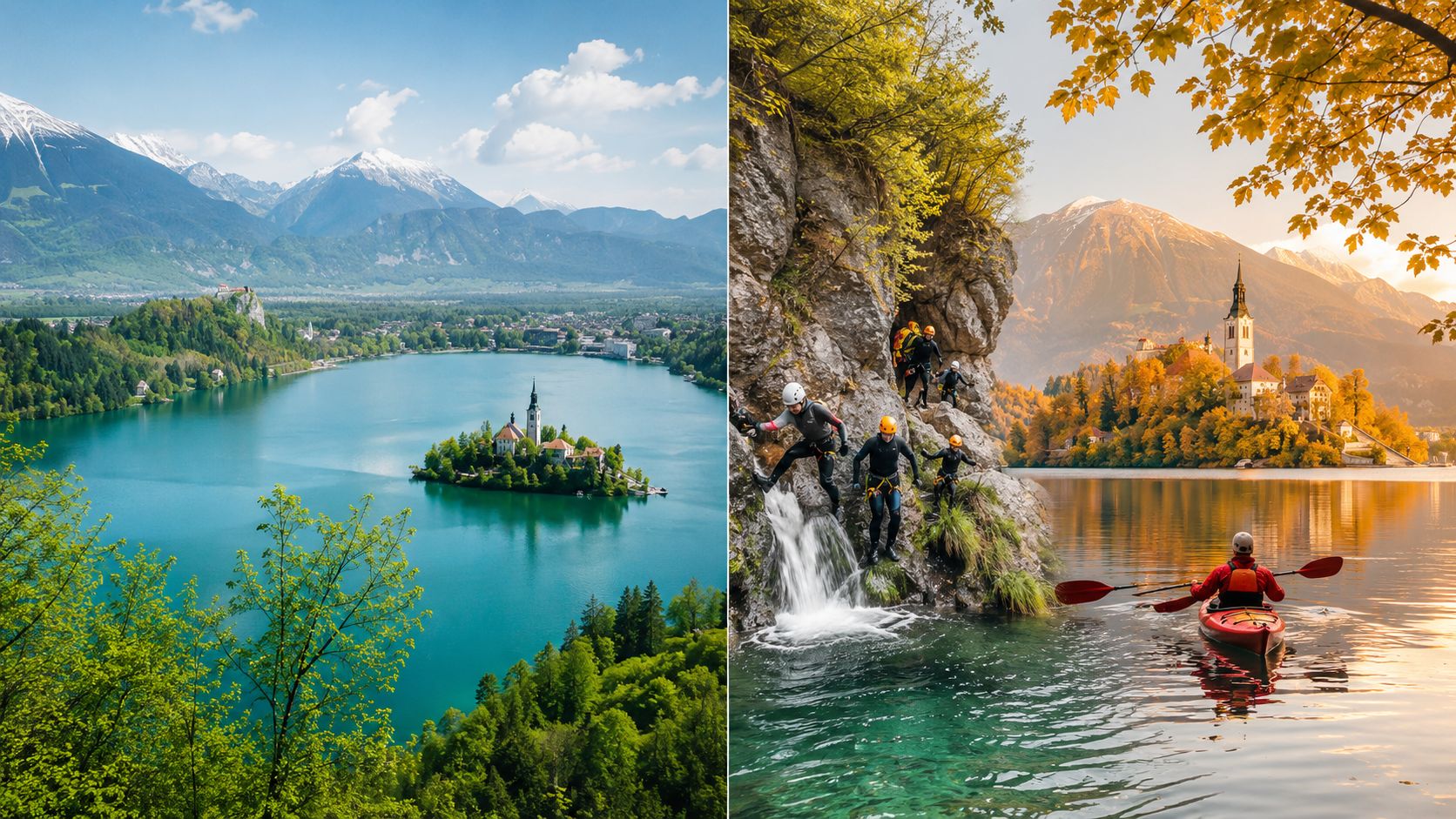
Why Lake Bled Works as an Active Holiday Base
The useful thing about staying in Bled is the variety of scenery within a short drive. The lake itself gives you flat walking, traditional boat trips and easy sightseeing. Beyond it, the Sava Dolinka valley offers river activities, while the surrounding alpine and forested areas lead towards Vintgar Gorge, Pokljuka and Triglav National Park.
That variety matters when a group has different expectations. One traveller may want a quiet morning beside the water, while another wants cold water, scrambling and a guide-led descent. You don't have to choose a single style of holiday, and you don't need to change accommodation to move between them.
Bled also has a strong visitor flow, so planning isn't just about finding attractions. Bled Municipality recorded 499,659 tourist arrivals and 1,216,324 overnight stays in 2025, with an average stay of 2.4 days. It represented 7.1% of Slovenia's arrivals and 6.8% of national overnight stays, according to the official Bled tourism statistics. In practical terms, many visitors have limited time and need activities that fit neatly into half-day or full-day plans.
Local planning rule: Put one demanding activity into the day, then leave space around it. Canyoning followed by a relaxed lakeside evening works better than adding another strenuous mountain outing.
Arrival is straightforward by road, rail or bus, although the final logistics for an outdoor activity still need checking. A local operator can reduce that friction with organised transport and equipment, while self-guided walks and lake visits give you flexibility. The strongest Bled itineraries use both.
Easy Lake-Side Activities for Your First Day
Start with the lakeside walking route if you've just arrived. The circuit is broadly flat and gives you a clear orientation of the castle, island, shoreline and surrounding hills. It suits prams and mixed-age groups better than the steeper viewpoints, but much of the route is exposed, so midday sun can make an easy walk feel longer than expected.
The traditional pletna boat is the classic way to reach Bled Island. Local records trace pletna boats to 1590, and the official tourism site lists 23 operating boats. Each is a wooden, flat-bottomed boat measuring 7 metres by 2 metres, carrying up to 18 people, with the boatman rowing while standing and using two oars. These details are documented by Bled Tourism's information on pletna boats.
What works for families
Pletna trips are low-effort once you're aboard, but queues can build later in the morning during busy periods. Go early if you want a calmer crossing. Bled Island itself isn't fully pram-friendly because access to the church involves steps, so families with very young children should plan for carrying or leaving the pram on the boat.
A rowboat or pedal boat gives couples and older children more control over the pace. The lake looks calm from the shore, but rowing takes more effort than many first-time visitors expect. Ask about the deposit and return arrangements before leaving the landing point.
Castle timing and terrain
Bled Castle is a better late-afternoon stop when the light softens and the viewpoint becomes more comfortable. The approach includes steep steps, so it isn't the easiest choice for anyone with limited mobility. Combine it with the lake walk rather than treating it as a completely separate outing.
If you're collecting ideas for active travel in other destinations too, this guide to Gisborne trip activities is a useful example of how to compare activities by effort and setting. Around Bled, these gentle options make a sensible first day before committing to guided canyoning or rafting.
Canyoning Near Lake Bled for Beginners
Canyoning is the clearest step up from sightseeing, but beginners don't need previous canyoning experience when they join a properly guided trip. You wear a wetsuit, helmet and harness, then move through a gorge using walking, scrambling, natural slides, swimming and, where conditions allow, optional jumps.
A typical guided morning starts with transport from the Bled area, equipment fitting and a walk to the canyon entrance. The descent isn't a continuous sequence of dramatic jumps. Good guides explain each obstacle, demonstrate the movement and provide a bypass when a participant isn't comfortable or when the conditions make an obstacle unsuitable.
What the day feels like
The physical demands are simple but real. Wet rock is slippery, water is cold and participants need enough balance to move carefully over uneven ground. Basic swimming confidence is important, and the activity is a poor fit for anyone who dislikes cold water or feels uneasy on exposed, wet footing.
Beginner-friendly routes in the wider Bled area can include gorges such as Fratarica and Jereka, but the route used on a particular day depends on water levels, weather, group ability and safety conditions. Heavy rain can change a canyon quickly, which is why a professional operator may alter the plan rather than follow a fixed route.
A canyoning trip should feel controlled, not improvised. The guide's route choice and group management matter as much as the jumps or slides.
Families with teenagers often find canyoning a good fit, provided the young participants meet the operator's current requirements and have the necessary confidence. Younger children, non-swimmers and participants with limited mobility may be better served by a lake activity or an easier walk.
For route details, current availability and the practical requirements, compare the Lake Bled canyoning trip before booking. Treat the product page as the final reference for dates, meeting arrangements and inclusions, since these can change with conditions and season.
Rafting and Kayaking on the Sava Dolinka
The Sava Dolinka is the river valley north of Bled and the main setting for nearby rafting and kayaking. The two activities feel quite different even when they use similar stretches of river.
Rafting gives a group a shared boat, a guide and a more social experience. Participants paddle together while the guide controls the line through the rapids. It generally suits first-timers, families with older children and groups where not everyone wants to manage an individual boat.
Kayaking is more hands-on. Sit-on-top kayaks are stable and approachable, while inflatable kayaks offer a livelier experience with more direct contact with the current. These formats suit active adults and older teenagers who want to paddle, turn and respond to the river themselves.
Choose by control, not just excitement
Rafting is usually the easier group decision. You can talk, paddle together and share the experience, while kayaking asks each participant to stay engaged with their own craft. Both involve splashing and getting wet, so bring a practical attitude rather than expecting a dry sightseeing cruise.
Guided trips commonly provide technical equipment such as a wetsuit, helmet and life jacket, alongside instruction and river transport, but always check the current product page. Morning departures often feel more organised and leave the afternoon open. Afternoon trips can work well after a relaxed morning, although you should allow enough time for changing and the return transfer.
For a broader way to choose a watersport in Europe, compare how much control and water contact you want, not just the activity name. The rafting near Bled activity page is the sensible place to check the current format, route and booking details.
Rafting vs kayaking on the Sava Dolinka
| Format | Best for | Effort level | Water contact | Typical duration |
|---|---|---|---|---|
| Rafting | Families, first-timers and social groups | Moderate, shared paddling | High | Half-day format |
| Sit-on-top kayaking | Active adults and older teens | Moderate to demanding | High | Half-day format |
| Inflatable kayaking | Participants wanting a more interactive river experience | Moderate to demanding | High | Half-day format |
The table is a planning guide rather than a promise of one fixed route. River levels and operating conditions can change the experience.
Day Trips Beyond the Lake Vintgar Pokljuka and Triglav
Vintgar Gorge is the most straightforward half-day excursion from Bled. The route follows the Radovna River on wooden walkways through a narrow gorge, with frequent photo stops and little need for advanced hiking technique. It suits most reasonably mobile visitors, but wet boards, stairs and crowds make sturdy footwear more useful than casual shoes.
Visitor management is strict. Slovenia's Ministry of Natural Resources and Spatial Planning set a maximum of 245 people inside the gorge at one time, with a daily cap of 2,290 visitors, under rules introduced in 2023. The visitor-capacity information for Vintgar Gorge explains why timed entry and early planning matter. Aim for the opening period rather than arriving in the busiest middle of the day.
Moving higher to Pokljuka
Pokljuka changes the feel of the day. The plateau is forested, cooler and less concentrated around one iconic attraction. It works for walking, cycling and quieter viewpoints, but the access road climbs sharply and temperatures can differ noticeably from the lakeshore.
Treat Pokljuka as a place for unhurried movement rather than a quick viewpoint stop. Signage and trail conditions vary, and visitors unfamiliar with the area can lose time choosing a route. A guided walk is useful when you want a suitable trail without spending your limited holiday hours researching maps and access.
Triglav National Park trailheads
Trailheads around Mostec, Studor and routes towards Bohinj offer more scope, but they also demand better judgement about distance, weather and return logistics. Triglav National Park monitors visitor flow using automatic passive infrared counters. Park reporting recorded 277,025 visitors and 780,694 overnight stays in 2023, with pressure concentrated on routes including 391 people per day on the Bohinj to Seven Lakes trail and 1,139 people per day in Vrata Valley, as reported by Triglav National Park's visitor monitoring.
For an easier visit to one of Bled's busiest nearby attractions, check the Vintgar Gorge trip from Bled and confirm the current access arrangements before setting out.
Sample Itineraries for a 2 or 3 Day Stay
A short stay works best when demanding activities don't sit next to each other without recovery time.
Two days
Day one: Start with the pletna crossing and Bled Island, then visit the castle around late afternoon. Walk part of the western lakeside route before returning to your hotel for dinner.
Day two: Join a morning canyoning trip, return to Bled around lunchtime and keep the afternoon unplanned. A gentle lakeside walk or café stop is enough after a wet, active morning.
Three days
Day one: Use the lake for orientation. Walk the shoreline, choose either the boat trip or castle, and keep the evening relaxed.
Day two: Book rafting or kayaking on the Sava Dolinka. The activity takes the active part of the day, leaving time to return to your accommodation, shower and eat without rushing.
Day three: Visit Vintgar Gorge early, then head towards Pokljuka for a quieter afternoon in the forest. Return to Bled before evening rather than trying to add another major attraction.
For families with younger children, replace canyoning or rafting with an easier hike, a designated swimming stop and a cream cake break. Adults can use a later day for a guided river or canyon activity while younger children follow a gentler plan, provided the group arranges transport and supervision separately.
Best Season and Weather Windows for Each Activity
Lake walks, pletna crossings and Bled Island visits can work throughout the year, with quieter mornings outside the busiest summer period. Canyoning generally operates from late spring into early autumn, but heavy rain upstream can make a route unsuitable at short notice.
Rafting is usually most dependable from spring through autumn. Summer water levels can feel different from the shoulder seasons, so don't assume that a familiar route will have exactly the same character on every date. Kayaking decisions also depend on current conditions and participant ability.
Vintgar Gorge can close during winter conditions, including ice, and is generally most practical from late spring into autumn. Pokljuka remains cooler than the lake, and snow can persist later on the plateau. For first-time visitors, summer and early autumn usually offer the simplest trail planning.
In the shoulder seasons, plan around a weather window rather than forcing a full-day schedule. A half-day activity gives the operator more room to adjust the route safely.
Safety and Packing for Active Days Around Bled
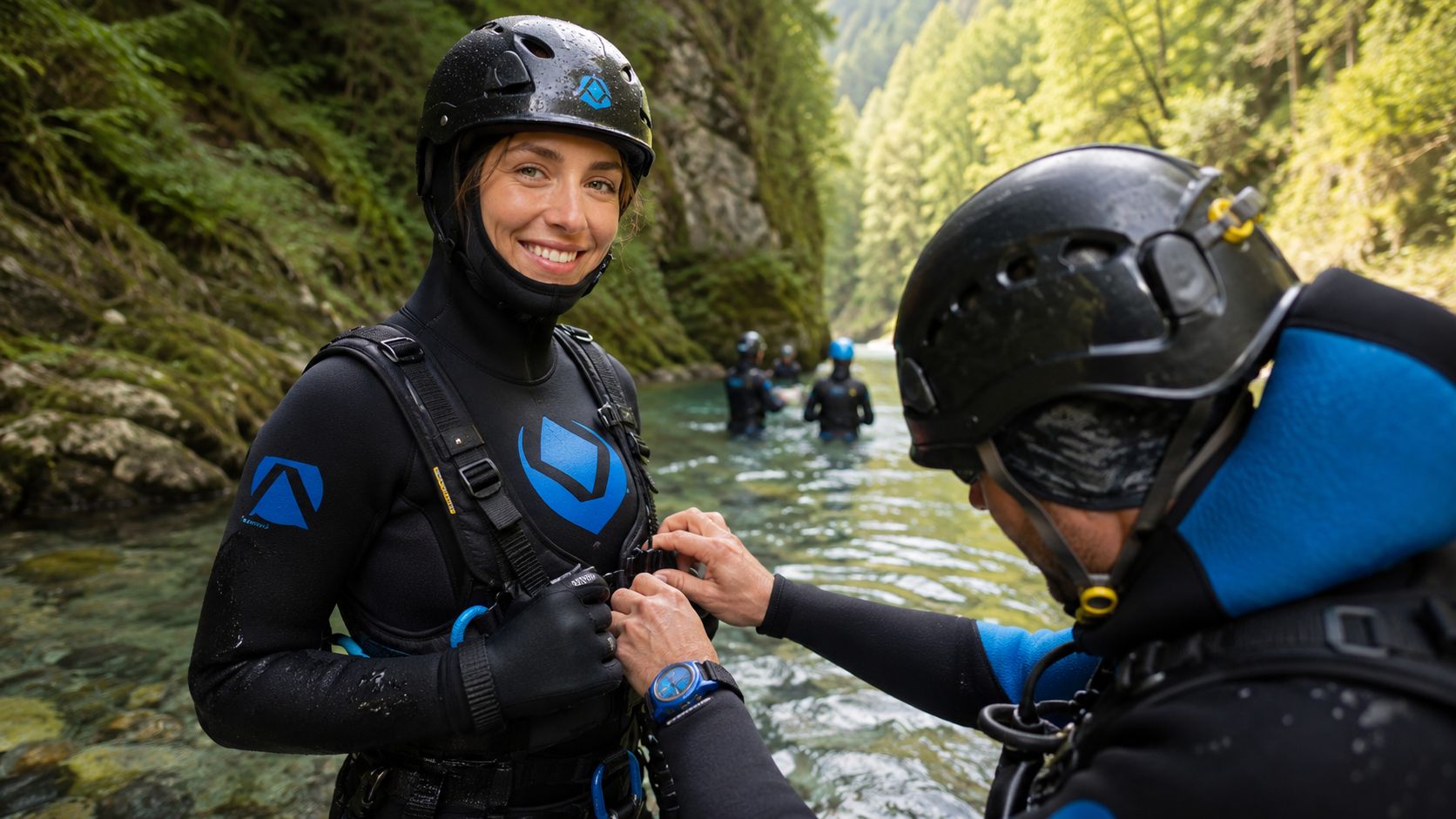
Pack for the activity, not the photograph. Canyoning and river trips require proper technical equipment and professional supervision. Don't enter a canyon or whitewater section independently because the weather, water level and route conditions can change faster than a visitor can assess them.
Footwear is particularly important. Secure sports sandals with heel straps or old trainers are more useful on wet ground than flip-flops. For a lake walk, comfortable shoes, sunscreen and a refillable bottle cover the basics, while a dry bag protects phones and keys during water activities.
Triglav National Park has clear restrictions. The park code prohibits driving, stopping or parking motor vehicles in the natural environment, bans drone use without prior consent and prohibits open fires except in designated or specifically permitted situations. The Triglav National Park visitor code of conduct is worth checking before a day in the park.
Swimming also isn't automatically allowed everywhere. Swimming in lakes within the first protection area is prohibited under the park act, and national mountain-safety guidance identifies high mountain lakes and streams as sensitive habitats where swimming isn't allowed. Dogs aren't allowed to swim there either, according to the Triglav National Park FAQs.
Booking Logistics Pickups Group Sizes and What to Check
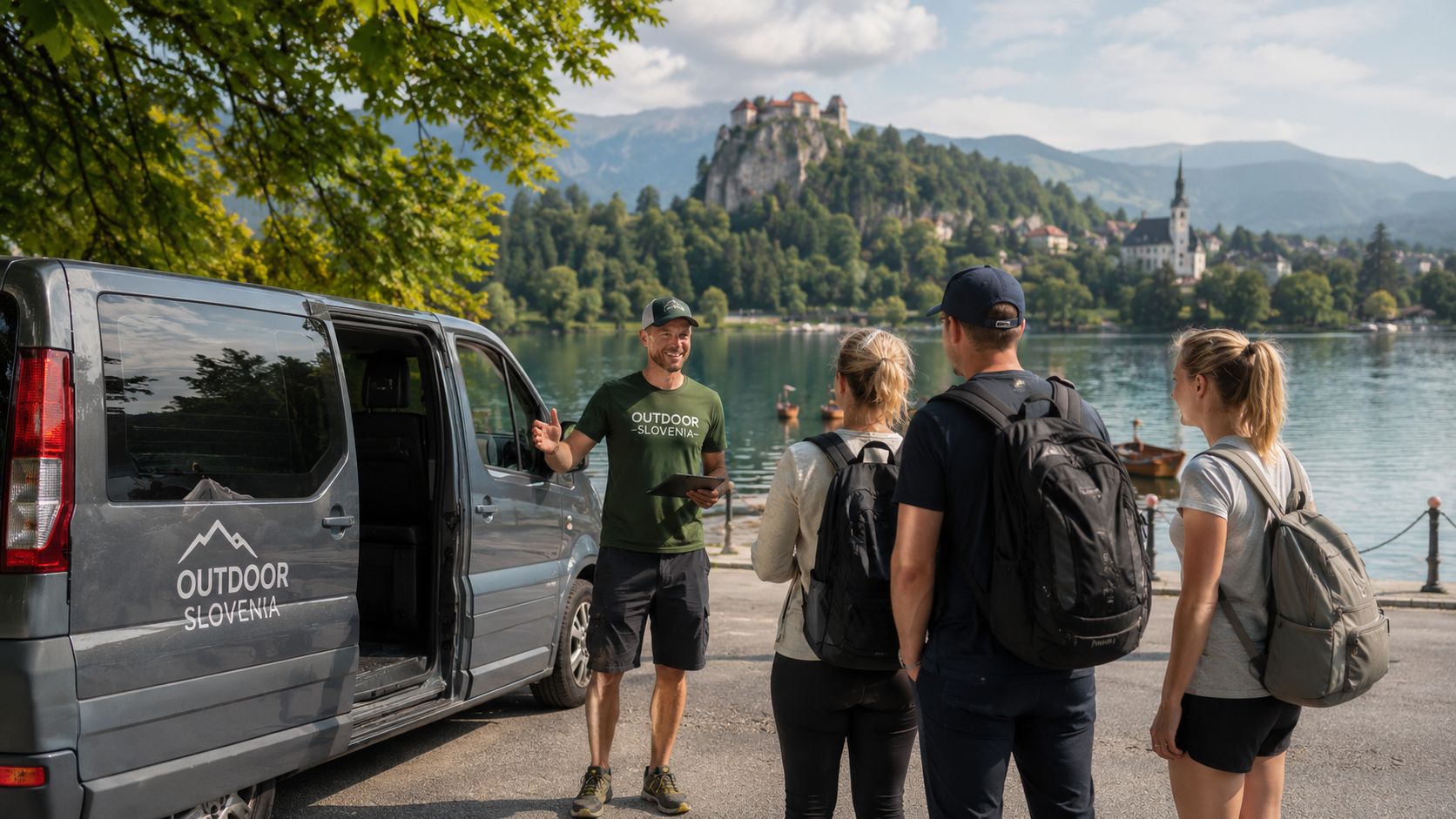
Guided activities are easier to organise when you check the practical details before comparing the photographs. Confirm whether pickup is available from your accommodation, where the meeting point is, what equipment is supplied and how long the full experience takes, including transfers and changing.
Read the current activity page for:
- Included equipment: Check whether wetsuits, helmets, footwear, life jackets and other technical items are supplied.
- Transport: Confirm whether hotel pickup and return are included or whether you need to reach a meeting point.
- Participant requirements: Ask about swimming confidence, mobility, fitness and age suitability before booking for a mixed group.
- Weather decisions: Understand how the operator handles route changes, postponements or cancellations when conditions become unsafe.
- Group format: Smaller groups can make instruction and decision-making easier, particularly for first-time canyoning or kayaking participants.
In July and August, popular morning departures can fill before the rest of your itinerary is settled, so reserve once your dates are reasonably firm. Outside the busiest periods, operators may have more flexibility, but current availability still needs confirmation.
The meeting point can differ from the activity location. A guide may collect several guests in Bled before driving to a river entry point or canyon trailhead, so confirm the exact collection details on the day.
Quick Reference Activity Match by Traveller Type
| Activity | Solo | Couple | Family, young kids | Family, teens | Mixed-ability | Active day |
|---|---|---|---|---|---|---|
| Lakeside walk | Strong fit, easy to do independently | Strong fit, flexible pace | Strong fit, broadly pram-friendly | Strong fit, add another activity | Strong fit, low-effort option | Works as a recovery activity |
| Pletna boat | Strong fit, shared experience | Strong fit, simple planning | Strong fit, low physical effort | Works with caveats, may feel calm | Strong fit, minimal exertion | Best paired with a more active afternoon |
| Bled Castle | Strong fit, clear viewpoint | Strong fit, good late-day stop | Works with caveats, steps are steep | Strong fit, short cultural visit | Works with caveats, check mobility | Useful between active outings |
| Vintgar Gorge | Strong fit, easy to join independently | Strong fit, scenic half-day | Works with caveats, boards and stairs | Strong fit, good photo walk | Works with caveats, uneven access | Strong fit if started early |
| Canyoning | Works with caveats, confidence matters | Strong fit for active couples | Not the best use of time for very young children | Strong fit if requirements are met | Works with caveats, route may need adapting | Strong fit as the main activity |
| Rafting | Strong fit, social format | Strong fit, shared effort | Works with caveats, check age suitability | Strong fit | Strong fit, shared boat helps | Strong fit for a half-day |
| Kayaking | Strong fit for active travellers | Strong fit | Not the best use of time for small children | Strong fit for confident teens | Works with caveats, individual control required | Strong fit |
| Pokljuka walks | Strong fit with route planning | Strong fit, quieter setting | Works with caveats, cooler and less accessible | Strong fit | Works with caveats, choose route carefully | Strong fit for a walking day |
| Triglav trailheads | Works with caveats, navigation matters | Strong fit for prepared hikers | Not the best use of time without careful planning | Works with caveats, effort varies | Works with caveats, route selection is critical | Strong fit for experienced groups |
Planning Your Trip From Here
Start by deciding how many active days your group wants. For a short Bled stay, one guided water or canyon activity is often enough to create a genuine outdoor highlight, while the lake, castle and gorge provide the flexible parts of the itinerary.
Next, sequence effort rather than attractions. A morning canyoning descent followed by a quiet afternoon is sensible. Canyoning followed by a long Pokljuka hike creates an unnecessarily demanding day, especially when the weather changes or the return transfer takes longer than expected.
Check three things against your travel dates:
- Season and water conditions: Ask whether the chosen river or canyon is operating and whether the route has changed.
- Group suitability: Confirm swimming confidence, mobility, fitness and any age requirements for every participant.
- Booking details: Verify pickup location, departure window, equipment, transport, cancellation terms and what happens if weather makes the original plan unsafe.
A local operator fits best as one planned component of a wider Bled itinerary. OUTdoor Slovenia has operated from the Lake Bled area since 2008 and offers guided canyoning, rafting and kayaking experiences for visitors who want instruction, equipment and organised logistics. The company's routes and availability should be checked directly rather than assumed from a general destination article.
For example, a couple might choose a lake morning, a guided canyoning half-day and a final visit to Vintgar Gorge. A family with teenagers could replace the canyon with rafting, while a mixed-ability group might keep the lake walk and pletna trip for everyone, then split the group for a more demanding activity.
The next step is practical. Revisit the canyoning or rafting product page, check availability for your dates and send a question if someone in your group has specific mobility, confidence or experience needs. That small amount of planning usually produces a better day than trying to fit every attraction into the same schedule.
Outdoor Slovenia Activities offers guided canyoning, rafting on the Sava Dolinka and kayaking around the Bled area, with technical equipment and professional instruction for suitable participants. Visit Outdoor Slovenia Activities to compare current activities, check availability and shape one active day around the rest of your Lake Bled itinerary.