
The first time I took friends out just after sunrise, the lake was so still that Bled Island looked doubled, church and reflection floating together in pale gold. An hour later, the boardwalks were busier, the café terraces louder, and they already understood something important about this corner of Slovenia. The famous view is only the beginning.
Most travellers arrive with a shortlist of postcard things to see. The island church. The castle. A mountain backdrop. All worth it. But the places that stay with you longest are the ones you feel in your body: cold spray on your face in a gorge, the grip of canyon shoes on wet rock, the easy rhythm of a paddle stroke as the lake wakes up.
That's why this guide is built a little differently. It's not just a list of landmarks around Lake Bled and Triglav National Park. It's a local-style route through the sights by way of the experiences that bring them alive. Paddle the water instead of only photographing it. Walk above the gorge, then go find the river that carved the valley. Stand beneath the mountains, then step into them with a guide who knows where the weather turns, where the crowds bunch up, and where the day still feels wild.
If you're still sorting your suitcase before you go, these essential travel packing tips are a useful place to start.
Table of Contents
- 1. Lake Bled & Alpine Lake Paddling
- 2. Triglav National Park The Heart of the Julian Alps
- 3. Sava Dolinka River Your First Rafting Adventure
- 4. Vintgar Gorge Walk Above Emerald Waters
- 5. Radovljica Old Town A Sweet Taste of History
- 6. Mount Triglav Summit Slovenia's Iconic Peak
- 7. Slovenian Gorges The Thrill of Canyoning
- 8. Plitvice Lakes National Park A Croatian Day Trip
- 9. Slovenian Ski Resorts Winter Wonderland Adventures
- 10. Design Your Own Adventure The Ultimate Combo Day
- Top 10 Sights Comparison
- Ready to See Slovenia for Yourself?
1. Lake Bled & Alpine Lake Paddling
Some places are made to be approached slowly. Lake Bled is one of them. From the shore, you see the church, the castle, the row of trees tracing the waterline. From a kayak or paddleboard, you notice smaller things: the sound of oars from a pletna drifting across the lake, the castle cliff rising steeper than it looked from the road, the way morning light turns the water from silver to green.
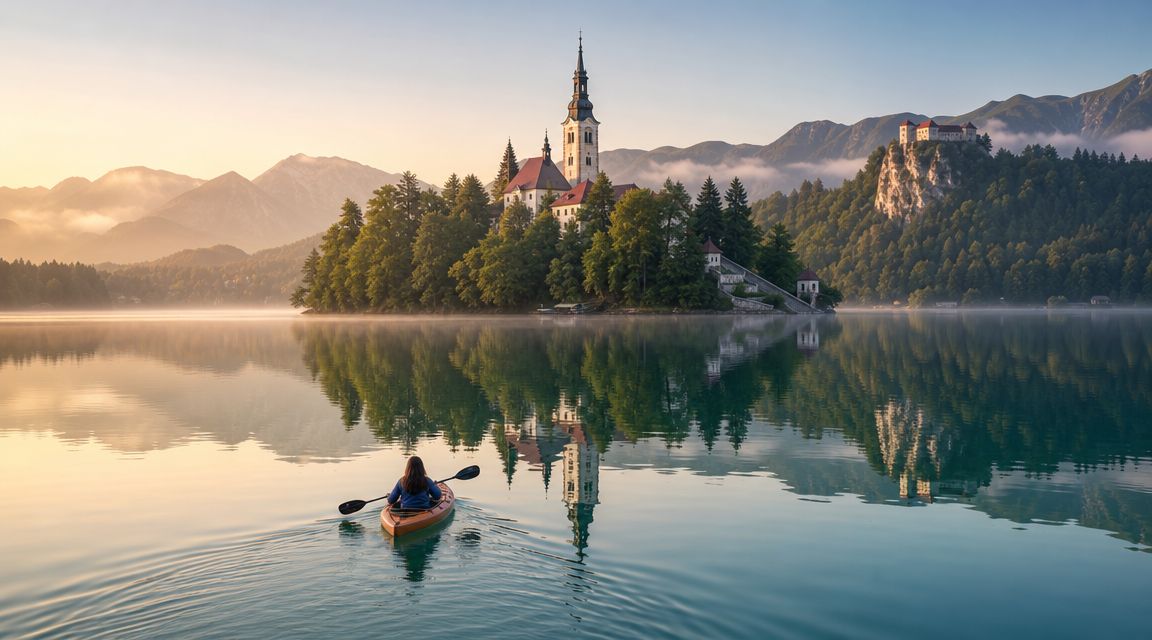
For first-time visitors, this is one of the easiest and most memorable things to see because it doesn't ask much of you. You don't need previous paddling experience to enjoy calm alpine water, and nervous beginners often relax within minutes once the boat starts gliding. Around Bled, many travellers also branch out to quieter nearby lakes, which makes paddling a natural first adventure day.
Best seen from water level
If you want the lake at its gentlest, go early. The hour after sunrise often feels like you've borrowed Bled before the rest of the day arrives. That's when we'd usually choose for a first session with cautious paddlers, families, or anyone who wants photos without a crowd in the background.
A few practical details make the outing much better:
- Start early if you can: Morning water is usually calmer, and the lakeside paths feel less busy.
- Dress for alpine water, not air temperature: Even on a warm day, the lake can feel cool once your hands and legs are wet.
- Choose stable equipment first: If you're unsure, a sit-on-top kayak often feels more reassuring than a narrower boat.
- Bring a dry bag: Phones, keys, and spare layers stay happier that way.
Practical rule: If Bled looks beautiful from the promenade, it looks better from the middle of the lake.
If paddling gives you the bug, it's worth browsing boat and paddle options around Bled before you arrive. Pair the session with a castle visit or an easy lakeside walk and you've got one of the most balanced half-days in Slovenia.
2. Triglav National Park The Heart of the Julian Alps
Triglav National Park is the reason so many journeys through north-west Slovenia feel bigger than expected. It's Slovenia's only national park and covers about 84,000 hectares, roughly 4% of the country's territory, according to this overview of Triglav National Park's scale and significance. That sounds like a simple fact on paper, but on the ground it means you can move from lake country to gorge, from river valley to high alpine world, within a single region.
Its conservation story runs deep too. The first protection steps around the Triglav Lakes Valley date back to 1924 in that same reference, which is one reason the park feels different from a place built only for tourism. People don't just come here to look. They come because the environment still has room to feel wild.
Why the park changes every itinerary
If you're deciding what things to see near Bled, this park is the anchor. It holds the highest parts of the Julian Alps and major watersheds, which is why so many outdoor days begin here or are shaped by it. Rafting routes, hiking plans, scenic drives, gorges, and mountain viewpoints all connect back to the park's geography.
I always tell first-timers not to think of Triglav National Park as one stop. Think of it as the great backdrop and engine of the whole trip. A canyon feels colder because it begins high in the mountains. A river feels cleaner because its water has come through protected valleys. Even a simple roadside viewpoint carries more weight when you know what sits behind it.
Go early, bring layers, and let the park set the rhythm of the day rather than trying to rush through it.
If you want one practical strategy, make Bled your comfortable base and venture out from there. That works especially well for travellers who want one day on quiet water, one day on a river, and one day in the mountains without changing hotels every night.
3. Sava Dolinka River Your First Rafting Adventure
The Sava Dolinka is the river I'd choose for someone who says, “I want to try rafting, but I'm not sure I'm an adrenaline person.” It gives you movement, cold water, clean mountain scenery, and enough excitement to make you laugh without feeling thrown into the deep end. That's a rare balance.
What makes it special isn't only the rafting itself. It's the setting. You're moving through a river corridor shaped by the same alpine system that defines the whole Bled and Triglav area, so the scenery never feels separate from the activity. You're not ticking off one more excursion. You're integrating into the natural setting.
What the first splash feels like
Your first few minutes are usually the same. A quick paddle command. A wobble of the raft. Then the boat starts to work with the current instead of against it, and the nerves disappear. Families often love this section because everyone has something to do, but nobody needs to be an expert.
A few habits make the day easier:
- Arrive with time to spare: Safety briefings and proper gear fitting are part of the experience, not a delay before it.
- Listen closely on the bank: The first commands matter most when the boat enters moving water.
- Wear the full kit properly: A snug wetsuit, buoyancy aid, and helmet make cold water feel manageable.
- Expect to get wet: Even on gentle sections, rafting is more fun when you stop trying to stay dry.
I've seen hesitant guests become the loudest paddlers in the raft by the end of the trip. That's why this is one of the best things to see through action rather than observation. The river teaches confidence quickly, especially when the guide keeps instructions clear and the atmosphere light.
4. Vintgar Gorge Walk Above Emerald Waters
Vintgar Gorge gives you drama with very little effort. The path carries you over clear rushing water, between steep rock walls and bright mossy edges, and nearly every bend looks like a photo someone would insist must be edited. It isn't. That colour is real.
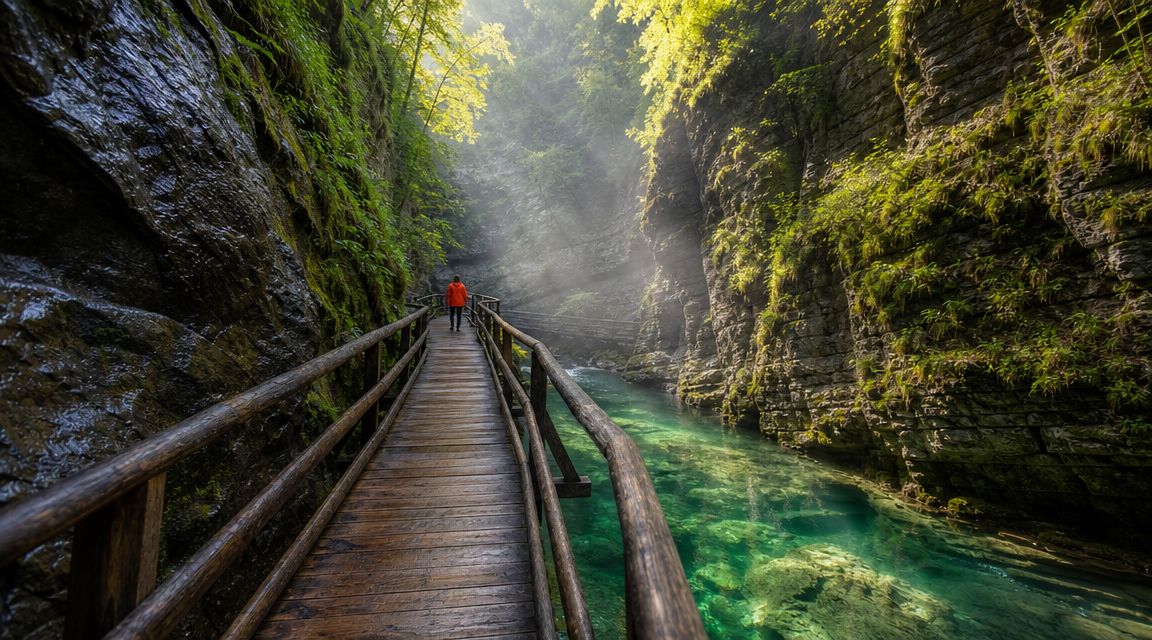
For visitors who want accessible things to see close to Bled, it's one of the easiest wins. You can visit without needing a whole expedition mindset, yet the scenery still feels dramatic enough to satisfy serious nature lovers.
The easy add-on that never feels ordinary
I like Vintgar best at the edges of the day. Early entry gives you softer light and a quieter boardwalk. Late afternoon can be lovely too, especially if you've spent the first half of the day on the lake or river and want a slower second act.
The best approach is to treat it as part of a wider outdoor day:
- Wear shoes with grip: Boardwalks and stone can stay slick.
- Keep your camera or phone accessible: You'll stop often.
- Don't rush the return: The surrounding area rewards a slower pace.
- Pair it with water: Gorge walk in the morning, paddling or rafting later, works beautifully.
The gorge is short enough for casual travellers and vivid enough that even seasoned hikers remember it.
If someone in your group isn't ready for rafting or canyoning, Vintgar is often the place that converts them. They see the colour of the water, hear the force of it under the planks, and start asking what it's like to get closer.
5. Radovljica Old Town A Sweet Taste of History
Not every memorable stop in this region involves a helmet or a wetsuit. Radovljica is where I send people when they need a pause between active days. The old town sits with quiet confidence: pastel façades, arcaded buildings, little shopfronts, and views that remind you the Alps are never far away.
It's one of those places that works best unhurried. Wander the main street, look in the windows, order something sweet, then let the pace drop. After a wet morning outdoors, that change of rhythm feels good.
Slow down for half a day
Radovljica is especially good for mixed groups. One person wants culture, another wants coffee, someone else wants local food, and everyone wants a place that still feels distinctly Slovenian. This town handles that easily.
A gentle half-day here usually works well with a Bled-based itinerary:
- Go in the morning for the calmest feel: Streets and cafés are easier to enjoy before the busiest parts of the day.
- Taste local honey products if you can: The region's beekeeping heritage gives the town extra character.
- Use it as a reset day: It pairs well with a more demanding adventure the day before or after.
- Leave room to linger: The point isn't to rush from sight to sight.
I've had guests tell me later that this was the surprise favourite. Not because it was the grandest landmark, but because it gave their trip breathing space. That matters. Great travel isn't only built from highlights. It's built from contrast.
6. Mount Triglav Summit Slovenia's Iconic Peak
Mount Triglav carries a special weight in Slovenia. Even if you don't climb it, you feel its presence in conversations, views, maps, weather patterns, and local pride. It's the peak people look for on the horizon and the name that gives the national park its identity.
For strong hikers, standing on or near its routes changes the scale of the country. Valleys that looked large from below suddenly seem folded and close. Ridges stretch away in every direction, and the whole Julian world makes more sense.
Not every great Triglav day is a summit day
A lot of travellers hear “Triglav” and think only of the final summit. The smarter approach is to respect the whole progression. A guided ascent can be right for fit beginners, but preparation matters, and so does honesty about your comfort with exposure, long days, and changing mountain weather.
The importance of local guiding becomes evident. Good guides don't just lead the route. They judge conditions, set the pace, manage safety gear, and know when a mountain day should become a scenic high-altitude hike instead of a summit push.
Here's the advice I give most often:
- Treat the mountain seriously: Fitness helps, but mountain judgement matters just as much.
- Book huts well ahead in busy periods: Last-minute mountain planning is usually the stressful kind.
- Start early and layer properly: The temperature and mood of the mountain can shift quickly.
- Be happy with the experience, not only the top: Some of the best memories happen below the summit.
For many visitors, Triglav becomes one of the most meaningful things to see without ever needing to stand on its highest point. A hut terrace at sunset, a ridge walk, or a view of the north faces can be enough to understand why it matters.
7. Slovenian Gorges The Thrill of Canyoning
Canyoning is the closest thing I know to stepping inside the terrain. You don't stand at a viewpoint and admire a gorge from above. You enter it. You descend through it. You swim the pools, slide polished rock, lower yourself down waterfalls, and look up at walls that shut out the ordinary world.
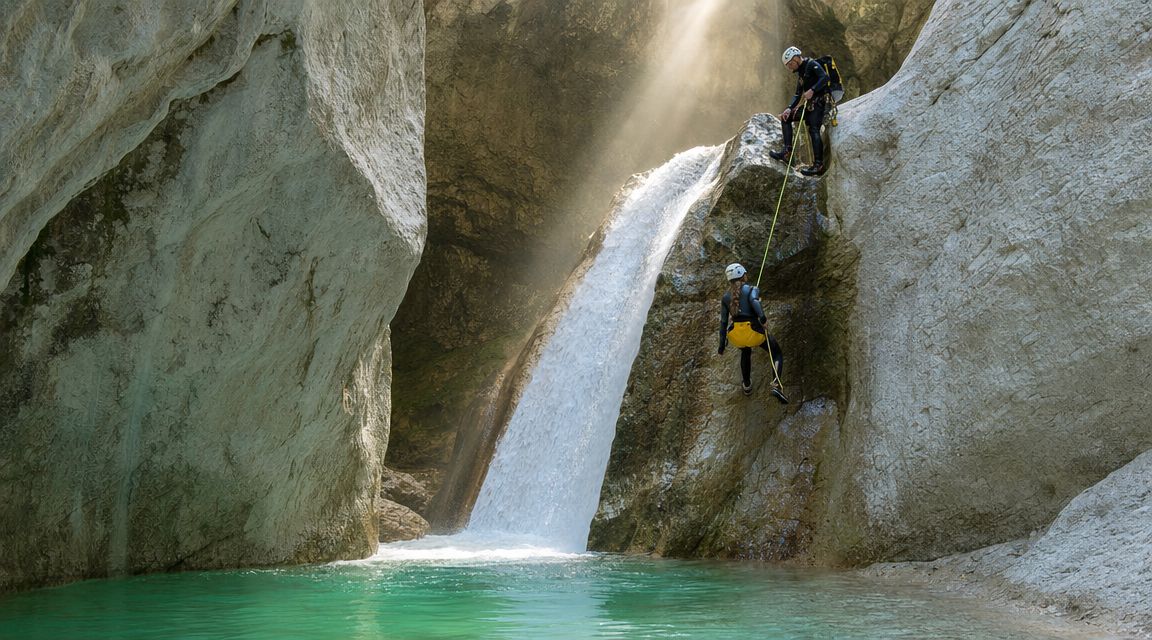
For adventurous visitors around Bled, this is one of the most vivid things to see because it turns scenery into direct contact. The limestone, the cold water, the smell of wet forest, the echo under a narrow rock section. You don't observe those details. You move through them.
The landscape from inside the canyon
First-time canyoners often worry about the technical side more than they need to. With proper equipment, clear instruction, and a suitable beginner route, the day feels structured rather than chaotic. You hike in, gear up, learn the basics, and then take each section one obstacle at a time.
Local advice: If it rained hard recently, ask first and trust the guide's call. Canyon conditions can change fast.
That's also why booking with a qualified operator matters. A proper canyoning day includes helmets, wetsuits, harnesses, and route choice matched to the group. If you're curious what that looks like around Bled, take a look at guided canyoning near Lake Bled.
I've watched people come out of a canyon grinning in that slightly stunned way that means they've done something new and bigger than expected. It's part hike, part swim, part rope work, and completely immersive.
8. Plitvice Lakes National Park A Croatian Day Trip
Plitvice isn't in Slovenia, but it often enters the conversation once travellers start looking beyond the immediate Bled area. If you have extra days and want a regional nature extension, this Croatian park offers a very different style of water scenery from the alpine north. Instead of one lake, one gorge, or one river corridor, you get a layered system of lakes, boardwalks, and waterfalls unfolding one after another.
I wouldn't squeeze it into a short Lake Bled stay. It works best when your trip already has some breathing room. Then it becomes a satisfying contrast.
When to add it to a Slovenia trip
Plitvice suits travellers who love scenic walking and don't mind a longer outing. It's less about adrenaline and more about sustained visual reward. You keep turning corners and finding another cascade, another timber path, another shift in colour.
If you're thinking about adding it, keep the plan realistic:
- Give it proper time: This isn't a stop you enjoy when rushed.
- Wear comfortable shoes and bring waterproof layers: Wooden paths and spray can keep things damp.
- Consider an overnight nearby: A longer regional trip often feels better than a punishing day run.
- Use it as contrast: It's strongest after active Slovenia days, not in place of them.
Plitvice is for the traveller who says yes to one more natural vista. Not because Lake Bled and Triglav aren't enough, but because the wider region has its own rhythm of water, rock, and forest worth seeing too.
9. Slovenian Ski Resorts Winter Wonderland Adventures
Winter changes the whole feeling of this region. Bled becomes quieter, the mountains look sharper, and the days naturally organise themselves around snow conditions, warm layers, and where to stop for something hot after a lesson. If summer in Slovenia is about rivers and gorges, winter is about building confidence on snow and then enjoying everything else clustered around the same base.
That pattern fits what's happening in the broader market too. In the global mountain and ski resort market, skiing and snowboarding accounted for 64.5% of service-related revenue in 2024, while the wider market was estimated at USD 18.01 billion, according to this mountain and ski resorts market report. The same report says adventure-seeker demand is the fastest-growing segment, projected at a 9.6% CAGR through 2033. Around Bled, that supports a simple idea. Build winter days around the slopes first, then add scenic and social extras.
Why winter visitors stay longer in one base
Another useful signal comes from ski travel habits in Slovenia's orbit. Third-party market analysis points to growing demand for all-mountain skis, performance gear, and resort services that go beyond lift access to include dining, snowboarding, tubing, and après-ski, as outlined in this ski market analysis. That's why many visitors now judge a winter break by how much they can do from one convenient base area.
Bled works well for that style of trip. You can head to nearby resorts for lessons, return to the lake for an evening walk, and keep the holiday varied without packing and unpacking every day.
- Book lessons and rentals ahead in busy weeks: Winter logistics are smoother when the basics are locked in.
- Dress in adaptable layers: Morning cold, midday sun, and afternoon shade can feel like different seasons.
- Choose a resort that matches your level: Beginners enjoy the day more when the terrain feels welcoming.
- Look beyond the piste: A ski day plus lakeside sightseeing is often the better holiday memory.
If you're planning snow time, these ski resorts near Lake Bled are a practical starting point.
10. Design Your Own Adventure The Ultimate Combo Day
One of my favourite Bled days started with a couple from Belgium gliding across Lake Bled while the church bell on the island carried over the water. By lunchtime, they were clipped into canyoning gear, laughing nervously at the first jump. A few hours later, they were in a raft on the Sava, soaked, hungry, and already asking how to fit another day of Outdoor Slovenia activities into the trip.
That is the magic of this region. The sights are not scattered attractions to tick off one by one. They connect naturally through the day. A lake becomes a paddle session. A gorge turns into a canyoning route. A river becomes your first rafting run.
The combo day works especially well around Bled because the distances are manageable and the scenery changes fast. In one day, you can move from still alpine water to narrow rock walls and then out onto a river with room to breathe again. You do not spend the whole trip in transit. You spend it doing things.
I usually tell visitors to build the day around one anchor activity, then add a second that changes the pace. Calm morning paddling pairs well with an afternoon rafting trip. If your group wants more adrenaline, canyoning and rafting make a strong match, with a proper food stop in between.
A good plan depends on honesty more than ambition:
- Share real swimming ability and fitness levels: Guides can shape a safer, more enjoyable schedule when they know the group clearly.
- Eat before the first briefing: Cold water and excitement drain energy faster than people expect.
- Bring dry clothes and an extra layer: The reset between activities can make the second half of the day much more comfortable.
- Stay flexible with weather and timing: The smartest itinerary is often adjusted that same morning.
The families and friend groups who remember Slovenia most vividly are often the ones who stop treating these sights as separate stops on a map. They paddle them, jump into them, raft through them, and end the day feeling they actually entered the place instead of only looking at it.
Top 10 Sights Comparison
| Experience | Implementation Complexity 🔄 | Resource Requirements ⚡ | Expected Outcomes ⭐ | Ideal Use Cases 📊 | Key Advantages / Tips 💡 |
|---|---|---|---|---|---|
| Lake Bled & Alpine Lake Paddling | Low 🔄, calm-water, beginner-friendly instruction | Moderate ⚡, kayaks/SUPs, rentals, basic guides, wetsuits | Scenic, relaxed paddling; strong intro to water sports ⭐ | Families, first-time paddlers, photography, half-day trips 📊 | Visit 6–9 AM; choose sit-on-top kayaks; bring dry bag 💡 |
| Triglav National Park | Medium–High 🔄, multi-activity planning; some technical routes | High ⚡, guides, transport, hut bookings, multi-day gear | Deep wilderness immersion; high biodiversity and vistas ⭐ | Full-day or multi-day alpine adventures, serious hikers, conservation-focused visitors 📊 | Book guides/huts in advance; June–Sept best; layer clothing 💡 |
| Sava Dolinka River (Rafting) | Low–Medium 🔄, guided, short section with basic instruction | Moderate ⚡, rafts, wetsuits, guides, transfers | Safe beginner rafting with dramatic canyon scenery ⭐ | Beginner rafters, families, short-adventure bookings 📊 | Wear thick wetsuit; book morning departures; arrive early 💡 |
| Vintgar Gorge | Low 🔄, maintained boardwalk, easy access | Low ⚡, entrance fee, sturdy shoes, short walk | High visual impact and easy hiking; strong photo opportunities ⭐ | Families, casual hikers, half-day itinerary add-on 📊 | Go early (7–8 AM), wear grippy shoes, allow 2–3 hours 💡 |
| Radovljica Old Town | Low 🔄, simple cultural visit, short walking loop | Low ⚡, time for museum/shop visits, modest fees | Cultural enrichment and local heritage insights ⭐ | Cultural complements to adventure trips, museum and food lovers 📊 | Visit 9–11 AM; sample local honey; pre-book museum tours 💡 |
| Mount Triglav (Summit) | High 🔄, long ascent, technical sections on some routes | Very high ⚡, certified guides, hut reservations, mountaineering gear | Iconic summit achievement with panoramic rewards ⭐ | Experienced hikers or fit beginners with guides aiming for summit goals 📊 | Hire a guide, acclimatize, start pre-dawn, book huts weeks ahead 💡 |
| Slovenian Gorges (Canyoning) | Medium–High 🔄, technical descents, rope work, guided only | High ⚡, harnesses, ropes, helmets, thick wetsuits, certified guides | Intense, full-body adventure and striking visuals; adrenaline focus ⭐ | Adventure seekers; beginners on Grade 1–2; summer-only activities 📊 | Choose Grade 1–2 initially; wear ≥5mm wetsuit; avoid rain periods 💡 |
| Plitvice Lakes (Croatia Day Trip) | Medium 🔄, long-day logistics and park navigation | Moderate–High ⚡, 2+ hr transfer, entrance fees, comfortable footwear | UNESCO-level waterfall landscapes and extensive boardwalk exploration ⭐ | Nature photographers, multi-day regional tours, UNESCO-focused visits 📊 | Enter at opening (7–8 AM); allow 6–8 hrs; consider overnight stay 💡 |
| Design Your Own Adventure (Combo Day) | High 🔄, coordinated multi-activity scheduling and risk management | High ⚡, multiple guides, varied equipment, transfers, photography | Broad skill exposure, high value, varied experiences in one day ⭐ | Families, corporate teams, mixed-skill groups, short-stay visitors wanting variety 📊 | Match activities to fitness; inform guides about non-swimmers; eat well pre-trip 💡 |
Ready to See Slovenia for Yourself?
Lake Bled gets the attention first, and fair enough. The island church, the cliffside castle, the ring of mountains behind them. It's one of the most recognisable scenes in Europe. But after enough days guiding people through this region, I've become convinced that the lasting memories usually come from what happens beyond the obvious viewpoint.
They come from the cold bite of river water on your ankles while you listen to a rafting guide on the bank. From the quiet wobble of a kayak settling under you for the first time. From that moment in a canyon when you look up, dripping and laughing, and realise the gorge is now something you've moved through rather than merely photographed. Even the gentler stops, like Vintgar or Radovljica, land differently when they sit inside a trip that also includes movement, weather, effort, and a bit of adventure.
That's what makes this part of Slovenia so rewarding. The things to see aren't isolated attractions scattered on a map. They connect. The national park shapes the rivers. The mountains shape the weather. The water shapes the valleys, the gorges, the routes people take, and the stories they come home with. You can feel that connection most clearly when you stop treating the natural environment like a backdrop and start stepping into it.
For first-time visitors, that doesn't mean everything needs to be extreme. Quite the opposite. Some of the best days here are beginner-friendly and family-friendly. Calm paddling on a lake. A guided rafting trip on accessible water. A gorge walk in the morning and a scenic town in the afternoon. With the right planning, you can keep the adventure high and the stress low.
It also helps to be realistic. Alpine weather changes. Water stays cold even on warm days. Good footwear matters. Guides matter. Booking the right activity for your confidence level matters. Slovenia rewards curiosity, but it rewards preparation too. When those two meet, the trip feels easy in the best sense. Safe, smooth, and full of moments that still feel spontaneous.
If you want to turn this list into an actual itinerary, Bled is one of the easiest bases to use. From there, you can build a few days around lakes, rivers, gorges, mountain viewpoints, and winter slopes depending on the season. Outdoor Slovenia Activities is one local option for guided experiences around rafting, canyoning, kayaking, full-day excursions, and winter lessons, which can make that planning simpler if you'd rather not piece every transfer and activity together on your own.
Slovenia isn't only a place to look at. It's a place to move through. That's when it becomes unforgettable.
If you're ready to swap screenshots for real memories, explore the guided trips at Outdoor Slovenia Activities and start building a Bled and Triglav adventure that fits your pace, season, and confidence level.