
The night before a coastal trip in Slovenia, travelers often do the same thing. They open a weather app, type in Koper, and assume the numbers on the screen are enough to plan a kayak launch, a beach walk, or a canyoning day.
That's where the trouble starts. Weather Underground Koper often sits inside a broader coastal weather maze, and the data you see may not come from Koper itself. It can be close enough to look useful and far enough to mislead you when wind, humidity, and rain move differently along the Adriatic edge.
Table of Contents
- Why Koper Weather Forecasts Often Mislead Outdoor Travellers
- Navigating Weather Underground for Accurate Koper Data
- Coastal Versus Alpine Microclimates in Slovenia
- Cross-Referencing Forecast Sources for Reliable Planning
- Translating Forecasts into Packing and Scheduling Decisions
- Last-Minute Safety Checks Before Your Adventure
Why Koper Weather Forecasts Often Mislead Outdoor Travellers
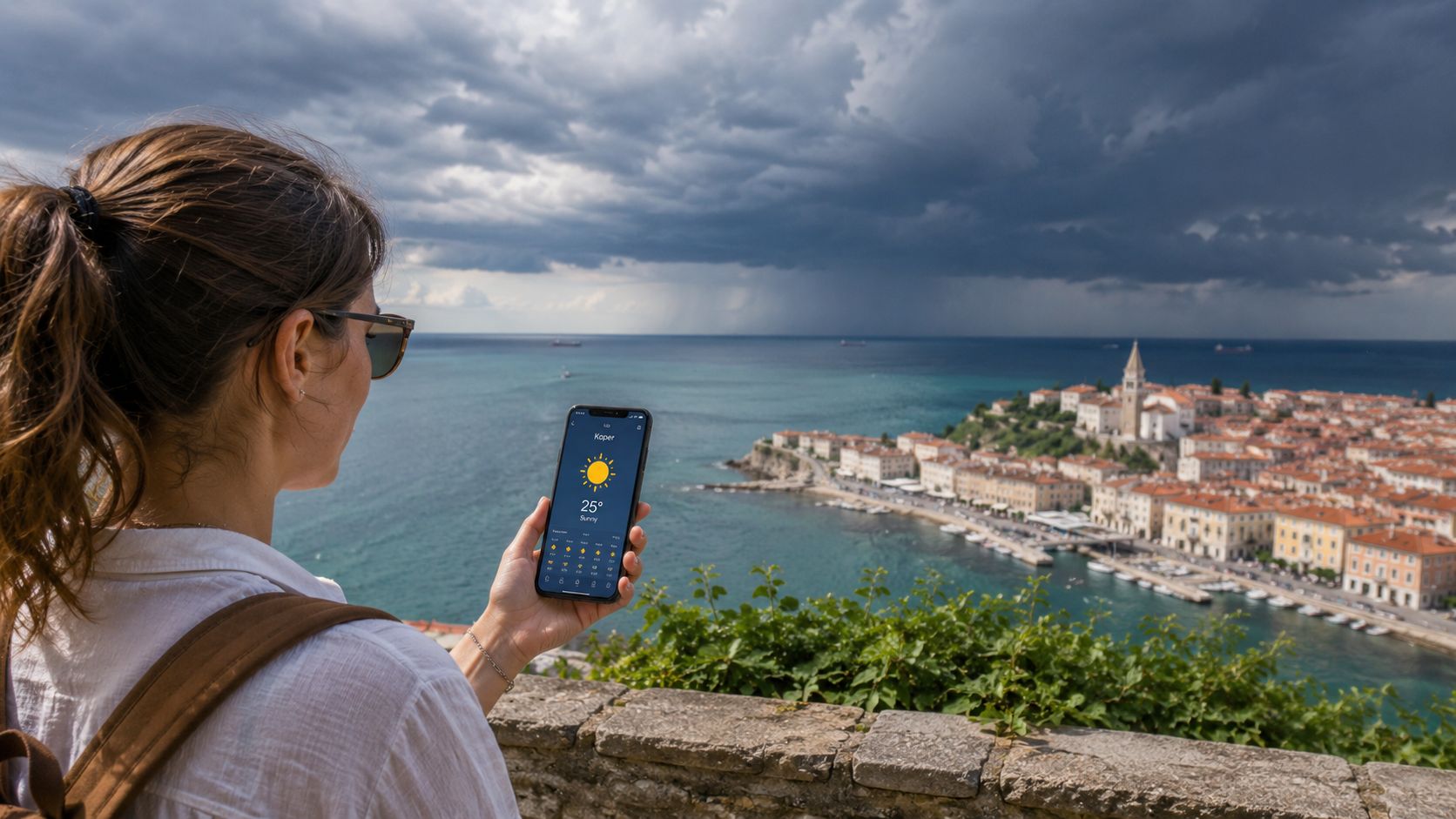
I've watched travellers step out of a rental in Koper, check one forecast, and pack for the wrong day. The sun might be showing on screen, but the air still feels damp, the wind shifts off the sea, and a beach plan turns awkward within an hour.
The station can be the real problem
The issue isn't only the forecast, it's the station location behind it. In coastal Slovenia, “Koper” can surface readings from Portorož/Secovlje rather than Koper itself, and historical pages may even lean on Ljubljana / Bezigrad for archived readings, which is a poor match for a maritime town. That mismatch matters because Koper sits on the Adriatic coast with marine influence, not in the inland basin where weather behaves differently. BBC Weather search results for Koper, time and date historical weather for Koper
Koper's geography makes the problem easy to underestimate. The municipality covers about 311.4 km² and had about 52,000 residents in the 2021 census, and its low elevation of roughly 10.6 m above sea level means the sea can shape what you feel on the ground more than a broad city forecast suggests. Climate summaries also put Koper at an annual mean temperature of 14.4 °C and around 988 mm of precipitation per year, which tells you this is a mild, wet coastal hub rather than a dry Mediterranean pocket or an alpine base camp. Weather and Climate for Koper
Practical rule: If the station isn't near your launch point, your plan can be wrong even when the forecast looks neat.
Why this hits outdoor plans so hard
Coastal activities are sensitive to small changes in wind, humidity, and short rain bursts. A sheltered old town walk can still be fine, while a kayak departure or a cliff-side route can feel completely different if the air is humid and the sea breeze is up.
That's why a single city label doesn't cut it. Koper is a gateway to beach days, paddling, and quick inland escapes, so you need weather that reflects the actual shoreline, not a generic “Slovenia coast” summary. Once you start checking that more critically, forecast hunting becomes less frustrating and a lot more useful.
Navigating Weather Underground for Accurate Koper Data
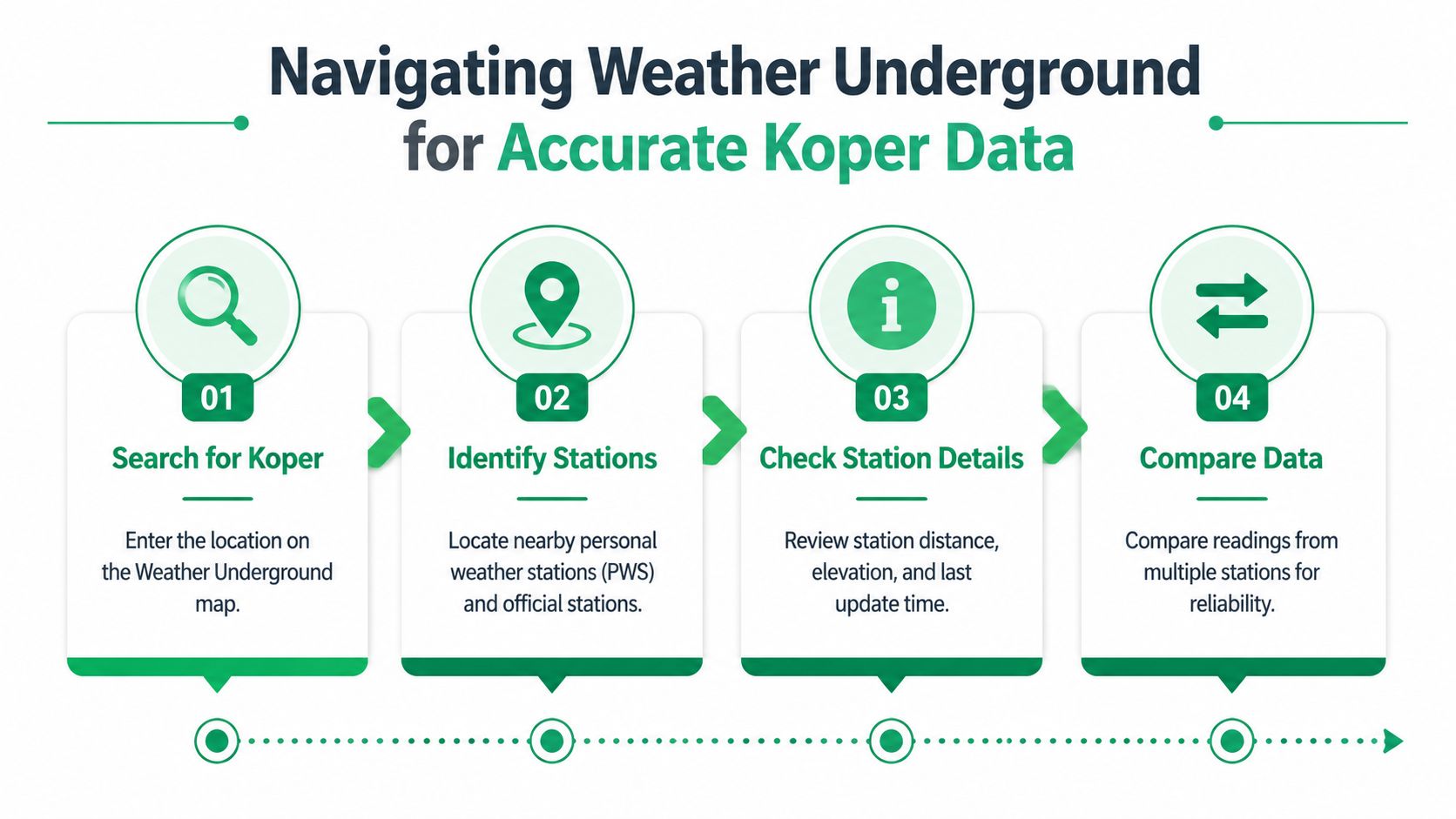
Weather Underground can be helpful for Koper, but only if you read it like a field tool, not like a promise. Start by checking which station is feeding the page, then ask whether that station represents the coast you're standing on.
Start with the station, not the headline
A good workflow is straightforward. First, identify the station ID. Then check where that station sits relative to your route, beach, or trailhead. If the page is drawing from a spot farther away than you expected, treat it as a nearby clue rather than a local reading.
For any Weather Underground import or station-based workflow, the safest practice is to identify the station ID, get the 32-character API key, back up the destination database, configure the import file, and run a dry-run before writing live observations. WeeWX explicitly recommends the dry-run as a first pass to catch configuration or range errors before data is written. WeeWX Weather Underground import guide
The same habit helps when you're planning a coast day. Station proximity tells you whether the numbers match the exposed waterfront, a sheltered bay, or an inland edge. If the source is clearly closer to Portorož or Secovlje than to your actual Koper activity, you should lower confidence in the reading.
Read the numbers in context
Temperature matters, but it doesn't tell the whole story. Humidity affects how warm the air feels, wind speed changes water comfort and shore safety, barometric pressure helps you sense whether the air mass is stable or shifting, and precipitation probability decides whether you should carry waterproof layers or just keep an eye on the sky.
Hourly data is more valuable than a single daily icon. That's where you spot the kind of short-term swing that can change a morning paddle or an afternoon stroll. A reliable page should help you see the trend, not just the current symbol.
Compare at least two nearby stations before you trust the most tempting number on the screen.
If you want a broader Slovenia check to compare with the coast, this Ljubljana Weather Underground guide is a useful contrast point.
Coastal Versus Alpine Microclimates in Slovenia
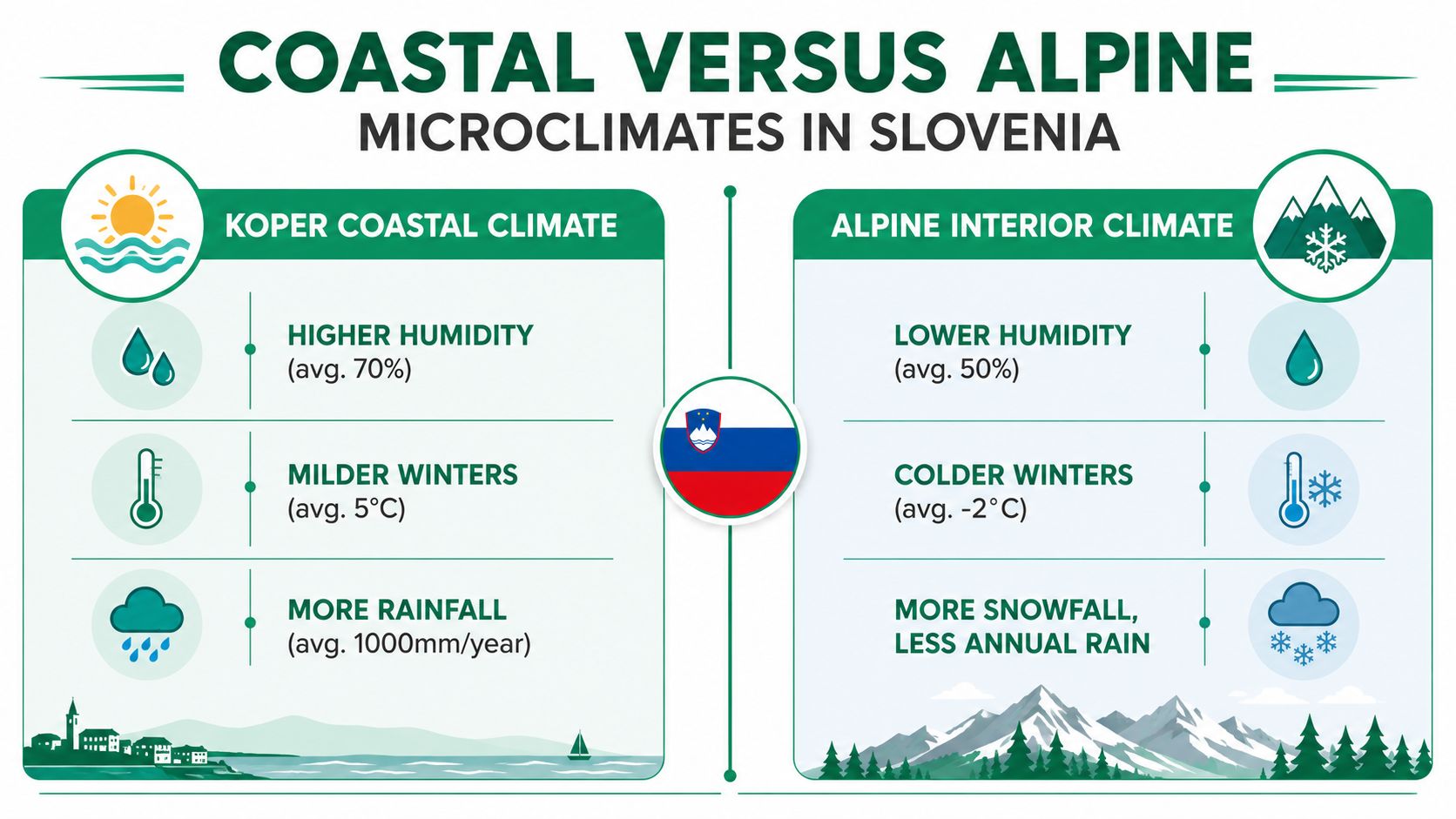
A plan that works on the Koper waterfront can fail fast in the hills. Coastal Slovenia and the alpine interior respond to different pressure patterns, different exposure, and very different terrain, so the same forecast number does not carry the same meaning once you leave the shore.
Koper feels maritime, not mountain-like
On a coastal readout, Koper often shows air that feels damp and close, with humidity in the high-80% range and light winds around 13 km/h. That matters at ground level. A mild-looking hour can still feel heavy on a kayak launch, on a harbor walk, or while waiting out a start time near the water. Ventusky live weather for Koper
That maritime feel changes what you pack first. In Koper, light layers, sun protection, and something that handles spray or a passing shower usually make more sense than thick insulation, because the coast can stay workable even when the air feels sticky.
Why the mountains need a different reading
The alpine interior reacts faster to elevation, shade, and incoming fronts. A day that stays comfortable on the coast can turn colder, windier, or more unsettled once you climb, and the reverse can happen too. That is why a single coastal forecast should never be treated as a blanket answer for a trail above the valleys or a route near Triglav National Park.
Packing for both zones at once is safer than trusting one forecast for the whole day. On mixed coast-to-mountain trips, I look at the lightest clothing that still covers the coast, then add the layer, shell, or spare gloves that the higher ground can demand. If the mountain part of the day matters, the Triglav National Park weather guide is the better reference point for timing and gear than a coastal summary alone.
Your route should set the clothing, not the other way around. A shoreline start, an inland drive, and a late-afternoon ridge stop can all sit under the same umbrella forecast, yet each one asks for a different margin of comfort and safety.
Cross-Referencing Forecast Sources for Reliable Planning
A useful Koper forecast rarely lives on one platform. Weather Underground, live coastal maps, and hourly forecast services each show a different slice of the same atmosphere, and that spread becomes useful when you know how to read it.
Use disagreement as a warning sign
Weather platforms for Koper can show temperatures ranging from about 9°C to 15°C, with wind speeds around 9 mph to 14 mph and pressure near 1014 hPa to 1015 hPa depending on provider and update time. That spread isn't a flaw in your planning, it's the reason you should avoid a single-point weather claim and think in ranges instead. Time and Date weather for Koper
Live forecast services can also diverge sharply over short periods. One source may show a clear 14°C forecast with rain chance below 5%, while another shows light showers with 70% probability later the same morning. That kind of split tells you the atmosphere is still unsettled, and outdoor plans should stay flexible. Met Office forecast for Koper
Build a simple comparison habit
| Forecast Source Comparison for Koper | Best For | Key Limitation |
|---|---|---|
| Weather Underground | Station-based detail and local snapshots | Only useful if the station is actually near Koper |
| Live coastal map sources | Present-moment humidity, wind, and pressure | Can still reflect a point nearby rather than your exact spot |
| Hourly forecast services | Short-term rain timing and trend shifts | Different services may disagree on the same morning |
| Historical weather pages | Pattern checking and past context | Some pages may rely on inland station data |
Historical pages need extra caution. When a Koper archive page is tied to Ljubljana / Bezigrad, the record may be fine for regional context but weak for a beach launch or harbour walk. time and date historical weather for Koper
If two sources align, confidence goes up. If they don't, the weather is telling you to leave room in the plan.
Translating Forecasts into Packing and Scheduling Decisions
Forecasts matter when they change what goes in the bag and what leaves the schedule. A clean Koper morning can still turn demanding if humidity stays high, wind picks up, or afternoon rain probability rises.
Pack for the conditions you'll actually feel
High humidity calls for breathable layers, not just a waterproof shell stuffed in a daypack. If the air is already heavy, overpacking insulated clothing can leave you sweaty before the activity begins, especially on the waterfront or at a launch point.
Wind changes the decision faster than many visitors expect. Around the coast, even moderate wind can make paddling less relaxed and exposed routes less pleasant, so sheltered lines, protected coves, and earlier starts usually work better than chasing the windiest part of the day.
Use forecast thresholds as planning cues
A practical forecast habit is to tie each metric to an action.
- Temperature range: If the day swings widely, keep a layer you can add or remove fast.
- Precipitation chance: If rain becomes likely, carry waterproof gear and protect electronics.
- Wind speed: If it's climbing, choose the more sheltered route or delay open-water time.
- Daylight: Long excursions need enough light to finish comfortably.
For a coastal beach base, the Plaža Žusterna guide fits well with this kind of planning because shore conditions can still support a good day even when the forecast looks less tidy than you hoped.
On mixed adventure days, I front-load the most weather-sensitive activity. If the morning is clearer and the afternoon looks less settled, do the water-based plan first, then leave the afternoon for food, walking, or a more flexible inland stop.
Put the most exposed activity in the safest weather window, not the other way round.
Last-Minute Safety Checks Before Your Adventure
The final weather check should be about movement, not just numbers. Koper's climate supports year-round outdoor activity, but the morning of your trip is when you decide whether the day feels good, merely possible, or not worth forcing.
Check the live trend before you leave
Look at the radar first, then the wind direction, then the rain timing. If the trend is stable and the readings between sources are close, you can move forward with more confidence. If the forecast keeps swinging between clear and showery, the day is still unsettled.
A good local habit is to ask whether the weather is improving, holding, or sliding the wrong way. That matters more than one pretty icon on a phone screen. When in doubt, a call to your guide service for a local conditions update is smarter than hoping the coast will settle itself.
Decide go, adjust, or reschedule
Proceed when the main sources agree, the wind looks manageable, and the rain window stays outside your activity time. Adjust when the forecast is usable but not clean, especially for exposed water or canyon routes. Reschedule when radar, rain probability, and wind shifts all point the same way and safety margins shrink.
Professional guided outings already include expert judgment, but a traveller who reads the weather well makes better decisions on the ground. That means fewer surprises at the launch point, fewer regrets at the trailhead, and a much better chance of enjoying the day you came for.
If you're planning a coast day, a paddling session, or a mountain transfer, Outdoor Slovenia Activities can help you turn changing weather into a safe, well-timed adventure. Browse Outdoor Slovenia Activities to choose the right trip, then use these Koper weather checks to pick the best day and start with confidence.