
You've packed for a sunny day beside Lake Bled, but canyoning in Slovenia quickly leaves the world of warm lakes and dry paths behind. A bright morning can turn into a cold, wet journey through a narrow alpine gorge, where every step meets polished rock and every pool takes heat from your body. Knowing what to wear for canyoning means preparing for that change before you arrive at the water.
The good news is that you won't need to buy a complete technical kit. A professional operator normally supplies the specialised protective equipment, while you bring a few personal items that make the day more comfortable. The key is understanding why the standard Slovenian system uses swimwear, thick neoprene, grippy footwear, and certified head protection together.
Table of Contents
- The Reality of Alpine Water Temperatures
- The Layered Protection System Explained
- Why Footwear and Helmets Are Non-Negotiable
- What You Bring Versus What We Provide
- Final Preparations and Comfort Tips
- Essential Canyoning Packing Checklist
The Reality of Alpine Water Temperatures
A typical day might begin with coffee in Bled, sunshine on the lake, and warm air around the meeting point. The drive towards the Soča Valley or Triglav National Park can feel like an ordinary summer outing. Then you enter a gorge such as Sušec or Fratarica, step into mountain water, and discover how different an alpine canyon is from a heated swimming area.
These gorges are shaped by mountain springs, snowmelt, shade, and fast-flowing water. The surrounding air may feel pleasant, but the water can remain cold enough to affect breathing, movement, and concentration. You don't need to be nervous about that change, but you do need to respect it. The right suit lets you focus on sliding, scrambling, swimming, and enjoying the limestone walls instead of thinking about how quickly you're getting cold.
Local guide's rule: If your clothing only works for a sunny walk, it isn't canyoning clothing.
The difference between a lake visit and a gorge descent is easy to underestimate. At Lake Bled, water temperature can vary with the season, but alpine canyoning demands a more protective approach because you're repeatedly moving through cold water and over wet rock. You may also spend time in shaded sections where wind protection and warm layers matter before entering or after leaving the canyon.
Why clothing belongs in the safety plan
Thermal protection isn't just about feeling cosy. Cold muscles become less comfortable and less responsive, while fatigue can make foot placement and climbing more difficult. A wetsuit helps preserve energy, allowing you to keep moving with better control.
Triglav National Park reflects this wider mountain-safety culture. Its visitor guidance recommends sturdy footwear with sharp rubber tread, warm layers, and protection from wind and rain, while canyoning itself is formally regulated. The park states that consent from JZ TNP must be obtained before canyoning, and a wild-water rescuer must be present in profit-making groups. Registration is compulsory for canyoning in the Fratarica and Predelica gorges in Log pod Mangrtom, as described in the park's official visitor guidance.
Those requirements help explain the local approach. In Slovenia, proper canyoning wear isn't standard swimwear with casual trainers. It's a layered system designed for cold water, slippery terrain, impact hazards, and changing mountain weather.
The Layered Protection System Explained
The simplest way to understand Slovenian canyoning equipment is to think from the skin outwards. Each layer has a job, and the layers work together rather than competing for space.
Start with a secure base
Wear a swimsuit underneath the wetsuit. Choose something that stays in place during jumps, slides, and harness movement. Avoid bulky decorations, hard clips, or loose fabric that can press against your body once the suit and harness are tightened.
The swimsuit isn't the main thermal layer. It provides a comfortable, practical base that can get wet without becoming heavy or awkward. It also makes changing into the technical equipment straightforward at the canyoning centre.
Add neoprene for insulation
The wetsuit is the central piece of the system. Slovenian operators commonly use 4 mm to 5 mm neoprene suits, with local offerings including a 4 mm neoprene suit and jacket and other alpine-water tours specifying a 5 mm wetsuit. These specifications appear in Slovenian operator materials such as Bovec canyoning equipment guidance.
Neoprene works by holding a thin layer of water close to your skin. Your body warms that layer, and the material slows further heat loss. A canyoning suit also needs to tolerate contact with rock, movement through narrow passages, and repeated immersion. A thin recreational swimming suit may feel flexible, but it won't offer the same insulation or abrasion resistance.
Some Slovenian trips use a jacket and trousers as a double-layer arrangement. This can provide useful warmth and protection across the torso, knees, and seat while retaining the flexibility needed for walking and scrambling.
Finish with protection and grip
Neoprene socks help reduce heat loss through the feet and improve comfort inside canyoning footwear. Dedicated canyoning shoes then provide the grip required on wet rock. The helmet protects your head during slips, jumps, and contact with the canyon walls, while the harness supports guided rope sections where the route requires them.
Sizing matters throughout the system. A wetsuit should feel close to the body without restricting breathing or movement, and your guide should check the fit before the group enters the water. You can read more about choosing cold-weather gear for outdoor activities if you're planning several alpine adventures, but for an organised canyoning trip, the operator normally handles the technical selection.
Why Footwear and Helmets Are Non-Negotiable
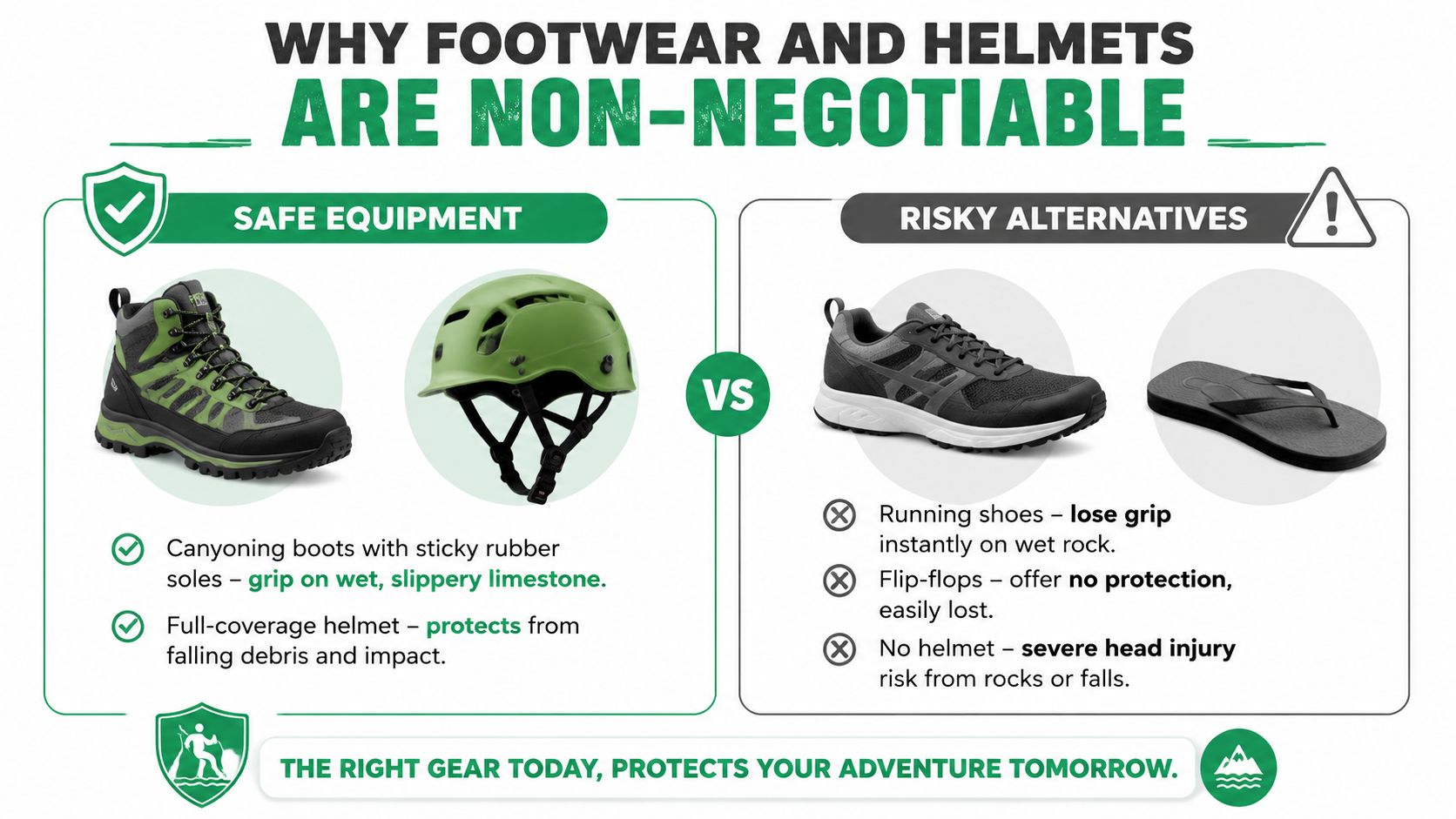
Wet limestone changes the rules beneath your feet. A running shoe may feel secure on a dry trail, yet its tread and rubber compound aren't designed for polished, water-covered canyon surfaces. Flip-flops are worse still. They can come off, expose your toes, and provide almost no useful protection when you're scrambling over rock.
Dedicated canyoning shoes use closed construction and sticky rubber designed to maintain contact on wet terrain. The sharp tread recommended in Triglav National Park's visitor guidance reflects the practical problem, water reduces friction and uneven ground punishes unstable footwear. Your shoes should fit firmly, protect the toes, and remain secure during swimming and jumping.
If you're comparing footwear for the approach walk or other mountain activities, a guide to the best trail shoes for Kiwi runners can help explain the difference between trail grip and canyoning-specific grip. Those categories overlap in some features, but a guide should decide whether personal shoes are acceptable for a particular route. Standard trainers aren't automatically suitable.
Choose the right helmet
A canyoning helmet must protect against impact and stay secure while wet. Independent Slovenia-facing guidance recommends a helmet certified for climbing or caving rather than a canoe, kayak, or cycling helmet, as explained in this Slovenia canyoning equipment guide.
That distinction matters because different sports expose the head to different hazards. A canyoning route may combine rock contact, falling debris, rope work, and awkward slips in confined spaces. The helmet should sit low and comfortably, with the adjustment system tightened enough that it won't shift when you move through water.
Thickness is a practical trade-off
Thicker neoprene provides more insulation but can feel warmer and slightly less flexible on dry approaches. Slovenian canyoning operators commonly balance those factors with suits in the 4 mm to 5 mm range, while specialist canyoning gear may include 5 mm jackets and 6.5 mm canyoning-specific suits, as outlined by technical canyoning clothing guidance. The right choice depends on the route, water conditions, and the operator's equipment system.
What You Bring Versus What We Provide
Packing for canyoning is easier when you separate personal items from technical equipment. You bring the things that need to fit your preferences and body. The operator supplies the equipment that requires specialist maintenance, sizing, inspection, and route knowledge.
Your personal packing list
Arrive with your swimsuit ready to wear underneath the wetsuit. Bring a towel and a complete change of dry clothes, including dry underwear and socks. A warm top or windproof layer is useful after the descent, especially when the gorge has kept you in shade.
Keep the rest of your bag simple:
- Wet-gear storage: Pack a reusable waterproof bag or lined pouch for the wet swimsuit and socks.
- Small recovery items: Water and a snack can help after an active descent.
- Sun protection: Bring sunscreen and sunglasses for the approach, meeting point, or time after the activity.
- Minimal valuables: Leave jewellery, passports, large wallets, and unnecessary electronics in secure storage rather than taking them into the canyon.
Slovenian-facing canyoning guidance also recommends bringing a towel and dry clothing for after the descent, as set out in this practical Slovenia canyoning overview. Your operator should explain where bags and valuables can stay during the trip.
The technical kit
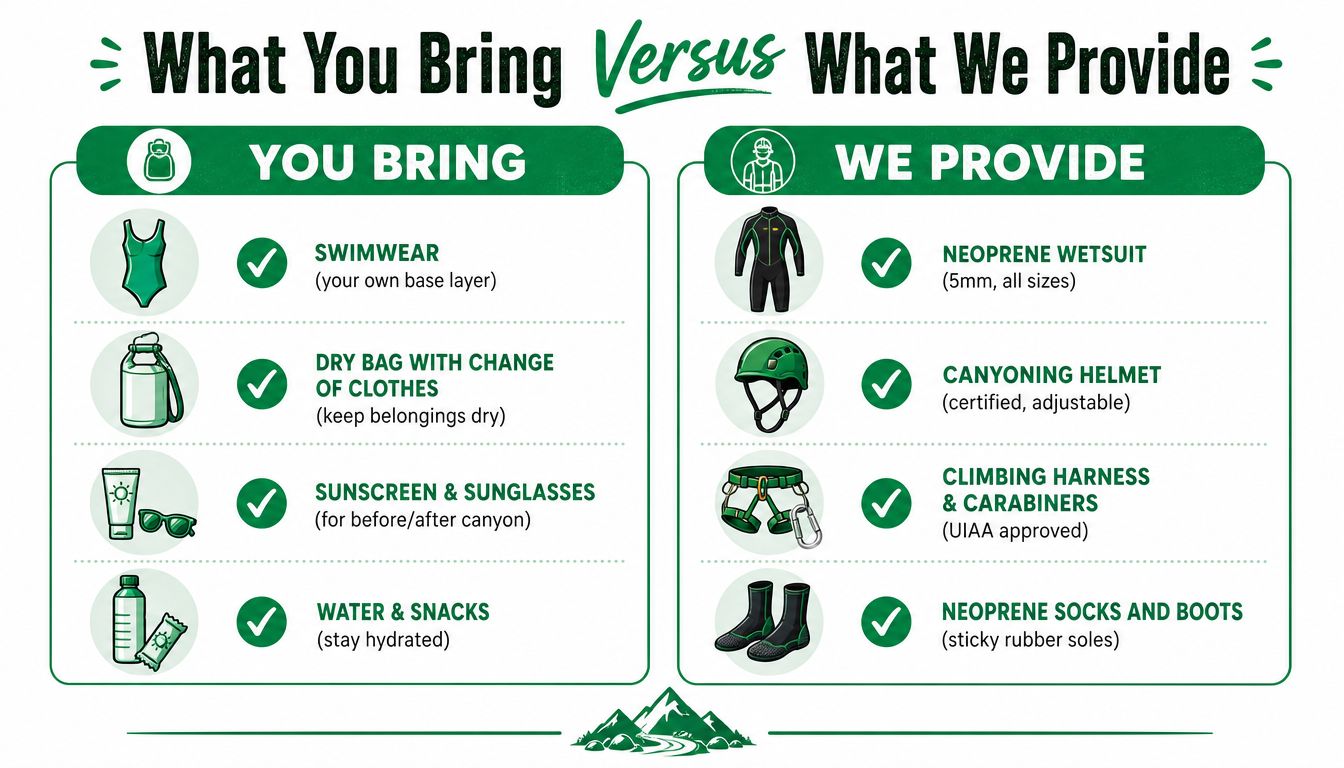
A reputable organised trip generally supplies the wetsuit, helmet, harness, and canyoning shoes. Neoprene socks are also commonly included, and some operators provide gloves for additional warmth and protection. The exact package varies, so check before travelling rather than assuming every item is included.
Outdoor Slovenia Activities provides technical canyoning equipment such as wetsuits, helmets, harnesses, and shoes, while guests bring swimwear and a towel. That division keeps your luggage light and ensures the equipment is selected for the route rather than improvised from everyday sportswear.
Final Preparations and Comfort Tips
The best canyoning mornings feel organised before the group reaches the water. Wear or pack your swimsuit so you aren't searching through luggage at the meeting point, and choose clothing that can be removed easily before the wetsuit fitting.
Tie long hair back securely. Loose hair can catch under helmet straps, obscure your view, or become irritating when soaked. Remove bulky jewellery and keep personal items to a minimum. Contact lens wearers should consider their own comfort around splashes and jumps, while prescription glasses need a secure strap if the guide allows them on the route.
A quick pre-descent check
- Hair: Tie it back low enough for the helmet to sit correctly.
- Skin: Apply environmentally responsible sunscreen before entering the canyon, and follow the guide's advice around sensitive natural areas.
- Helmet: Check that it sits level and doesn't move when you look up or down.
- Wetsuit: Make sure there are no uncomfortable folds around the shoulders, waist, or knees.
- Footwear: Confirm that the shoes are closed, secure, and comfortable before walking on rock.
Don't rush the transition after the descent. Change out of wet clothing as soon as practical, dry your feet, and put on warm layers. A hot drink, a snack, and dry footwear can make the drive back far more pleasant, particularly after time in a shaded gorge.
The small details affect the whole experience. A well-tied hairstyle, an organised dry bag, and a warm sweatshirt won't make the canyon less wild, but they'll help you finish the day feeling refreshed rather than chilled.
Essential Canyoning Packing Checklist
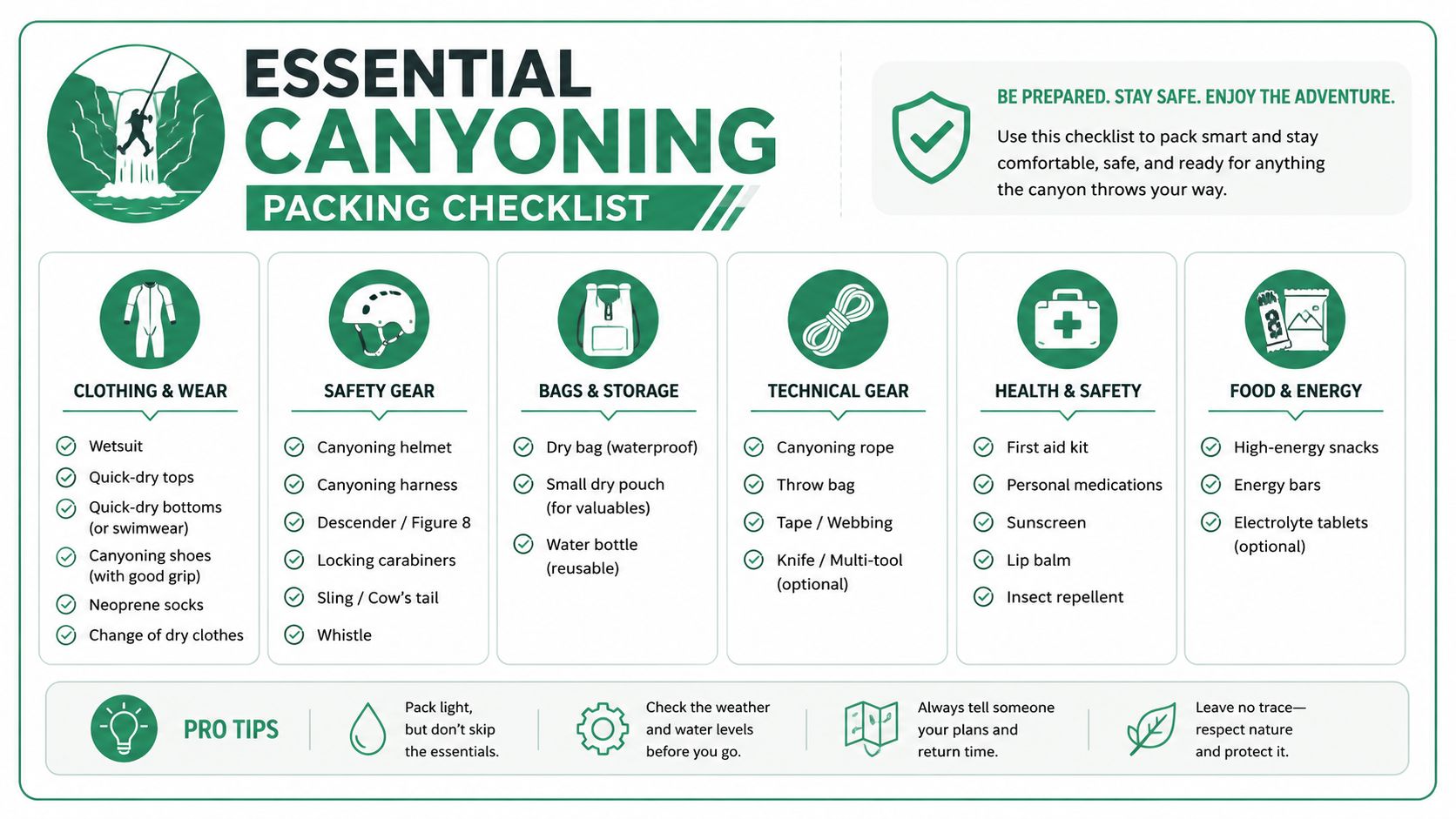
Use this checklist the night before your trip, then confirm the technical equipment with your operator.
Bring from home
- Swimwear: Wear it under the wetsuit.
- Towel: Choose a compact towel if luggage space is limited.
- Dry clothes: Pack a complete change, including underwear and socks.
- Warm layer: Take a sweatshirt, fleece, or windproof jacket for after the descent.
- Wet bag: Separate the soaked swimsuit and other damp items from your dry clothing.
- Water and snacks: Carry simple recovery food and a drink for before or after the activity.
- Sunscreen and sunglasses: Use them outside the canyon where conditions require them.
- Secure storage plan: Leave valuables behind unless your operator provides a safe way to store them.
Confirm before you arrive
Ask whether your trip includes the neoprene wetsuit, neoprene socks, canyoning shoes, helmet, harness, and any gloves. Slovenian canyoning operators commonly provide this layered technical system, with local guidance describing 5 mm neoprene wetsuits, boots, and gloves as suitable for a 2.5 to 3 hour session with continuous movement in cold water, as noted by Slovenia canyoning activity guidance.
Book with a professional, properly organised operator that respects Triglav National Park requirements and checks equipment before the group enters the gorge. The right clothing won't remove the adventure, it gives you the warmth, grip, and confidence to enjoy Slovenia's alpine canyons responsibly.
Outdoor Slovenia Activities offers guided canyoning trips with wetsuits, helmets, harnesses, and canyoning shoes provided, while you bring swimwear and a towel. Visit Outdoor Slovenia Activities to choose a beginner-friendly adventure around Bled and the Soča region, and arrive ready for the cold-water reality of Slovenia's mountain gorges.