
The first hoofbeats were soft on the forest track above Bled, then sharper as the path opened near the meadows and the morning light caught the high ridges. Pine scented the air, Triglav stood pale in the distance, and the whole ride felt calm, focused, and just wild enough to stay unforgettable.
That's what horseback riding in Slovenia can feel like when the route, horse, and guide all match the rider. Around Lake Bled and the edges of Triglav National Park, a rare mix awaits: gentle river paths, quiet villages, forest tracks, and serious alpine terrain.
Table of Contents
- Your Slovenian Riding Adventure Awaits
- Discover the Best Trails Around Bled and Triglav
- Why a Guided Tour is Your Best Choice
- Essential Safety and Riding Preparation
- Seasonal Riding When is the Best Time to Go
- Sample Itinerary A Perfect Bled Adventure Day
- Booking Your Slovenian Riding Adventure
Your Slovenian Riding Adventure Awaits
Sunrise rides near the Triglav foothills have a different rhythm from almost any other outdoor experience in Slovenia. The horse settles into an easy walk, mist lifts from the grass, and every sound becomes clearer, hooves on soil, birds in the trees, and water somewhere below in the valley.
Near Bled, that quiet beginning can quickly turn into a wider adventure. One moment you're passing through a shaded forest lane, the next you're looking out towards open alpine country and feeling how close the mountains really are. Riders often expect postcard scenery. What surprises them is how immersive it feels from the saddle.
Why this landscape suits horseback riding
Slovenia works so well for riding because the scenery changes fast without feeling chaotic. Forest, meadow, riverbank, village edge, and mountain backdrop all sit close together, so even a shorter outing can feel rich and varied.
For travellers who want a fuller overview before choosing a route, our guide to horseback riding in Slovenia gives a practical starting point. It helps connect the dream of riding here with the realities of terrain, trip style, and rider ability.
You don't need to be an expert rider to enjoy Slovenia. You do need the right route for your confidence level.
Bled and Triglav draw riders for different reasons
Bled gives many visitors their first easy entry into Slovenian riding. The setting is famous, the access is simple, and the nearby valleys offer calmer terrain for people who want scenic riding without committing to a hard mountain trek.
Triglav National Park brings a more rugged mood. It's Slovenia's oldest and largest national park, and the scale of the natural surroundings changes how a ride feels. Forest sections become deeper, the mountain presence becomes stronger, and the sense of distance grows even when you're not far from Bled.
That mix is why so many travellers look for horseback riding trails in this area first. Some want a peaceful family outing. Others want a real alpine ride with more challenge. Both are possible here, but they shouldn't be approached in the same way.
Discover the Best Trails Around Bled and Triglav
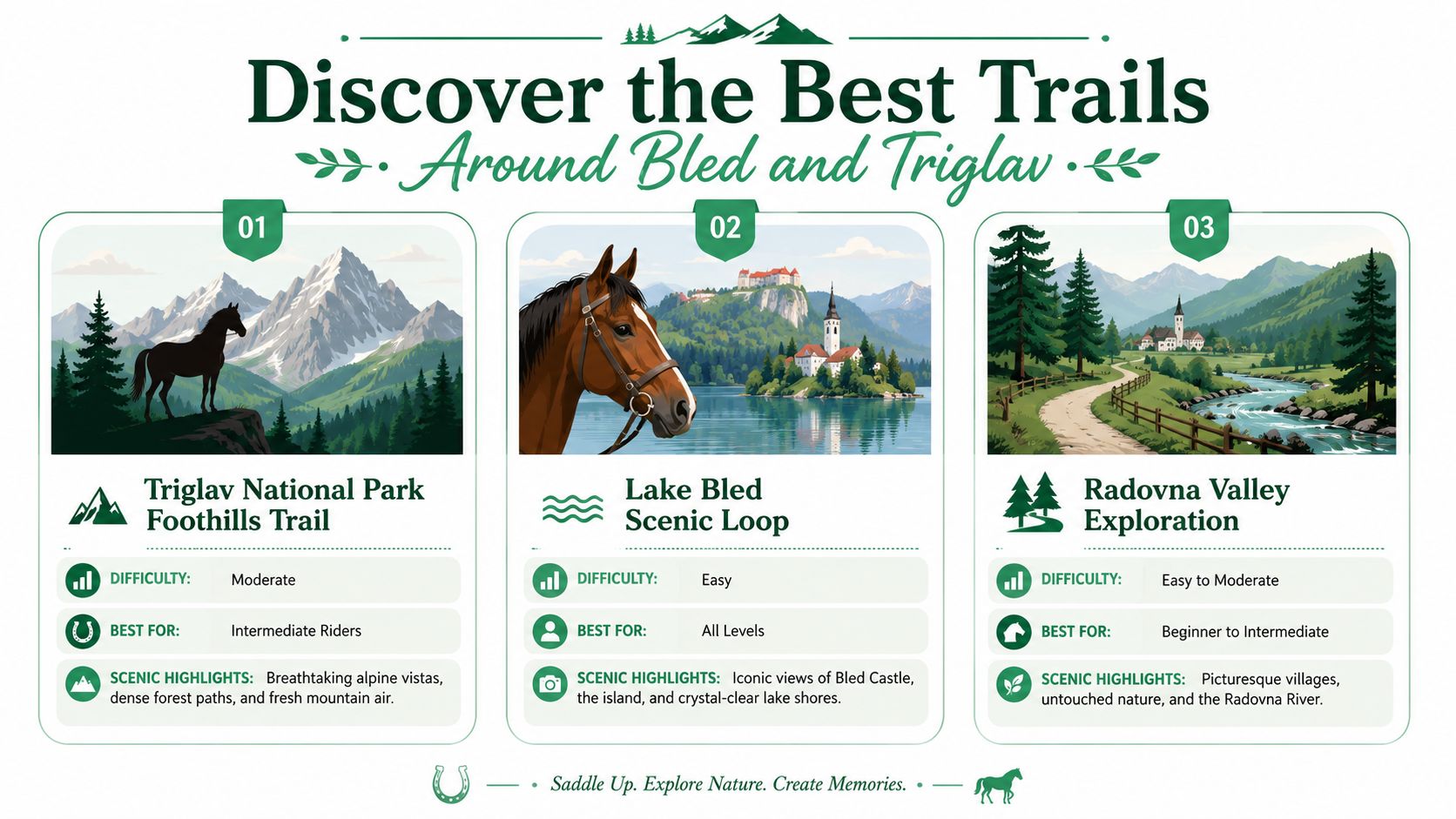
Choosing between horseback riding trails near Bled and Triglav gets easier when you stop thinking in terms of famous places and start thinking in terms of rider fit. The right trail is the one that matches your balance, confidence, and appetite for varied terrain.
This visual guide gives a quick sense of the main riding styles around the region.
Beginner routes that build confidence
For new riders, the foothill and valley routes are often the smartest choice. Expert trail designers in the Slovenia and Julian Alps region note that beginner-friendly trails in Triglav National Park should have a maximum gradient of 12%, a minimum width of 2.5 metres, and often use Icelandic horses because of their calm temperament and adaptability to rugged ground, with routes frequently following the Radovna River valley for stable, low-erosion surfaces, as described in this Triglav National Park trail riding overview.
That sounds technical, but the practical meaning is simple. Steeper paths can unsettle beginners. Narrow tracks can make riders tense. A steady horse on a broad, predictable trail gives people space to relax and learn.
A good first ride often includes:
- Gentle gradients: You can focus on posture, reins, and rhythm instead of bracing for steep climbs.
- Open sightlines: River valleys and broad tracks feel less intimidating than dense, twisting woodland.
- Consistent footing: More predictable surfaces usually mean a calmer experience for both horse and rider.
Intermediate rides with more variety
Once a rider is comfortable walking, trotting when invited, and handling small terrain changes, the area around Bled opens up nicely. Intermediate horseback riding trails often combine forest sections, meadows, rolling valley terrain, and occasional climbs that keep the ride interesting without becoming punishing.
The Radovna corridor is especially attractive because it feels wild while still staying readable. The river presence, village edges, and forest entrances create a ride that changes mood several times in one outing. Travellers who also want to explore on foot often pair riding with a day in Triglav National Park hiking areas, because the same natural surroundings reveal different details at walking pace.
Practical rule: If you want scenery and variety more than speed or technical challenge, choose an intermediate route over an advanced alpine one.
Advanced trails for experienced riders
Slovenia also rewards riders who want steeper, longer, and more physically demanding routes. On the national trail listings, the Novo Mesto to Češča Vas route shows the highest ascent at 1,729 feet, approximately 527 metres, and other top horseback riding trails in the country also exceed 1,000 feet, pointing to a riding network with a distinctly mountainous character, as shown on Slovenia horseback riding trails on AllTrails.
That matters because experienced riders often arrive expecting rolling countryside and discover something much bigger. Slovenian riding can become alpine riding very quickly. Elevation changes affect pace, horse energy, rider balance, and how much concentration the day requires.
Bled and Triglav Horse Riding Trails at a Glance
| Route Name | Difficulty | Best For | Scenery Highlights |
|---|---|---|---|
| Radovna Valley beginner routes | Easy | First-time riders, families, cautious adults | Riverbanks, broad valley paths, forest edges |
| Bled foothills and meadow tracks | Moderate | Riders wanting longer scenic outings | Alpine meadows, woodland lanes, mountain views |
| Alpine ascent trails in Slovenia | Advanced | Experienced riders seeking challenge | Strong elevation gain, rugged terrain, expansive mountain scenery |
If you're unsure, choose the easier option first. Riders almost never regret a route that lets them settle in and enjoy the scenery. They do regret choosing terrain that asks more than they're ready to give.
Why a Guided Tour is Your Best Choice
Independent travel sounds romantic until the practical questions start arriving. Which trail is legal for horses? Which route suits a nervous beginner? What happens if the weather turns, the horse reacts to wildlife scent, or the ground is rougher than expected?
A guided ride answers those questions before they become problems.
A guide changes the whole experience
A good riding guide does more than lead from the front. They watch how each rider sits, how each horse responds, and how the group handles changing terrain. That changes the quality of the day in ways that are easy to miss when you're booking.
The route becomes only one part of the experience. The guide also shapes pace, rest points, confidence, and communication. For beginners, that often means the difference between surviving a ride and actually enjoying it.
Here's where guided riding usually helps most:
- Horse matching: Calm, suitable horses matter as much as scenic trails.
- Route adjustment: Guides can shorten, slow, or simplify the plan when a group needs it.
- Context: The scenery becomes more meaningful when someone local explains what you're seeing.
Local knowledge matters in mountain terrain
This part of Slovenia has beauty, but it also has rules and realities. Some routes are only appropriate in certain conditions. Some valley sections are much better for new riders than higher terrain. Some forest stretches feel easy until a rider meets a sharper descent or a narrow turn.
In Triglav National Park, horseback riding is restricted to designated routes because Slovenian law does not allow access to natural environments, including hiking trails and forest roads, for non-motorised activities unless those routes are explicitly designated. That legal protection helps reduce ecological damage in the park's 840 km² area, as outlined in this guide to Triglav National Park rules and access.
That's one reason a guided experience is often the sensible choice. It reduces guesswork, supports horse welfare, and keeps riders in the places where riding is appropriate.
One practical option for travellers comparing organised outdoor days around Bled is Outdoor Slovenia Activities, a Lake Bled based operator that runs guided experiences with professional guides, technical equipment, hotel pick-up and drop-off, and routes adapted for beginners, families, and small groups. For visitors already coordinating transport and activities, that kind of structure can make trip planning simpler.
Essential Safety and Riding Preparation
Most riding problems start before the horse moves. They begin with the wrong footwear, clothing that rubs or catches, a rider who's too tense to listen, or a group that treats mountain nature like a theme park. Good preparation fixes much of that.
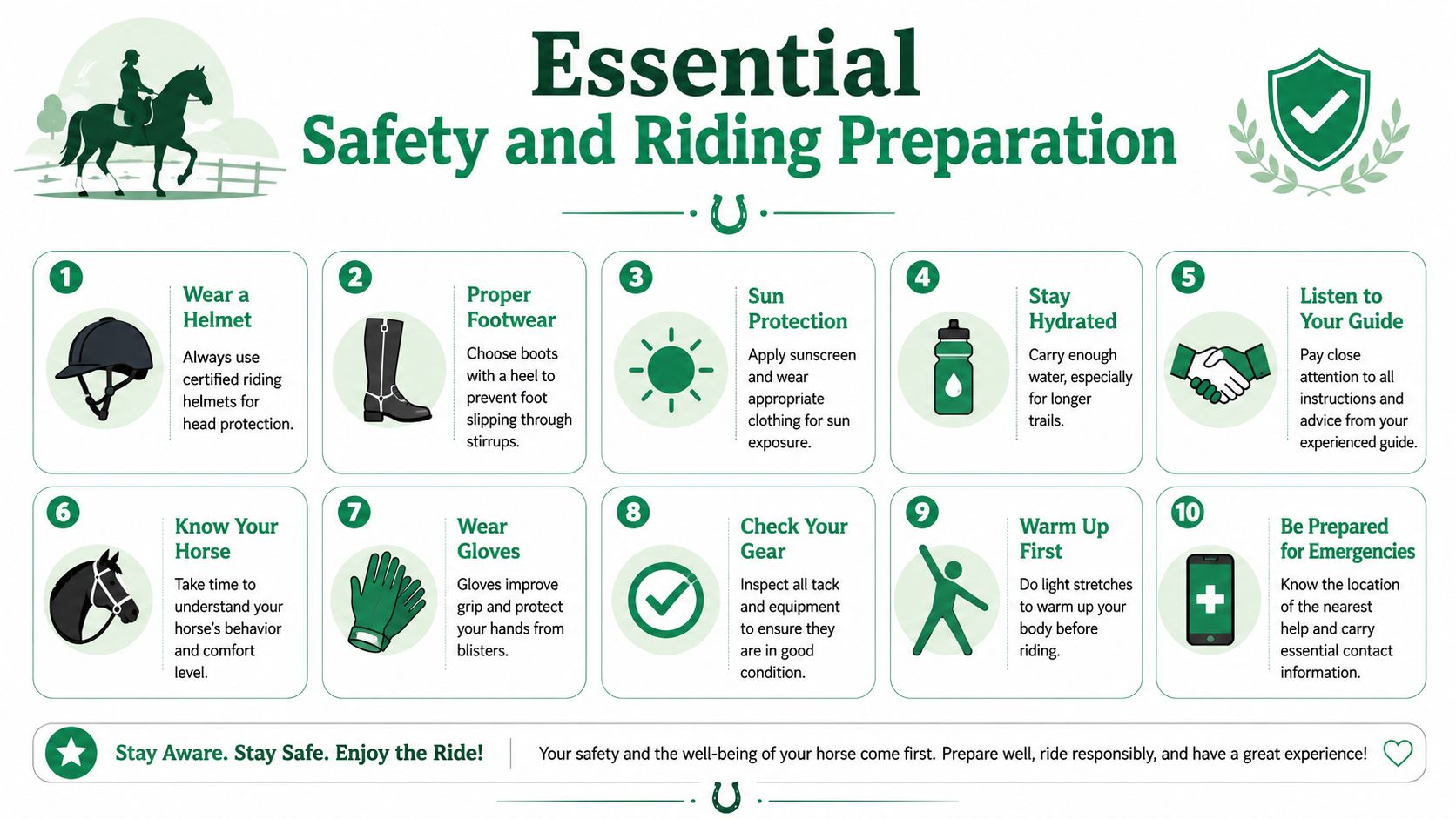
This checklist helps turn general safety advice into something useful on the ground.
What to wear and how to prepare
Your goal is comfort, control, and flexibility. Slovenia's mountain weather can shift during the day, so clothing needs to work in layers rather than in one heavy piece.
A simple preparation routine works well:
- Start with proper footwear. Boots with a small heel are standard because they help keep your foot from sliding too far through the stirrup.
- Choose fitted clothing. Trousers or leggings that move easily are better than loose fabric that twists or catches.
- Bring light layers. A cool morning near Bled can feel very different from a sunnier valley later in the day.
- Use sun protection. Even gentle rides can mean long exposure in open areas.
- Listen first, ride second. The safety briefing matters more than most first-time riders expect.
If you want a practical clothing reference before travelling, Bridle Up Hope Shop's guide is a useful read for understanding how comfort and safety work together in riding wear.
Sit tall, keep your hands quiet, and let the horse feel a calm rider. Most horses respond well to consistency.
For travellers who like to understand outdoor safety systems more broadly, our page on self-protection equipment and mountain safety basics offers a helpful mindset. Riding equipment is different, but the principle is the same. Preparation makes confidence possible.
Wildlife awareness is part of trail safety
This is the gap many articles skip. Forested horseback riding trails around Bled and Triglav aren't only scenic spaces. They're shared natural habitats.
A recent review of riding content in Slovenia notes that bears and wolves are prevalent in Triglav National Park and forests near Bled, yet wildlife safety is rarely addressed. It cites data saying bear sightings in the Julian Alps increased by 18% in the last 12 months, while 92% of popular trail descriptions leave out wildlife protocols or emergency procedures, according to this discussion of horseback riding safety gaps in Slovenia.
That doesn't mean riders should feel alarmed. It means they should take local guidance seriously.
A few practical habits matter:
- Stay with the group: Separation creates confusion for riders and horses.
- Keep noise level normal: Sudden shouting can unsettle horses more than it helps.
- Follow the guide immediately: In a wildlife-related situation, quick coordinated action matters.
- Don't improvise shortcuts: Forest terrain can look harmless and still lead into unsuitable or restricted ground.
The safest rider isn't the bravest one. It's the rider who stays calm, observant, and responsive.
Seasonal Riding When is the Best Time to Go
The answer depends less on a single “best month” and more on what kind of ride you want to remember. Some travellers want lush green scenery and long, bright days. Others want cooler air, quieter paths, and stronger autumn colour.
What each season feels like in the saddle
Spring feels fresh and slightly unpredictable. The valleys wake up quickly, the air stays crisp, and the countryside looks vivid after winter. It's a lovely time for riders who enjoy softer temperatures and changing mountain light, but it also asks for flexible clothing and a willingness to adapt to conditions.
Summer suits travellers who want the fullest outdoor day. Meadows are rich in colour, forest sections provide shade, and the longer daylight helps combine riding with other Bled experiences. Families often like this season because the whole day feels easier to organise.
Autumn is often the most atmospheric. The forests around Bled and the approaches to Triglav become warmer in tone, the air sharpens, and the rides can feel more peaceful after peak summer movement. Riders who value mood and scenery often fall for autumn quickly.
Winter surprises people. Many assume riding stops, but trail riding in Triglav National Park is available year-round, with guided tours designed for beginners from the Bohinj region. Winter riding isn't about long alpine epics. It's about a quieter, more focused experience, where route choice and guide judgement matter even more.
Different seasons don't just change the colour of the trail. They change pace, footing, visibility, and the kind of rider who enjoys the day most.
If you want the easiest first experience, late spring to early autumn often feels intuitive. If you already know you enjoy calm, cool outdoor days, autumn and selected winter outings can be highly rewarding.
Sample Itinerary A Perfect Bled Adventure Day
A well-planned riding day around Bled doesn't feel rushed. It unfolds naturally, with enough structure to keep things smooth and enough breathing room to let the scenery do its work.
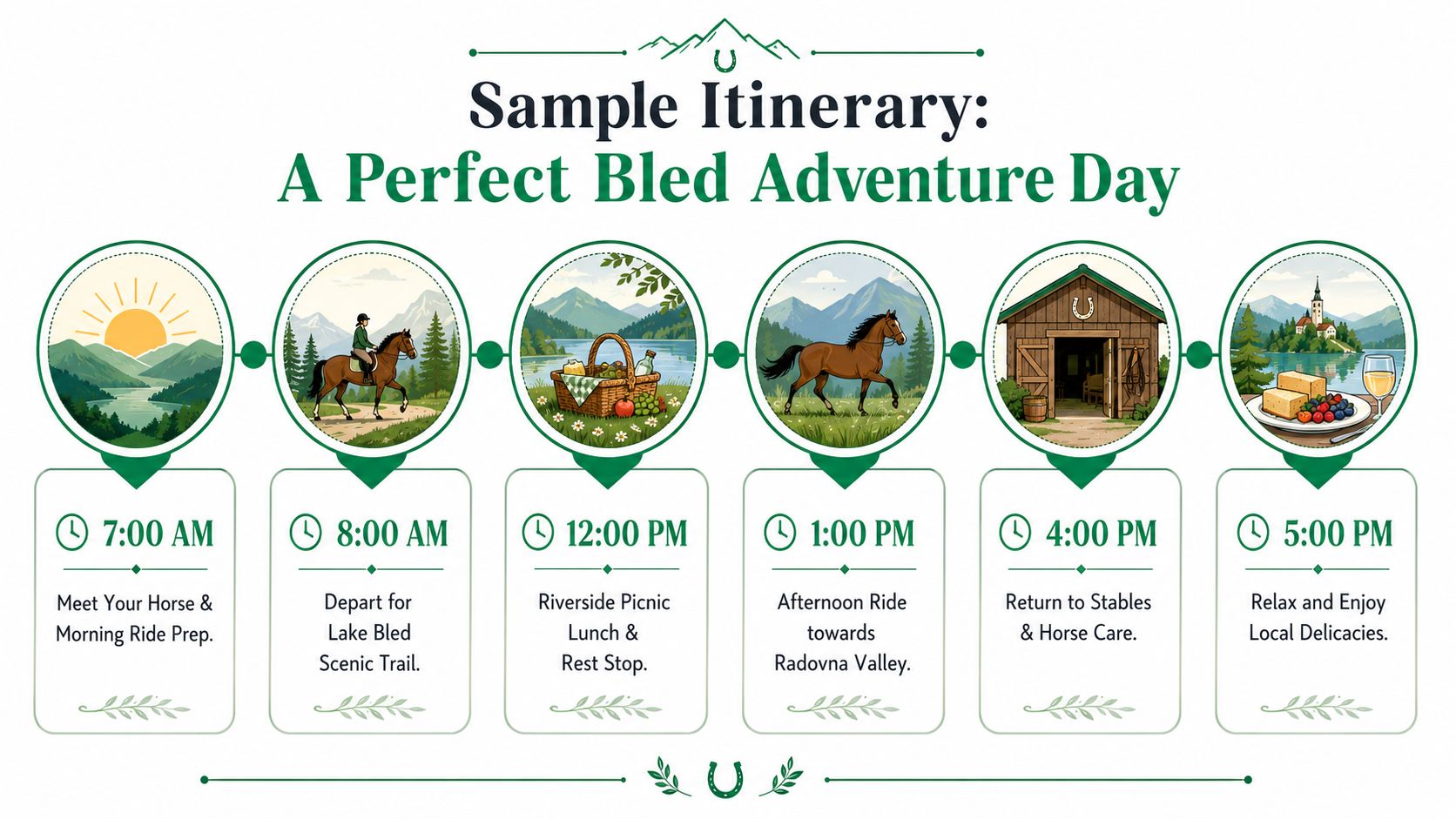
This sample gives a realistic picture of how a relaxed full day can come together.
A full day on horseback and around Bled
Morning begins with a simple meet-up, gear check, and introduction to the horses. In this initial phase, nervous riders usually settle. Once everyone understands the basics of mounting, spacing, reins, and pace, the mood shifts from uncertainty to anticipation.
From there, the route heads towards Triglav National Park. The ride described in local tour materials begins in Krnica village, crosses a wooden bridge, and follows the river Radovna along its banks before entering the park's forested terrain, according to this description of the Radovna riverside horseback route. That sequence makes the outing feel beautifully gradual. Village edge first, then water, then forest.
By midday, a stop near the river or a scenic clearing gives riders a break to stretch, drink water, and reset. This part matters more than people expect. The pause lets beginners release tension from their hips and legs, while stronger riders get time to absorb the setting instead of charging through it.
A balanced Bled adventure day might look like this:
- Morning ride: Easy pace at the start while the group settles into rhythm.
- Midday pause: Water, snack, and a moment by the river or at a meadow edge.
- Afternoon extension: A second riding section with more confidence and better posture.
- Late-day Bled time: Lake views, a stroll, or a quiet local meal after returning from the stables.
The most memorable riding days usually have contrast. Forest and open ground. Focus and rest. Movement and stillness.
That contrast is what makes the area so appealing. You can spend part of the day following a calm horse through valley light, then finish near one of Europe's most recognisable lakes. It feels complete without feeling overfilled.
Booking Your Slovenian Riding Adventure
Booking horseback riding trails in Slovenia gets much easier when you lead with the right details. Operators can give better advice when they know whether you're travelling as a family, a couple, a mixed-ability group, or an experienced riding party looking for harder terrain.
What to ask before you book
The most useful booking enquiries are clear and honest. Don't try to sound more experienced than you are. A good operator would rather match you to the right ride than place you on the wrong one.
Include these points when you enquire:
- Rider experience: Say whether you're a complete beginner, occasional rider, or confident intermediate.
- Group profile: Mention children, nervous adults, or anyone who may need a slower pace.
- Trip style: Some travellers want a short scenic outing. Others want a longer day or a multi-day riding holiday.
- Timing: Say when you'll be in Bled and how flexible your schedule is.
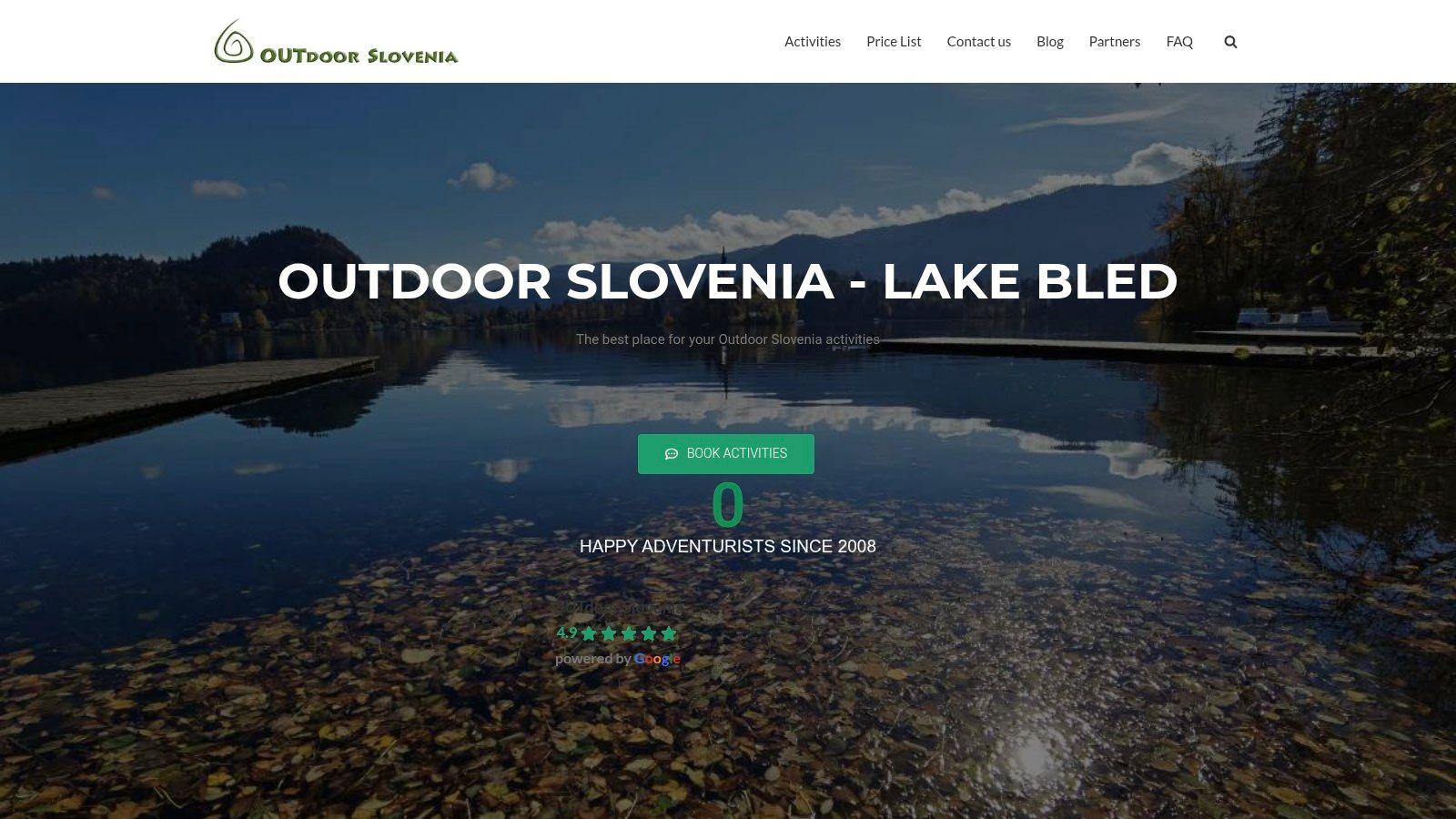
This screenshot can help you recognise the kind of local base many travellers use when arranging active days in the Bled area.
How multi-day riding fits a bigger Slovenia trip
Not every rider wants a single-day outing. Some visitors build a whole holiday around horses, and Slovenia has structured options for that style of travel too. The Karst Plateau ride runs for 7 nights with 5 days of riding, includes 4 to 7 hours of riding per day, and takes 2 to 8 riders in a small group. The Historic Castle route offers 5 nights and 4 days of riding with 6 to 7 hours daily, as shown in these Slovenia multi-day riding routes.
That kind of format suits travellers who want immersion rather than a one-off activity. It also works well if horseback riding is only one part of a broader Slovenia holiday. Some people use planning aids before they speak with an operator, and Hyperleap AI's itinerary planning tools can be a useful way to sketch how riding days might fit alongside Bled, Bohinj, or other outdoor stops.
When you're ready to confirm, ask what's included, how weather changes are handled, where the meeting point is, and how rider ability affects route choice. Those questions usually tell you a lot about how carefully the day is organised.
If you're ready to turn these trails into a real day outdoors, browse Outdoor Slovenia Activities and enquire with your travel dates, group size, and riding experience. A well-matched guided ride around Bled or Triglav can be one of the most memorable days of a Slovenia trip.