
You're at the lake before most have had coffee, the boardwalk still cool under your feet, and the water looks so flat it could be glass. That's the moment when a kayak tour on Lake Bled starts to make sense, because the first decision isn't about fitness or bravado, it's about choosing the right launch, the right route, and the right time of day.
Lake Bled rewards calm, organised planning. In Triglav National Park, boating is managed rather than free-for-all, with navigation windows and flow-sensitive rules on key waters, including the Sava Bohinjka, while Lake Bohinj is allowed year-round under park guidance. That regulatory reality shapes kayak-tour timing around Bled more than most visitors realise, and it's exactly why a practical guide matters before you book.
If you're building a Slovenia itinerary and want a useful way to think about timing, route choice, and content planning around travel intent, Sight AI's travel SEO insights are a smart read. For the paddling itself, the basics are simpler than most first-timers expect. Short reads clear, currents are gentle on the lake, and the busiest summer mornings can disappear fast once the weather turns good.
Table of Contents
- Arriving at Lake Bled Ready to Paddle
- What a Kayak Tour on Lake Bled Actually Involves
- Routes, Durations, and Where You End Up
- Who a Kayak Tour Is Really For
- Safety, Rules, and Gear You Don't Have to Think About
- When to Go for the Best Conditions and Fewest Crowds
- Pairing Your Kayak Tour with Other Bled Adventures
- Booking, Pricing, and How to Plan Your Day
Arriving at Lake Bled Ready to Paddle
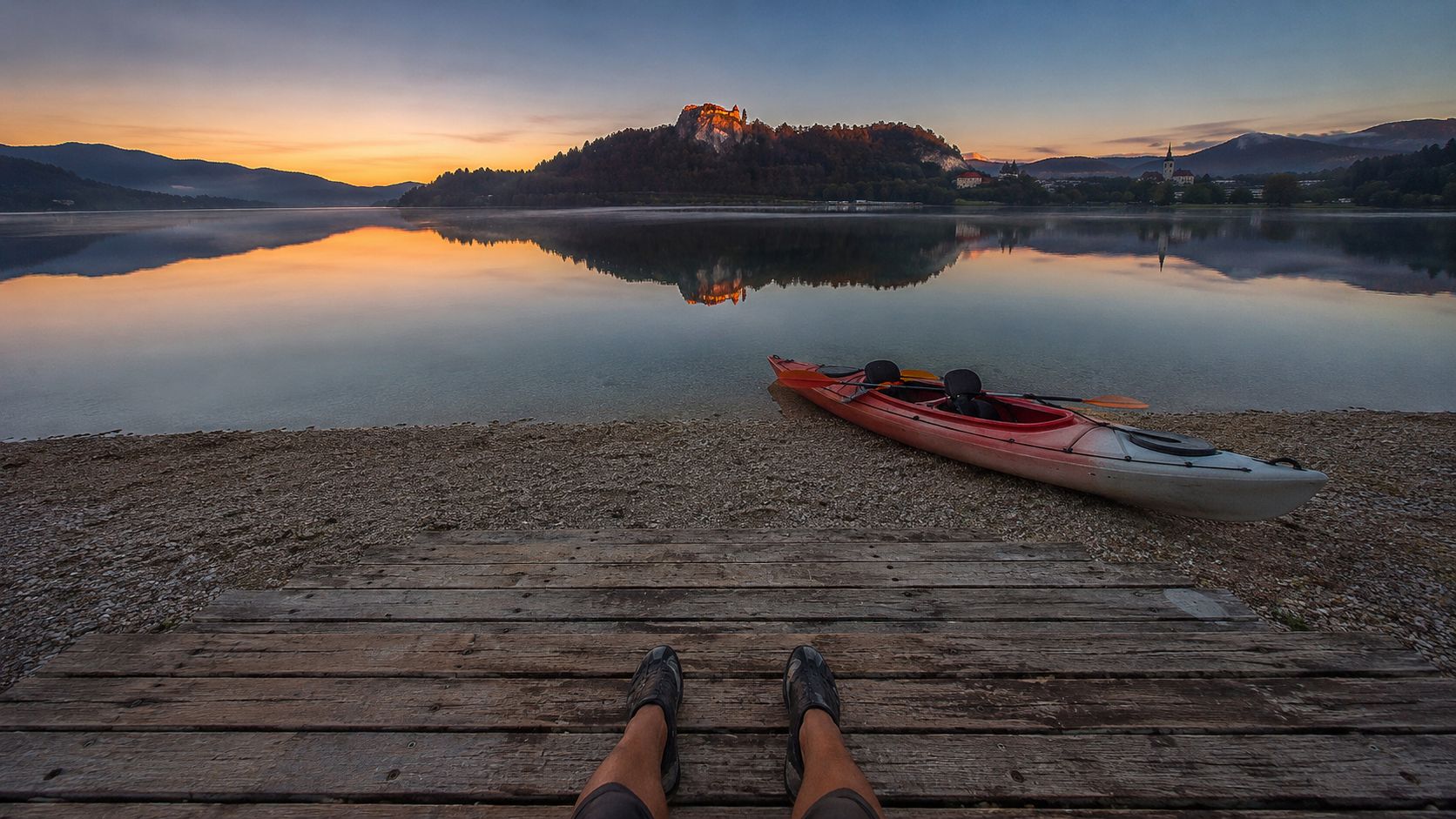
The best first paddle I ever see is the one where a guest steps onto the shoreline a little before sunrise, still half-awake, then realises the lake hasn't started moving yet. From that angle, with Bled Castle catching the first light above the water, the place feels private even when it's popular, and that's why early tours sell out so quickly in the warm months.
Lake Bled is a small alpine lake, and its dimensions help explain why it works so well for beginners. It stretches 2,120 metres long and 1,380 metres wide, covers 144 hectares, sits at 475 metres above sea level, and reaches a maximum depth of 30.6 metres; Bled also notes a maximum annual water temperature of 26°C Lake Bled facts. That size is large enough to feel like a real outing, but compact enough that the lake never becomes intimidating for first-timers.
The practical promise is straightforward. A good kayak tour here isn't about covering huge distances, it's about reading the water, choosing a route that fits your confidence, and paddling when the surface is kindest. Most visitors end up deciding three things first, where to launch, how long to stay out, and whether they want a quiet scenic loop or a longer run that edges towards the lake's tributaries.
Practical rule: if you only have one morning in Bled, choose calm water and an early start over a longer route. The experience feels better, and the photos usually do too.
For first-time paddlers, that's the core appeal. You don't need a racing mindset here, you need a clean entry point, a steady guide, and a route that lets the lake do most of the work.
What a Kayak Tour on Lake Bled Actually Involves
At the launch, the first job is choosing equipment that makes the boat predictable. Operators generally use single and tandem sit-in touring kayaks, fitted with neoprene spray skirts, adjustable foot braces, and dry-bag storage for phones or wallets. The arrangement keeps the cockpit relatively dry and your feet supported, so beginners can concentrate on steering and balance rather than their belongings.
The lake can feel cool when you first get in. Once the paddling rhythm settles, you warm up, but even summer water is not bath-like. A wetsuit layer becomes more useful in the shoulder seasons, particularly if wind or splashes keep you damp. Before the tour, review how to paddle a kayak correctly for body position, torso rotation, and basic strokes.
What the guide does
The guide sets the pace and makes the route work for the group's actual ability. They check spacing between boats, respond to wind changes, and position the group away from awkward wakes near the shoreline. On busier warm-season mornings, that control also helps the group avoid bunching around popular viewpoints and landing areas.
Tours are usually social and compact rather than spread across the whole lake. Beginners can stay with the group without sprinting, while stronger paddlers still have enough rhythm to enjoy the movement. If your arms start burning immediately, the pace or technique needs adjusting.
A calm tour usually means the guide handled the logistics before you noticed them.
Your posture does most of the work. Sit low, keep your knees lightly braced, and rotate through your torso instead of pulling only with your arms. That technique makes a short outing feel active without turning it into a punishing workout. It also gives the guide more room to adjust the session if wind, boat traffic, or changing conditions make the planned pace unsuitable.
Routes, Durations, and Where You End Up
Choose the route by confidence, weather window, and how the group wants to spend the morning. A 60-minute Western Shore loop is the most forgiving first outing. It stays near the castle viewpoint, keeps the route easy to shorten, and suits beginners or anyone mainly after a quiet scenic paddle.
The 90-minute Bled Island circuit adds the pilgrimage church and the classic lake view. It gives couples, families, and photographers more time on the water without turning the outing into a demanding workout. Guides often favour this route in the earlier part of the day, before wind exposure and visitor traffic make the eastern side feel less settled.
See the boats for rent options if you prefer a self-guided alternative, but check local access rules and weather conditions before setting out.
Longer routes start to feel more regional
The 2.5-hour northern traverse reaches the mouth of the Mišca stream and brings Triglav's lower slopes more clearly into the scenery. The water remains suitable for a touring outing rather than a white-water run, yet the route feels less like a viewpoint circuit. Shoreline changes become more noticeable as you leave the busiest photographic areas.
The half-day Sava Bohinjka extension requires a stronger, more committed group. Paddling becomes the main activity, with less time for casual stops and sightseeing. Its suitability also depends on the current conditions and the route permitted by the operator, so confirm those details rather than assuming the lake itinerary continues unchanged.
| Route | Best for | Feel on the water |
|---|---|---|
| Western Shore loop | First-timers | Short, steady, easy to settle into |
| Bled Island circuit | Couples, families, photographers | Classic, scenic, balanced |
| Northern traverse | Stronger beginners | Longer, more exploratory |
| Sava Bohinjka extension | Confident adventurers | More serious day, less casual |
Wind usually becomes more noticeable on the eastern shore later in the morning. For a first kayak tour, choose the shortest scenic loop in the calmer seasonal window, then move to a longer route once the boat and conditions feel familiar.
Who a Kayak Tour Is Really For
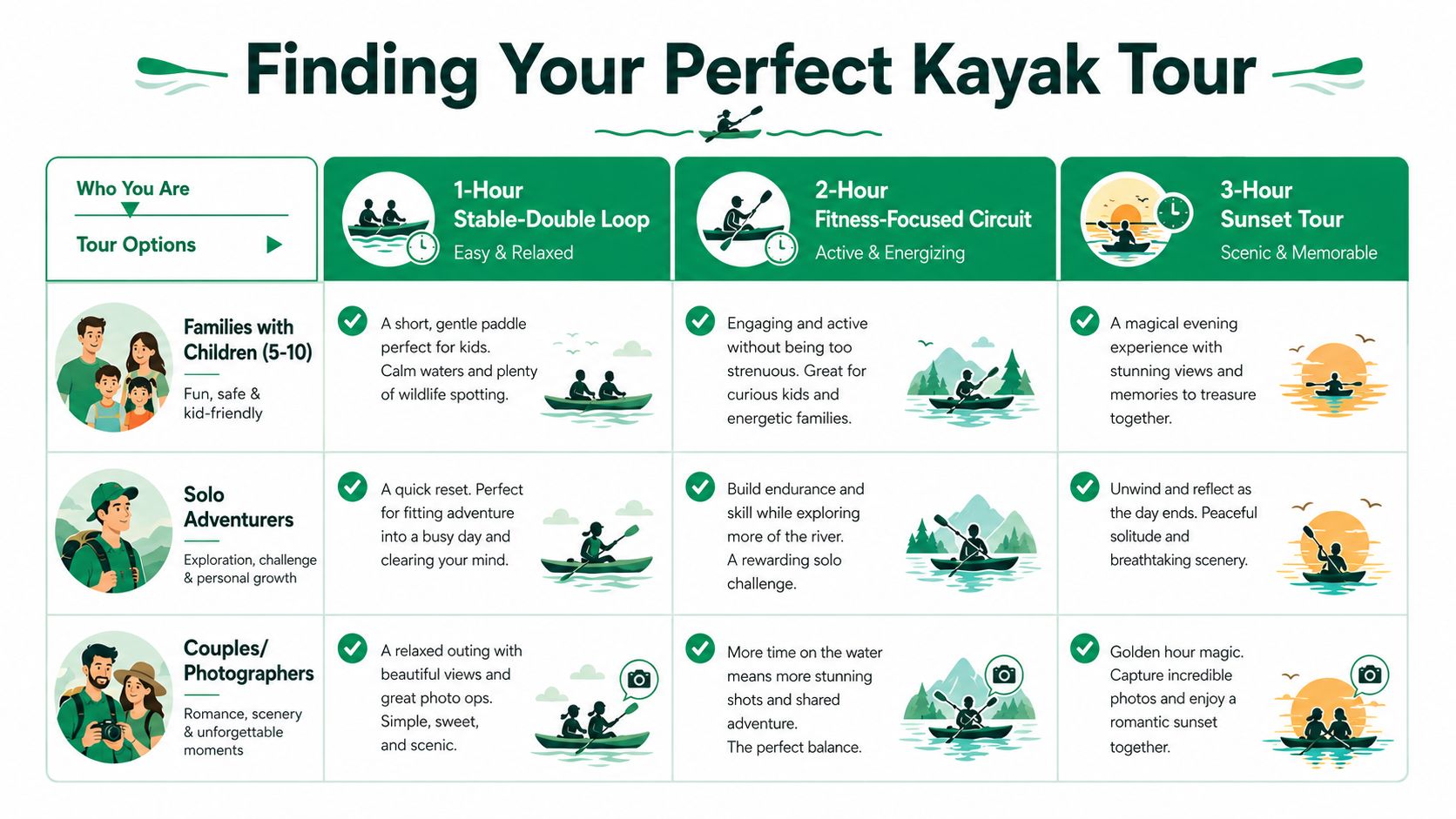
Families usually want reassurance more than excitement, and Lake Bled gives them exactly that. The steadier western shoreline is the sensible choice for younger children, because it keeps the outing predictable and easy to shorten if attention spans fade. A stable double kayak also helps here, since a child can sit with an adult and the whole trip feels more like shared time than a technical exercise.
Solo beginners are a different case. They often do better with a guided group than with a private arrangement, because the social rhythm takes pressure off every paddle stroke and makes the first fifteen minutes less awkward. Once people relax, the technique comes quicker.
Match the mood to the route
Couples and photographers often care most about light and composition. Early morning is the cleanest slot for that, because Bled Island lines up neatly with the Julian Alps behind it before the day gets busy or the lake surface starts getting textured.
Adrenaline seekers shouldn't expect Lake Bled to feel wild. It's a recovery-day paddle, not a showcase of technical difficulty, and that's fine. Serious paddlers usually treat it as a contrast session after something bigger in the Soča region, or as a warm-up before a more vertical mountain day.
Direct advice: if someone in your group has serious lower-back or knee issues, ask for a sit-on-top kayak instead of a closed cockpit.
You should also ask about minimum age and weight limits before booking, because operators vary and those details affect who can safely fit the craft. In summer, English-speaking guides are easy to find, but that pool often thins by October, so language needs are worth checking if your group isn't comfortable improvising.
Safety, Rules, and Gear You Don't Have to Think About
Lake Bled's paddling rules are straightforward, but they affect where and how you launch. Kayaks, canoes, pletna boats, and SUPs are permitted as non-motorized, shallow-draft vessels that do not damage the lakebed. Motorized craft and electric boards are prohibited under the Bled lake rules. Use the designated entry and exit points, and check boats for invasive shells before and after use. These steps protect a heavily shared lake, especially during the busy summer months.
Families should confirm the operator's safety briefing before launch. Operators provide a PFD, and children under 12 must wear one throughout the tour. Standard equipment usually includes a spray skirt, paddle, dry bag, and, in cooler shoulder-season conditions such as May and September to October, a wetsuit.
Thunderstorm days can change Lake Bled quickly. Water that looked calm at the launch may become wind-ruffled soon after summer weather arrives from the Karavanke.
Cold water also deserves respect. A capsize can shock an unprepared swimmer even in June, so a guide-led tour provides more than instruction. Reputable operators keep no more than six kayaks with one guide. That guide manages route choices, watches changing conditions, and handles boat rescue if the group gets into trouble.
Pack lightly:
- Swimsuit or quick-dry layers: wear them beneath the clothes you arrive in.
- Towel and change of clothes: both are useful after paddling.
- Sunscreen and secure footwear: loose sandals are awkward on the shore.
- Personal items left behind or sealed: place small essentials in the dry bag.
For beginners who want to rehearse the basics, this kayak technique guide explains efficient paddle form before the briefing. Once on the water, follow the guide's signals, keep clear of other vessels, and let the equipment do its job.
When to Go for the Best Conditions and Fewest Crowds
Month choice matters more than many expect. The prettiest water and the easiest booking window don't always line up, and that's why May and mid-September are often the sweet spot for a Lake Bled kayak tour. In those periods, the air is cooler, the lake tends to feel steadier, and the mood is calmer than in the middle of the summer rush.
June and early July can still be lovely, but they also bring the busiest daytime traffic around the western beach. That matters because the lake's best launch windows get squeezed once school trips and holiday groups start clustering around the same shoreline. August is the toughest month to love if you care about space and comfort, since the visitor load is heaviest and the afternoon water tends to feel less forgiving under wind.
Think in weeks, not just seasons
The most usable advice is to book the quieter part of the month, not just the month itself. The first or second week of May feels very different from the last week of August, even if the marketing photos look similar. October can also be excellent if you value emptier water and clear views, though operators reduce schedules and some close after the middle of the month.
Dawn tours, roughly 06:30 to 08:00, win for photography and calmness from May through September. Afternoon slots only really make sense when the mornings are already fully booked, which happens most often in July and August. That's also when you should be the most honest about value, since a June tour is usually the better buy than the same product in peak August.
Best-value rule: if your dates are flexible, choose shoulder season first and time of day second.
Slovenia's broader tourism flow also points in the same direction, with summer demand concentrated heavily into the warmest weeks Slovenia tourism in 2025. For paddlers, that means better water and better breathing room often show up on the calendar before they show up in the brochure.
Pairing Your Kayak Tour with Other Bled Adventures
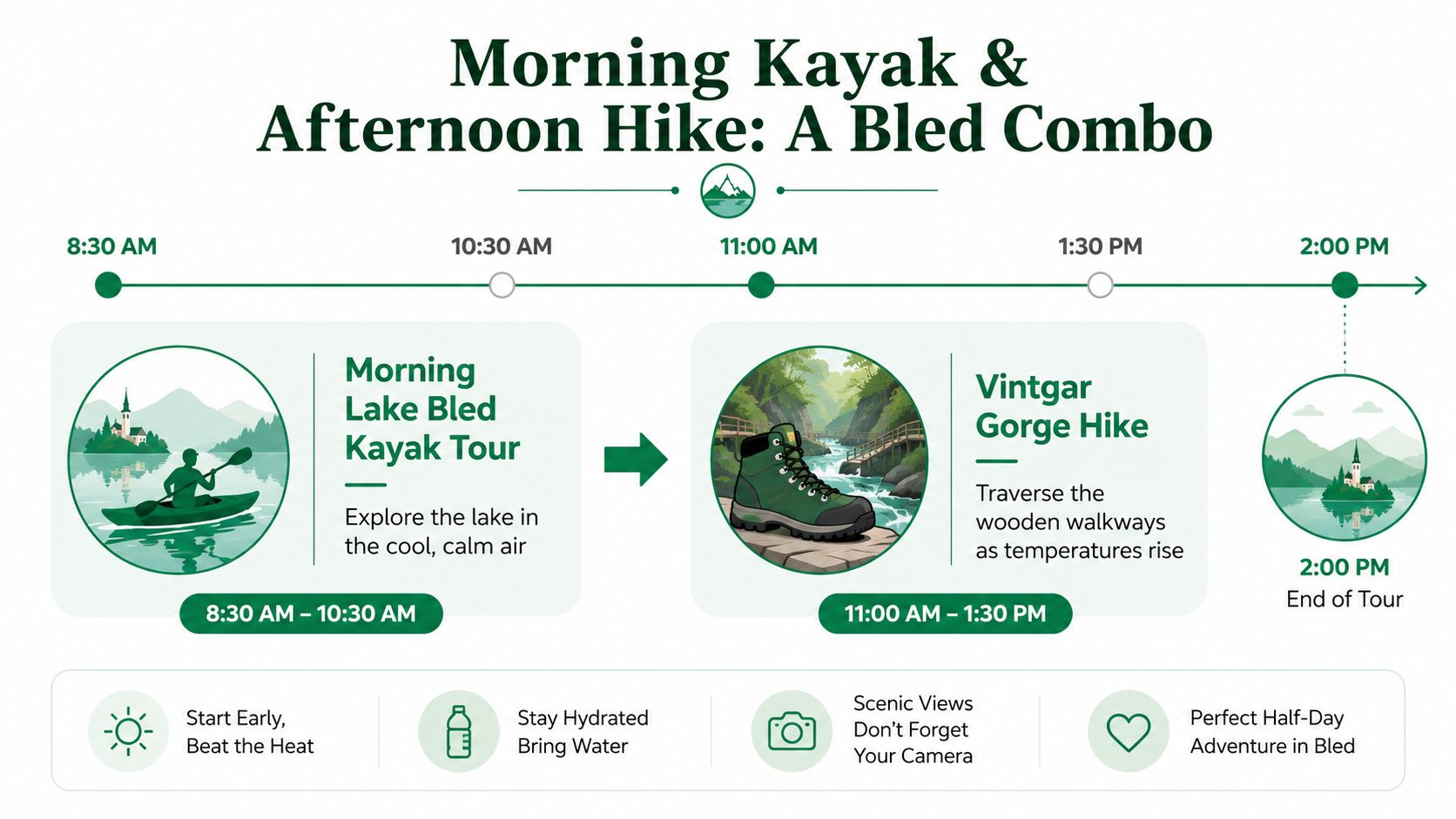
A kayak tour works best as one part of a mixed day. Start on the lake in the cooler part of the morning, then move on to a hike while the paths are still comfortable and the crowds are spreading out. That order fits Bled's rhythm better than trying to cram everything into the hottest hours.
If you want a stronger contrast, reverse the sequence. A late-afternoon paddle after a morning ride up to Vogel gives you height and views first, then a quieter finish on the water. The day feels more balanced that way, and beginners usually appreciate having the more demanding part behind them before they step into the kayak.
A clean half-day plan
Use Lake Bled as the anchor and add one second stop, not three. Vintgar Gorge works well after a morning tour because the walk stays cooler in the shade, and the trail fits naturally into the same day. Bohinj takes longer to reach, so it makes more sense when you want a fuller mountain-water combination and don't mind using more of the day on the road.
For visitors who want variety, canyon rafting on the Sava Dolinka gives a different pace from another flat-water session. Two calm-water activities back to back can blur together, while rafting changes the feel enough to keep the day from becoming repetitive.
The simplest Bled day is the one where your dry clothes, phone, and keys stay in one place while you move from lake to trail.
That matters because you do not want to return to the hotel between activities. Most kayak operators keep valuables dry while you are on the water, so you can finish the paddle and head straight to the next stop. The schedule below shows how a morning kayak tour can flow into an afternoon hike without wasting time on extra transfers.
Booking, Pricing, and How to Plan Your Day
A guided 2 to 3 hour kayak tour in Slovenia is usually sold as a simple package. Kayak, spray skirt, PFD, dry bag, and guide are included, while photo add-ons or transport from Ljubljana are usually separate. In Bled, the better booking choice depends on how much flexibility you want. Third-party platforms are convenient. Direct booking with local operators is often easier if you want a smaller group and quick message support.
For a practical rental and booking starting point near the lake, rent a kayak in Bled is worth checking alongside other local options. Outdoor Slovenia Activities is one operator that runs guided kayak experiences in the area, and other Bled-based providers also organise similar tours, so compare the meeting point, group size, and what is included before you pay.
Day-of details that save people stress
Arrive 15 minutes early so fitting, briefing, and departure do not get compressed. Parking is usually handled from Velika Zaka or the central Bled car parks. Avoid alcohol before paddling, even on a calm lake outing. Most tours continue in light rain, but thunderstorms are different, and operators will cancel if conditions turn unsafe.
A sensible booking checklist looks like this:
- Pre-book in July and August: availability tightens fast.
- Walk in during May or September: there is usually more flexibility.
- Confirm the meeting point coordinates: Bled gets busy, and vague directions waste time.
- Ask about the guide-to-paddler ratio: you do not want a crowded convoy when the lake is busy.
For the best fit, match the month to the plan. Early summer and early autumn usually give the easiest balance of water conditions, crowd flow, and comfort. Mid-summer requires earlier booking and a steadier start time if you want a calmer launch. Late in the season, shorter sessions make more sense if the day looks changeable.
If this is the first proper outing of your Slovenia trip, the goal is not to squeeze in the most activity. It is to leave the water wanting another paddle tomorrow, which is what a well-run Lake Bled tour should do.