
You're probably reading this with several tabs open. One has a map of Bohinj. One has a weather forecast you don't fully trust. One has a hut booking page that may or may not already be full. And somewhere in the middle of that planning mess, you're trying to answer a simple question: how do you do Sedmera Jezera Koča properly?
That's a fair question, because the Seven Lakes Hut is one of those hikes that looks straightforward on paper and becomes much more nuanced once you start planning your trip. The trail choice matters. The season matters. Booking matters even more than most visitors expect. If you get the logistics right, you get one of the most rewarding hut hikes in Slovenia. If you leave it too late, especially in summer, you can end up with a long ascent, a crowded trail, and no bed.
From our perspective as local guides in Slovenia, practical advice carries more weight than romantic descriptions. The valley is beautiful. The hut is iconic. But a successful trip comes down to timing, route selection, realistic pacing, and proper mountain preparation.
Table of Contents
- Welcome to the Heart of the Julian Alps
- The Seven Lakes Valley Explained
- How to Hike to the Sedmera Jezera Hut
- Securing Your Spot An Insider's Booking Guide
- When to Go A Seasonal Guide
- Your Essential Packing and Safety Checklist
- Guided Hikes and Nearby Adventures
Welcome to the Heart of the Julian Alps
You reach the hut after a steady climb, turn the last stretch of trail, and the whole setting changes. The forest gives way to open alpine ground, Dvojno jezero comes into view, and the stone hut sits where tired legs usually stop complaining for a minute.
That first arrival stays with people.
Koča pri Triglavskih jezerih, often called the Seven Lakes Hut, stands high in the Triglav Lakes Valley inside Triglav National Park. For international visitors, this is often the moment when the Julian Alps stop feeling like a day trip and start feeling like a real mountain tour. The setting is beautiful, but the hut's real importance is practical. It gives hikers a reliable overnight stop in one of Slovenia's classic alpine areas, which is exactly why summer demand is so high.
That matters more than many first-time visitors expect. In peak season, the challenge is often not reaching the hut. It is getting a bed. Good weather weekends, school holidays, and August dates fill fast, especially for hikers planning a hut-to-hut route rather than a long out-and-back day. If you want a quieter experience, timing usually matters more than fitness.
Practical rule: Treat this as a proper alpine outing with hut support, not a casual walk to a mountain restaurant.
I give the same advice to guests every season. Start early, carry enough layers for a cold change in weather, and plan around the group you have. Strong trail markings help, but they do not shorten the ascent, reduce afternoon storms, or fix poor footwear. The most common mistake among foreign visitors is underestimating how demanding a “well-known hut hike” can still be in the Julian Alps.
Choose the day carefully, book early if you plan to sleep there, and keep enough margin in your schedule to adjust for weather or trail conditions. Do that, and Sedmera Jezera Koča gives you what people come to Slovenia for in the first place. Clear water, limestone terrain, mountain silence, and an overnight that feels earned.
The Seven Lakes Valley Explained
Reach the valley on a clear summer morning and the first impression is space. The trail opens, the rock turns pale, and Dvojno jezero suddenly makes the hut feel placed rather than built. That setting is why Sedmera Jezera Koča stays in people's memory long after the ascent.
The name still catches first-time visitors off guard. The Seven Lakes Valley is not a tight cluster of lakes around one building. It is a long karst valley inside Triglav National Park, shaped by water, limestone, forest edges, alpine pasture, and open high-ground terrain. The hut sits beside Dvojno jezero, one of the valley's most recognisable lake settings, so hikers arrive straight into the scenery instead of viewing it from a distance.
A classic route with real mountain character
This is one of the traditional hut areas of the Julian Alps, and it feels that way on the ground. Trails are well established, junctions are familiar to local hikers, and the whole valley has the rhythm of a route people have been walking for generations. It does not feel built for quick consumption. It feels used, respected, and still authentically alpine.
That matters for expectations. International visitors often choose this valley for a first hut trip because the goal is famous and the path is well known. The trade-off is that popularity can make the place look easier on paper than it feels underfoot. A marked trail and a famous hut do not turn the day into a casual outing.
If you want a clearer picture of the main route options before choosing your day, our guide to the Sedmera Jezera hiking route options helps compare the feel of each approach.
Why the valley feels bigger than the map suggests
The valley keeps changing as you move through it. Lower sections can feel shaded and enclosed. Higher up, the terrain opens out into limestone shelves, dwarf pine, grass, and water that appears where many visitors do not expect it. That variation is part of the reward. You are not walking to a single viewpoint. You are moving through a chain of distinct alpine environments.
The hut's location is central to that experience. Sitting next to Dvojno jezero, it works as a natural overnight stop and as a base for seeing more of the valley without rushing every decision into one long day.
A lot of guests ask me whether this area is only for hardened mountaineers. It is not. Prepared hikers with decent fitness do well here. Families with mountain experience also come through successfully. The key is simple. Choose a route that matches your group, allow more time than your phone estimate suggests, and treat the hut as part of a working mountain network, not a restaurant with an easy stroll attached.
Hikers who give this valley time usually enjoy it far more than hikers who try to race through it.
Access from the main trailheads is manageable for fit walkers, but it still takes a proper half day on foot in mountain terrain. That is one reason the valley attracts such a mix of hikers. It feels accessible, yet still earned. If you are preparing for a multi-day trip and want to build fitness before arriving, this overview of science-backed endurance training is a useful starting point. Fitness helps, but judgment matters more here. Start with the right expectations, and the Seven Lakes Valley delivers one of the most satisfying hut experiences in Slovenia.
How to Hike to the Sedmera Jezera Hut
You book a bed for tonight, check the forecast over coffee in Bohinj, and then face the decision that shapes the whole day. Do you take the shorter, steeper line and arrive sooner, or choose the steadier approach that leaves more in the tank for tomorrow? That choice matters more than many international visitors expect.
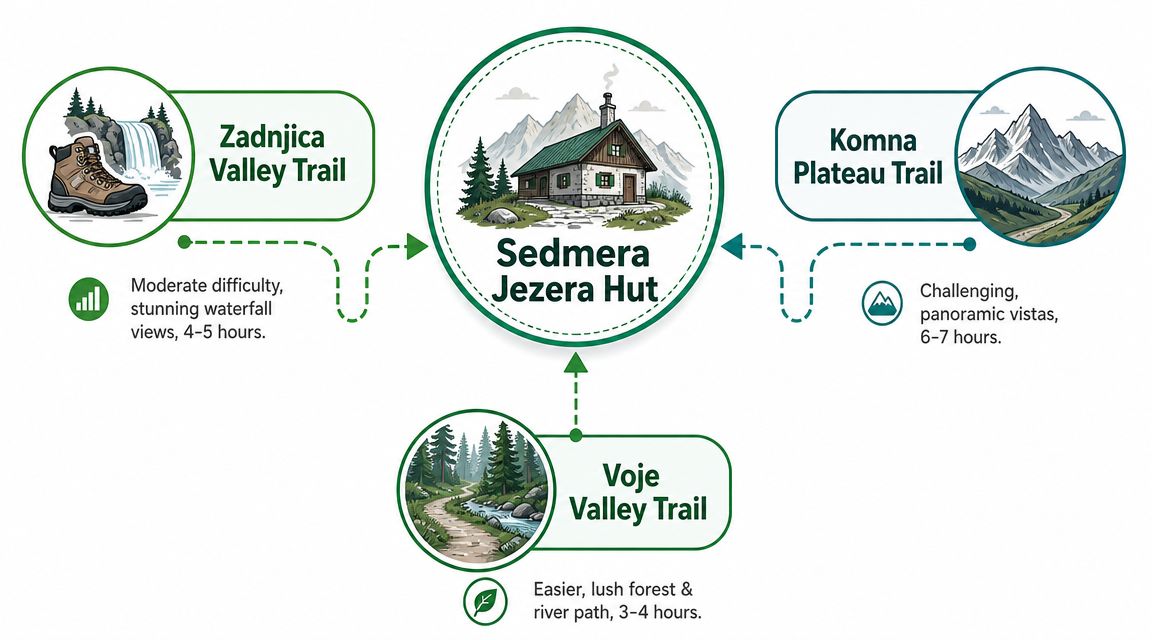
A good route to Sedmera Jezera Koča is the one that fits your group, your pack weight, the weather window, and your overnight plan. If you already have a reservation, the goal is not to race the mountain. The goal is to arrive safely, with enough energy left to enjoy the hut and handle the next day.
Choosing the route that fits your day
The Savica approach via Komarča is the line many strong hikers ask about first. It is direct and satisfying, but it feels serious in hot weather or with a full overnight pack. I recommend it to hikers who are confident on steep, rocky ground and comfortable with sustained climbing from the start.
The Blato side usually gives a better day for visitors who want a more even rhythm. The ascent builds gradually, the walking feels less abrupt, and groups tend to stay together more easily. For mixed ability parties, families with mountain experience, and hikers adjusting to Alpine terrain, this is often the smarter call.
Longer approaches from the Bohinj side suit walkers who want the journey itself to be the point. These routes give you more variety through forest, pasture, and higher karst terrain, but they also demand better pacing. Start too fast and the final stretch to the hut can feel much longer than expected.
If you are preparing in advance, uphill walking, long steady efforts, and recovery between back to back days matter more than random hard sessions. This overview of science-backed endurance training is a useful starting point for hikers who want to arrive better prepared.
A practical route comparison
| Route | Starting Point | Approx. Duration | Difficulty | Best For |
|---|---|---|---|---|
| Savica via Komarča | Savica area | Around half a day on foot | Demanding | Strong hikers who want a direct ascent |
| Bohinj via Črno jezero | Bohinj side | A longer half day | Moderate to demanding | Hikers who want a scenic approach |
| Longer valley approaches | Major trailheads around the area | Varies by trailhead and pace | Varies | Groups matching the route to experience and stamina |
Treat every posted time as a planning reference, not a promise. Summer heat, wet rock, photo stops, and crowded trail sections can change your pace quickly. That is one reason I push visitors to start early, especially if they have a fixed dinner and sleeping plan at the hut.
For route visuals and local trail context, our own Sedmera Jezera route guide helps hikers compare the feel of the approaches before choosing one.
A few decisions make the day easier:
- Start early. You get cooler temperatures, more margin for slower sections, and a better chance of reaching the hut before the busiest late afternoon arrival wave.
- Choose for the slowest hiker in the group. One experienced mountain walker cannot set the standard for everyone.
- Plan the descent before you leave the car. Knees, footing, and fatigue cause problems on the way down, especially after a poor night's sleep in a busy dorm.
- Carry less than you think you need. Extra weight turns a manageable route into a tiring one, particularly on steeper sections.
The strongest plan is usually the one with a little spare capacity built in. In the Julian Alps, that margin often decides whether the hike feels controlled and enjoyable, or rushed from the first climb onward.
Securing Your Spot An Insider's Booking Guide
You finish the climb in good time, reach the hut, and find out every bed is already taken. In peak summer, that happens more often than international visitors expect.
Booking pressure at Sedmera Jezera Koča catches people out because the hut sits on one of the most famous routes in the Julian Alps and works within a short operating season. The official PD Ljubljana-Matica hut page lists a total capacity of 200 people, with 30 beds in private rooms and 170 in communal dormitories. That split matters. A couple looking for a private room is competing for a very small part of the hut's capacity.
Why Booking Is So Competitive
Weekend demand is the main pressure point. In practice, Friday and Saturday nights fill first, then good-weather midweek dates follow. If your flights, rental car, and valley hotel are fixed before you reserve the hut, you have already made the hard part harder.
Private rooms go first. Shared dorm places usually give you more options, but only if you book early enough and accept that mountain hut sleeping is simpler, noisier, and less private than hotel accommodation. I tell guests to decide this before they start checking dates. Flexibility on room type often decides whether the overnight plan works at all.
International hikers also misread the season. This is not a year-round guesthouse with steady turnover and easy last-minute availability. Opening dates vary by year, and the bookable window is short. Check current valley conditions before committing to a date, especially if weather may affect your approach, with our Bled weather guide for mountain trip planning.
How to improve your chances
A few habits improve your odds noticeably:
- Reserve the hut before building the rest of your overnight itinerary. The bed is the limiting factor, not the parking space or the room in the valley.
- Target midweek dates if you can. Tuesday or Wednesday nights are often easier than weekends and usually quieter once you arrive.
- Choose dormitory sleeping if your group can tolerate it. Holding out for a private room narrows your options straight away.
- Book as soon as your travel dates are firm. Waiting rarely rewards you in July and August.
- Cancel properly if plans change. It helps other hikers and keeps the hut system working fairly.
One more trade-off is worth being honest about. The “perfect” date, sunny forecast, weekend stay, and private room usually do not come together. Successful bookings often come from choosing two or three priorities and letting go of the rest. If you want the easiest reservation, go midweek and accept a dorm. If you want more comfort, book very early and keep your travel dates flexible.
That is the practical mindset I use when helping guests plan this overnight. Treat the hut bed as the first reservation, not the final detail, and your chances improve a lot.
When to Go A Seasonal Guide
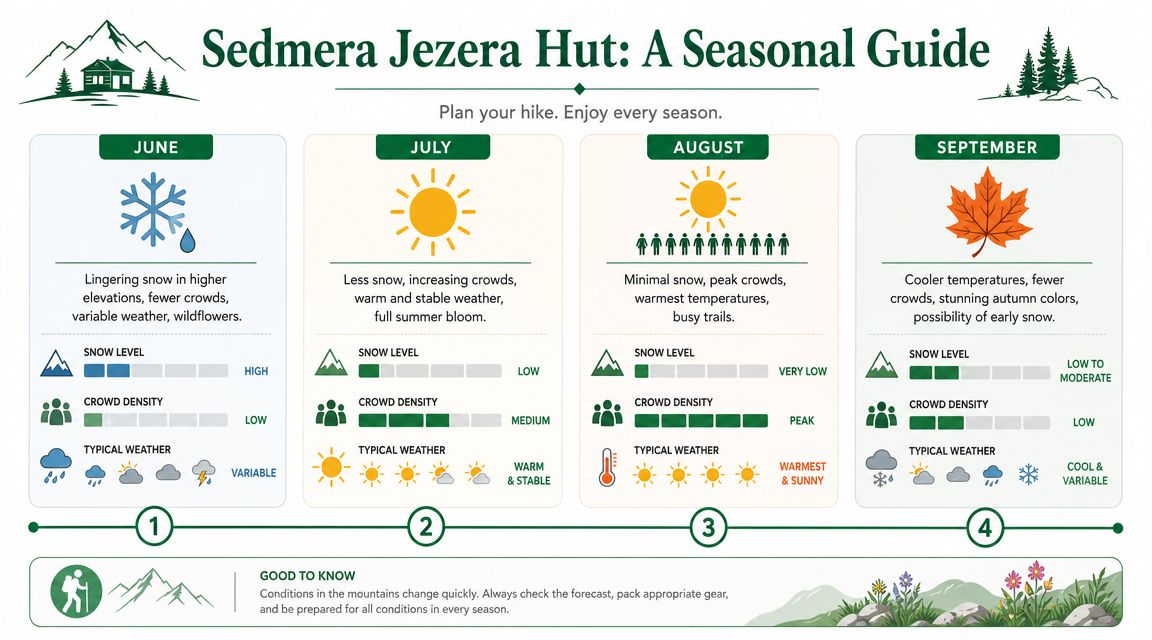
The hut's alpine position controls the season more than the calendar does. Koča pri Triglavskih jezerih sits at 1,685 m, and that elevation shapes snow persistence, route conditions, and operating windows. The hut is typically open from mid-June to early October, while the bivouac may remain accessible outside those dates for experienced mountaineers, according to Turistika's hut detail page.
Early season realities
Mid-June into early July can be beautiful, but it asks more of hikers. You may find lingering snow on shaded sections or higher terrain nearby. Trails can be wet, mornings feel colder, and your pace may be slower than expected.
This period often suits hikers who value quieter mountain atmosphere and are comfortable adjusting to conditions. It does not suit people who want guaranteed dry paths, minimum gear, and a simple summer walk.
Before setting off, check broader local conditions around the region with a current Bled weather guide, then compare that with mountain-specific forecasts. Valley sunshine doesn't guarantee stable weather higher up.
Peak summer and late season trade-offs
Mid-summer gives most visitors what they're hoping for. Trails are generally clearer, days are longer, and the hut atmosphere is lively. The trade-off is crowd density. You'll share the route, the dining room, and the sleeping areas with many other hikers.
That doesn't make peak season a bad idea. It just means you should lean harder on early starts, pre-booking, and realistic expectations. People who expect solitude on an August weekend usually leave disappointed.
September often brings a very different mood. The light softens, temperatures drop, and the valley can feel calmer. For many experienced hikers, this is the most satisfying period because the trails often feel less hectic while still offering good walking days. The trade-off is weather instability. Cold mornings, low cloud, and an early seasonal shift can change the plan quickly.
A simple rule helps here:
- Choose early season if you're comfortable with variable mountain conditions.
- Choose peak summer if you want the easiest overall access and accept the crowds.
- Choose late season if you prefer quieter trails and don't mind colder, less predictable days.
Strong mountain days in September can feel magical. Weakly prepared September hikers can get cold very fast.
The right month depends less on marketing photos and more on your appetite for snow patches, crowded huts, and weather risk.
Your Essential Packing and Safety Checklist
Most problems on this hike start long before the trailhead. They start when people pack for a sunny tourist walk instead of a mountain day. Conditions in the Julian Alps can shift quickly, and even a straightforward route feels serious when rain, wind, fatigue, or a late return enter the picture.
What belongs in your pack
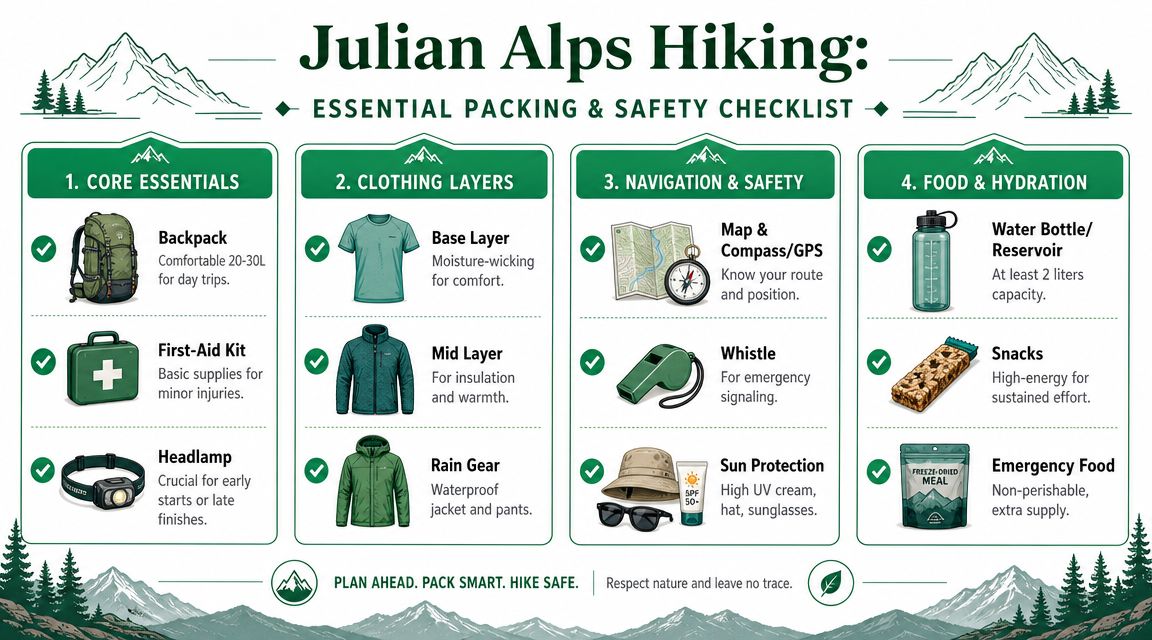
A safe pack list isn't glamorous, but it works. If you want a general travel framework before adapting it for alpine use, this broader guide on what to pack for your journey can help organise the basics.
For the Seven Lakes Hut specifically, focus on mountain function:
- Footwear that's already broken in: Hiking boots or sturdy trail shoes with grip matter far more than brand prestige. New boots on a rocky descent are a terrible experiment.
- Layered clothing: Start with a moisture-managing base, add insulation, and carry a waterproof outer layer. Cotton is the weak link because it gets wet, stays wet, and makes cold conditions worse.
- Food you'll eat: Bring simple, familiar snacks. A mountain day is not the time to test unusual energy products you dislike.
- Enough water for the route: Don't assume casual sipping will be enough on a warm climb.
- Navigation backup: Phone mapping helps, but it shouldn't be your only plan. A map, downloaded route, or dedicated navigation device adds margin.
- Headlamp: Even on a day hike. Slow descents, delayed starts, and weather hold-ups happen.
- Basic first aid and blister care: Small problems become bigger when they're ignored several hours from the car.
For route planning and orientation, our Triglav Lakes map page is a useful companion before you go.
What hikers most often get wrong
The first mistake is underdressing because the forecast looks warm. High-alpine conditions don't care what it felt like beside Lake Bled at breakfast. Wind, shade, and sudden rain change comfort and safety quickly.
The second mistake is carrying too little and then walking too slowly because of discomfort. Hunger, sore feet, and poor weather protection don't just make the day less pleasant. They affect judgement. People stop making good decisions when they're cold, thirsty, or rushed.
The third mistake is treating marked trails as risk-free. Slovenian mountain routes are well organised, but they still demand attention. Loose stone, muddy sections, exposed terrain, and fatigue on descent are the usual trouble points.
Bring the gear that lets you handle a worse day than the one you expect.
A good checklist isn't about fear. It's about keeping a great hike from turning into a preventable problem.
Guided Hikes and Nearby Adventures
Some hikers love doing all the planning themselves. Others don't. Both approaches are valid. But there are situations where a guided day makes obvious sense.
When a guided day makes more sense
A guided hike is especially useful if you're visiting Slovenia for a short time, if your group has mixed fitness levels, or if this is your first hut-based alpine hike. In those cases, a key benefit isn't only navigation. It's pacing, judgement, and decision-making when the day doesn't go exactly to plan.
Families and international visitors often tell us the same thing after their first mountain trip here. The trail itself wasn't the hardest part. The hardest part was knowing what was normal, what needed caution, and when to adjust the plan. That's where a local mountain guide adds value.
Outdoor Slovenia Activities is one option for visitors who want organised outdoor days around Bled and Triglav National Park, including guided experiences and logistics support based on current local conditions.
What to combine with the area
The Seven Lakes Valley works well as the centrepiece of a wider Slovenia trip. Many travellers pair a hut hike with easier days around Bohinj or Bled so the holiday keeps variety. That's usually smarter than trying to stack hard mountain days back to back if you're not used to Alpine terrain.
A balanced plan often works better than an overambitious one:
- Add a water-based day: Rafting or kayaking gives your legs a break while keeping the trip active.
- Keep one lighter recovery day: Lake walks, viewpoints, or a relaxed Bohinj outing help before or after a hut night.
- Leave weather margin: The mountains don't always fit your preferred timetable, so keep one day adaptable.
The visitors who enjoy Sedmera Jezera Koča most are rarely the ones who cram the most into the itinerary. They're the ones who leave enough room to walk properly, notice the valley, and come back with energy rather than exhaustion.
If you'd like help planning your time around Bled, Bohinj, and Triglav National Park, explore Outdoor Slovenia Activities for guided outdoor options that can fit around a Seven Lakes trip, from mountain days to rafting, kayaking, and family-friendly adventures.