
You can arrive at the river in the right mood and still ruin the first hour by wearing the wrong kit. On Slovenia's alpine runs, the mistake usually isn't lack of enthusiasm, it's dressing for the air instead of the water, then discovering that a warm Bovec morning hides a cold current under the raft. The better approach is simple, dress for the river first, then add sun protection, secure footwear, and the layers that let you stay focused on paddling instead of shivering.
Table of Contents
- Why Your Clothing Choices Shape the Whole Rafting Experience
- Building the Perfect Layering System for River Rafting
- Choosing Footwear That Stays on Your Feet
- Wetsuits and Drysuits for Cold Water Rafting
- Sun and Thermal Protection Essentials
- What Your Rafting Operator Already Provides
- Your Final Rafting Gear Checklist
Why Your Clothing Choices Shape the Whole Rafting Experience
A first-timer on the Sava Dolinka can look perfectly prepared from the car park, then feel the whole trip change after one cold splash. Cotton clings, sandals slip, and distraction creeps in fast. The raft still moves, the scenery still delivers, but you stop noticing the river and start negotiating with your own discomfort.
That's why clothing matters more than people expect. REI recommends dressing for water temperature, not air temperature, and says that when water is below 70°F, 21.1°C, rafters should plan on a wetsuit or dry suit and booties, plus a PFD at all times on the water, with synthetic or wool layers as the practical base because cotton stays cold when wet. That threshold is the decision point for Slovenia's mountain-fed rivers, where summer air can feel generous while the water stays stubbornly cold. You can read a similar practical approach in planning trip outfits with TryThisFit, although Slovenian alpine rivers demand the extra caution that comes with cold runoff.
Practical rule: if you're unsure what to wear for river rafting in Slovenia, assume the river is colder than it looks.
The right outfit changes the whole day. On a guided trip, that means you stay freer in the raft, safer on wet exits, and more present for the scenery, instead of wasting energy thinking about what's soaking through. For a local rafting route example, see rafting on the Soča River, where mountain water and fast-changing weather make clothing choices especially important.
Building the Perfect Layering System for River Rafting
Start with a base layer that works when wet
The first layer should be synthetic or wool, never cotton. A quick-drying top, such as polyester or merino, pulls moisture away from the skin and keeps some insulation even after spray or a swim. That matters on Slovenian rivers because a wet shirt is not just annoying, it becomes the thing that keeps stealing heat all afternoon.
For warm days, a light synthetic athletic top can be enough. For shoulder season or a chilly morning start, long sleeves make more sense because they protect you from both cold water and wind. The fabric choice is more important than the exact cut, which is why rafting guides keep coming back to the same advice, no cotton, quick-dry only.
Add warmth only when the river calls for it
A mid-layer is there for insulation, not bulk. A lightweight fleece is the usual choice because it traps warmth without becoming heavy when damp. If the day starts cool or the forecast looks unstable, a waterproof or windproof shell gives you another buffer against spray and sudden mountain weather shifts.
A useful way to think about layering is this. If the water is above 21.1°C, quick-dry clothing and sun protection are usually enough. If it drops below that line, insulation becomes part of safety, not a comfort upgrade. On a hot, stable day, you can skip the fleece and keep the system simple, but the base layer should still be synthetic or wool.
Choosing Footwear That Stays on Your Feet
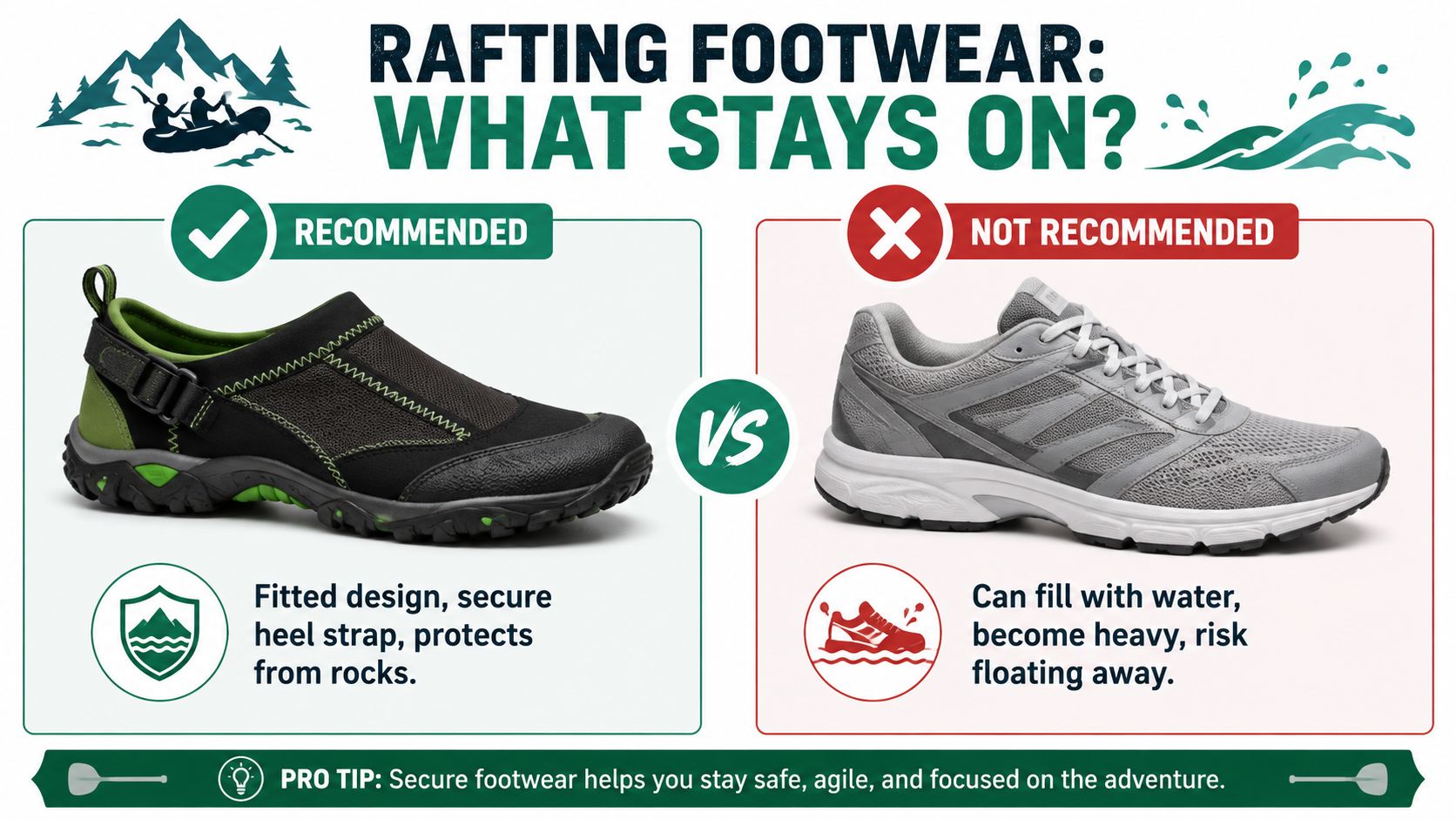
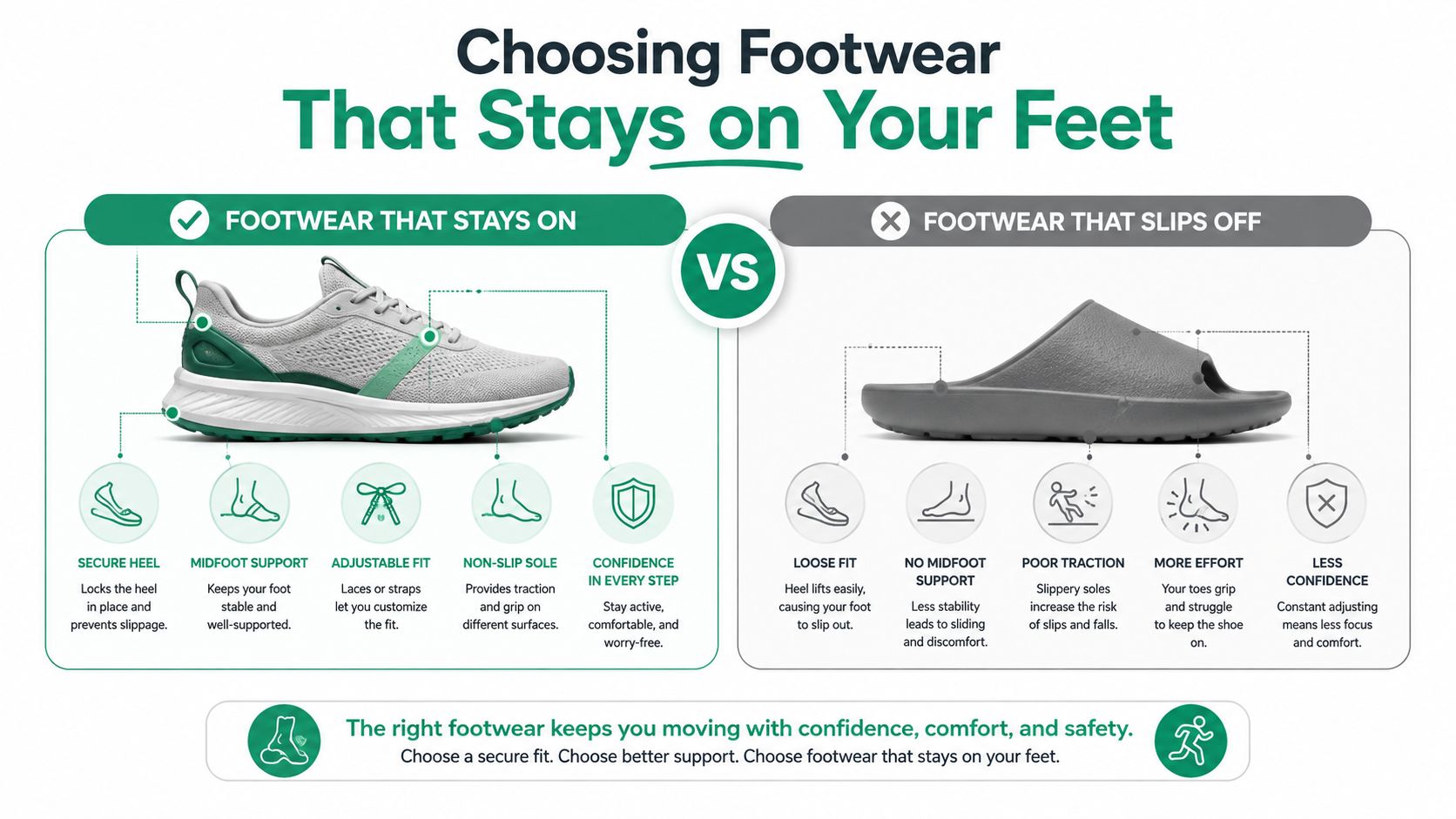
Footwear is where many first-time rafters get surprised. A shoe that feels fine on land can become useless as soon as the raft rocks, a current pulls at your feet, or you step onto a slippery riverbank at take-out. The main job is simple, stay on, protect the foot, and drain quickly.
Three checks that solve most mistakes
Start with the retaining system. Laces, a heel strap, or a snug upper are essential because the shoe has to stay with you if you end up in the water. Then check toe coverage. Full coverage helps against rocks, knocks, and the awkward steps that happen during launches and portages.
The final layer is comfort in cold conditions. Synthetic or wool socks can help when the river is chilly, but only if the shoe itself already fits securely. Socks inside a loose shoe just create more slippage.
What to leave behind
Guides consistently reject flip-flops, Crocs, and loose casual shoes because they're the first things to disappear in fast water. Bare feet aren't a solution either. You lose grip, you lose protection, and you make every rocky exit harder than it needs to be.
A good middle ground is a strapped sandal with a strong heel strap and a sole that grips wet stone. That works well for warmer days, while lace-up trainers or dedicated water shoes make more sense when the river is colder or the terrain at the bank is rougher. For a Slovenia-specific footwear reference, see obutev za v vodo.
Wetsuits and Drysuits for Cold Water Rafting
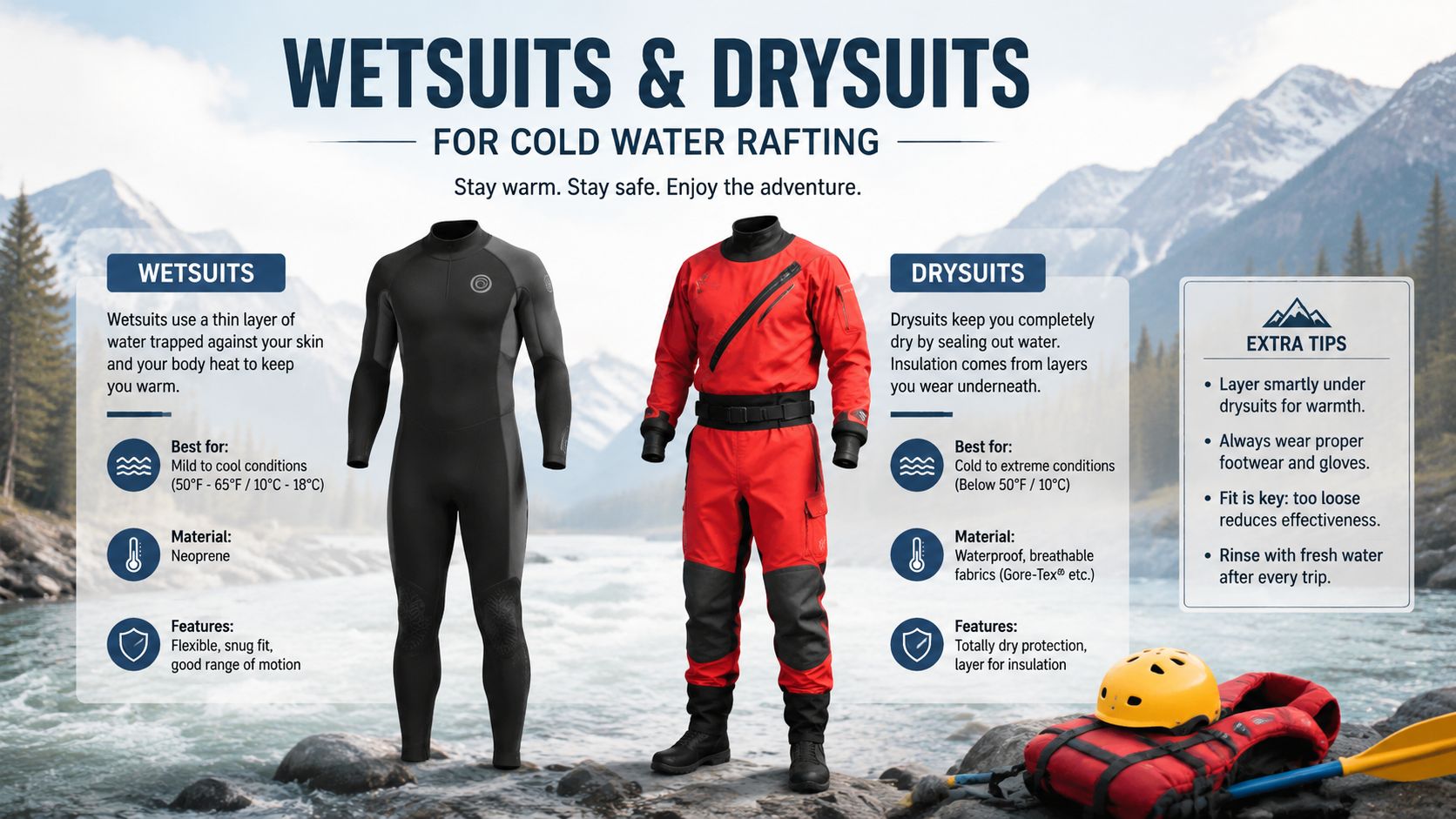
Cold water changes the whole equation. In Slovenia, that matters because alpine rivers can feel cold even when the valley air is warm, and that contrast catches people off guard. Once the water slips below the 21.1°C benchmark, the choice isn't about style anymore, it's about how much insulation you need.
Wetsuit for active warmth
A wetsuit works by letting in a thin layer of water, then warming that water with your body heat. It suits moderate cold and active paddlers who generate a lot of movement, which is why it's common on trips where the river is cool but not extreme. It's also the more familiar option for first-timers, because it adds warmth without feeling as enclosed as a full dry system.
Drysuit for the coldest conditions
A drysuit keeps you dry by sealing at the wrists and neck. That makes it the stronger option when the water is very cold, the trip runs longer, or you know you chill quickly. If you've ever ended a day still thinking about the one cold splash, a drysuit is the piece of kit that solves that problem.
Booties and neoprene gloves are smaller upgrades that make a noticeable difference on cold days. They're useful when you don't need a full drysuit but still want your hands and feet to stop feeling like the first things the river attacks. On the Soča and Sava Dolinka, that kind of targeted insulation often keeps the trip comfortable without overcomplicating your kit.
Sun and Thermal Protection Essentials
Slovenian rivers can give you two different problems in the same hour. The sun sits high, the water reflects glare back at you, and then a cold splash cuts through your comfort. The fix is a small set of extras that protect both skin and temperature.
The items that earn their place
- Hat with a brim: Keeps sun off your face and neck, and a secure fit matters because loose hats don't last long once the raft starts moving.
- Sunglasses with a retainer strap: Regular sunglasses are easy to lose, retainer straps keep them attached when spray hits.
- Sunscreen: Apply it before you arrive, because the river starts reflecting light almost immediately.
- Lip balm with SPF: Easy to overlook, useful on long bright days, especially if the wind picks up.
- Light fleece or waterproof shell: Adds thermal protection when the morning starts cool or the weather turns.
For a practical consumer-side guide to sun protection basics, Healtsy's SPF essentials guide covers the general logic well, but rafting adds one extra demand, the gear has to stay put when wet.
Why the small pieces matter
A brimmed hat doesn't just block sun, it keeps your face more relaxed when the river throws light back at you from every angle. Sunglasses without a strap can be gone after the first splash, and losing them mid-trip usually turns into avoidable frustration. A light shell or fleece is the difference between “fresh” and “too cold to enjoy the view” on a crisp morning.
Useful habit: apply sunscreen before the launch, then assume you won't have many comfortable chances to deal with it later.
What Your Rafting Operator Already Provides
First-time guests often overpack because they're worried about missing something critical. In practice, a professional outfitter handles the biggest safety pieces, so you don't need to buy a pile of specialised gear before your first river day.
The standard kit stays with the professionals
A properly fitted PFD, or lifejacket, and a helmet are standard safety equipment on commercial rafting trips, and they're worn regardless of skill level or river conditions. One rafting guide states these are core items, not optional extras, and that's the right way to think about them. They stay on from the moment you step into the raft until you get out again, because they're part of the system that keeps the day safe.
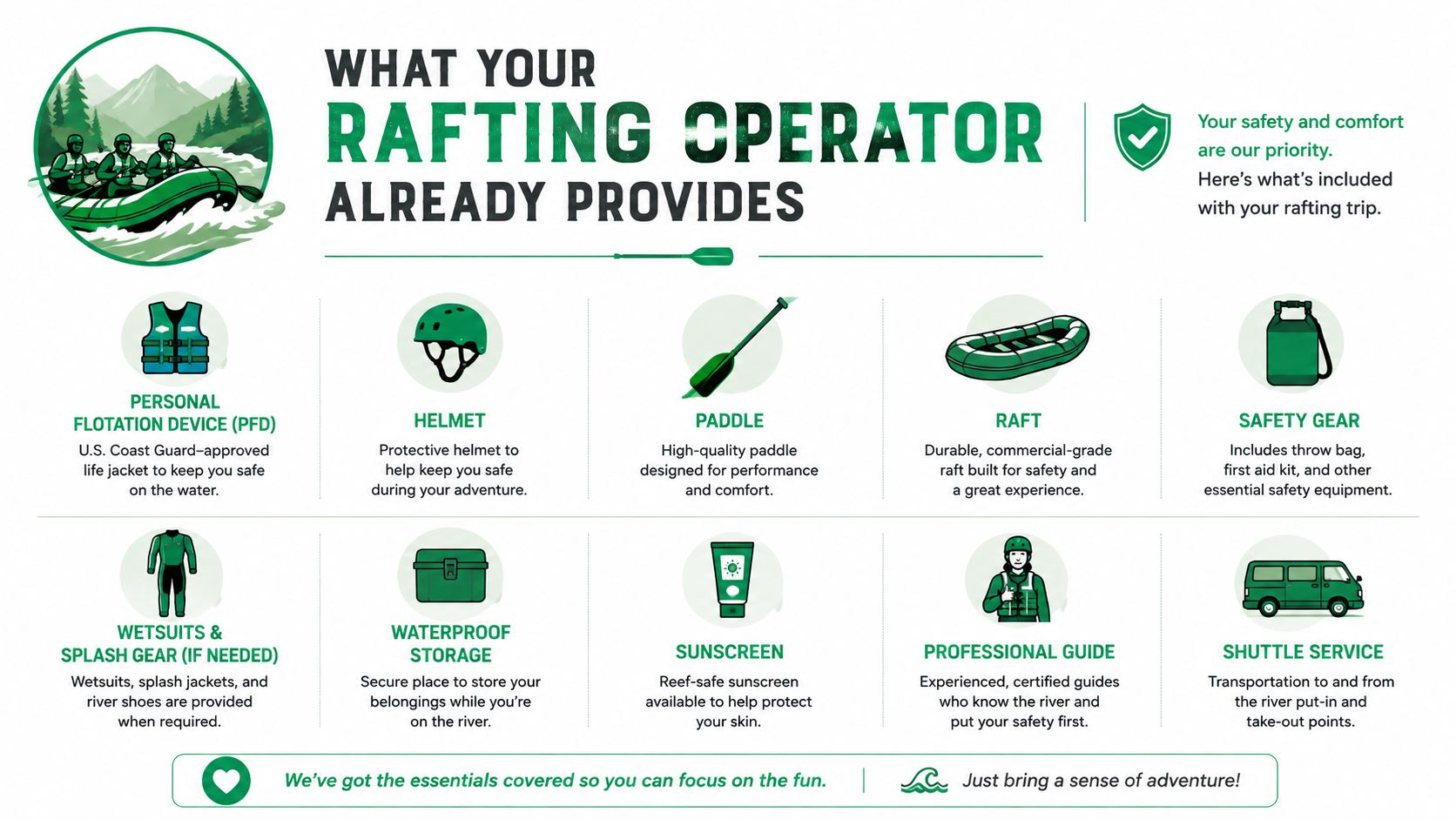
Many operators also include wetsuits or drysuits when the water calls for them, and they usually provide the colder-weather extras that go with them. At Outdoor Slovenia, the practical side is covered in the same spirit, with technical equipment handled by the team and the clothing decisions left to you. If you're searching around locally, the phrase rafting near me usually leads you back to the key question anyway, what do I need to bring myself?
Keep your own packing simple
That means you can focus on the pieces you control, layers, footwear, sun protection, and a dry set of clothes for after the trip. Safety hardware is the operator's job. Comfort clothing is yours.
Your Final Rafting Gear Checklist
If you want the short version of what to wear for river rafting, use this rule set. Dress for the water, not the air. Never wear cotton on the river. Keep your footwear secure.
- Base layer: synthetic or wool top, quick-drying and close enough to the body to work under a PFD.
- Mid-layer: lightweight fleece if the morning is cool or the river stays cold.
- Outer shell: windproof or waterproof layer when spray or mountain weather is likely.
- Footwear: strapped sandals, water shoes, or lace-up trainers with a secure fit.
- Sun protection: brimmed hat, strap-secured sunglasses, sunscreen, and lip balm with SPF.
- Thermal extras: booties, neoprene gloves, or a drysuit when the water temperature demands more protection.
- After-trip comfort: dry clothes and shoes waiting for you on shore.
If you're packing your phone, keys, or a change of clothes, it also helps to think about protection for your daily carry so the items you leave behind stay dry while you're on the river.
The less you overpack, the easier the day feels. The right clothing does the heavy lifting, and the outfitter covers the technical safety gear.
Outdoor Slovenia Activities runs guided rafting, canyoning, and other beginner-friendly adventures around Bled, the Soča Valley, and Slovenia's alpine rivers, with technical equipment and practical support handled by the team. If you're ready to book a river day and want clear advice on what to wear for river rafting, visit Outdoor Slovenia Activities and plan your trip with people who guide these waters every season.