
You've probably stood on a riverbank before, watching helmets bob above the water and wondering if white water rafting for beginners is really as intense as it looks. On the Sava Dolinka near Lake Bled, the answer is usually reassuring: with a guide, the right river section, and proper gear, your first trip feels less like chaos and more like a tightly managed outdoor adventure.
The trick is choosing a trip that fits your confidence, the season, and the group you're travelling with. Around Bled, that usually means calm, guided water, clear instructions, and a boat crew that's helping you every stroke of the way.
Table of Contents
- Getting Started with White Water Rafting
- Understanding the Thrill of Your First Trip
- Safety Foundations and Essential Gear
- Understanding River Class Levels
- Top Beginner White Water Rafting Routes Around Bled
- Operator Services and How to Prepare
- Taking the Plunge with Confidence
Getting Started with White Water Rafting
The first few minutes on the riverbank near Lake Bled tell you a lot. The guide is checking life jackets, your group is gathering around the raft, and the water looks lively without looking wild. That mix of nerves and curiosity is exactly where most first-time guests start, and it's a good place to be.
A white water rafting beginner doesn't need paddling experience to enjoy a well-run trip. Beginner trips in Europe are typically run on Class I–II water, where obstacles are limited, rapids are small, and the main job is following the guide's calls. The point isn't to prove anything, it's to enjoy the river scenery and the shared rhythm of a small team moving together.
Practical rule: if a trip feels rushed before you've even touched the water, ask more questions. A proper beginner outing should feel organised, calm, and clearly explained.
That's why local operators near Bled build the experience around comfort as much as excitement. If you're comparing options, a good place to start is rafting near me, because for beginners, the choice is often about distance, river section, and how much support you want on the day. The best first outing feels scenic, social, and manageable from the start.
Understanding the Thrill of Your First Trip
Your first run starts before the rapids do. You feel the cold alpine air, hear the river changing tone ahead, and notice how quickly the guide gets everyone focused. That's normal. The excitement is real, but on a beginner run, it's controlled and shared.
Commercial guided rafting has a fatality rate of about 0.55 deaths per 100,000 user days, and guided trips are safer than private boating at 0.45 versus 2.25 deaths per 100,000 user days (whitewatr.com). Those numbers matter because they show why first-time guests are placed on guided water, not left to figure it out alone. The guide's job is to read the river, time the paddle strokes, and keep the raft in the right line.
What you'll feel on the water
The emotional pattern is usually simple. There's anticipation at the put-in, a burst of adrenaline at the first splashy section, then relief when you realise the boat is stable and the guide is in control. On Class I–II water, the rapids are enough to make you laugh, grip the paddle, and lean into the moment, but not so complex that they overwhelm beginners.
The social side helps a lot. Everyone paddles together, so even nervous guests usually settle once they hear the same short command repeated by the guide and see the rest of the crew respond. That shared timing is part of the fun, because the raft starts to feel like a small team rather than a group of strangers.
The most useful first-trip mindset is simple. Follow the guide, keep paddling when asked, and let the river provide the excitement.
A half-day outing often alternates between scenic floats and short bursts of action. That rhythm is what makes beginner rafting approachable. You get enough thrill to remember it, but not so much intensity that you spend the whole trip braced for impact.
Safety Foundations and Essential Gear
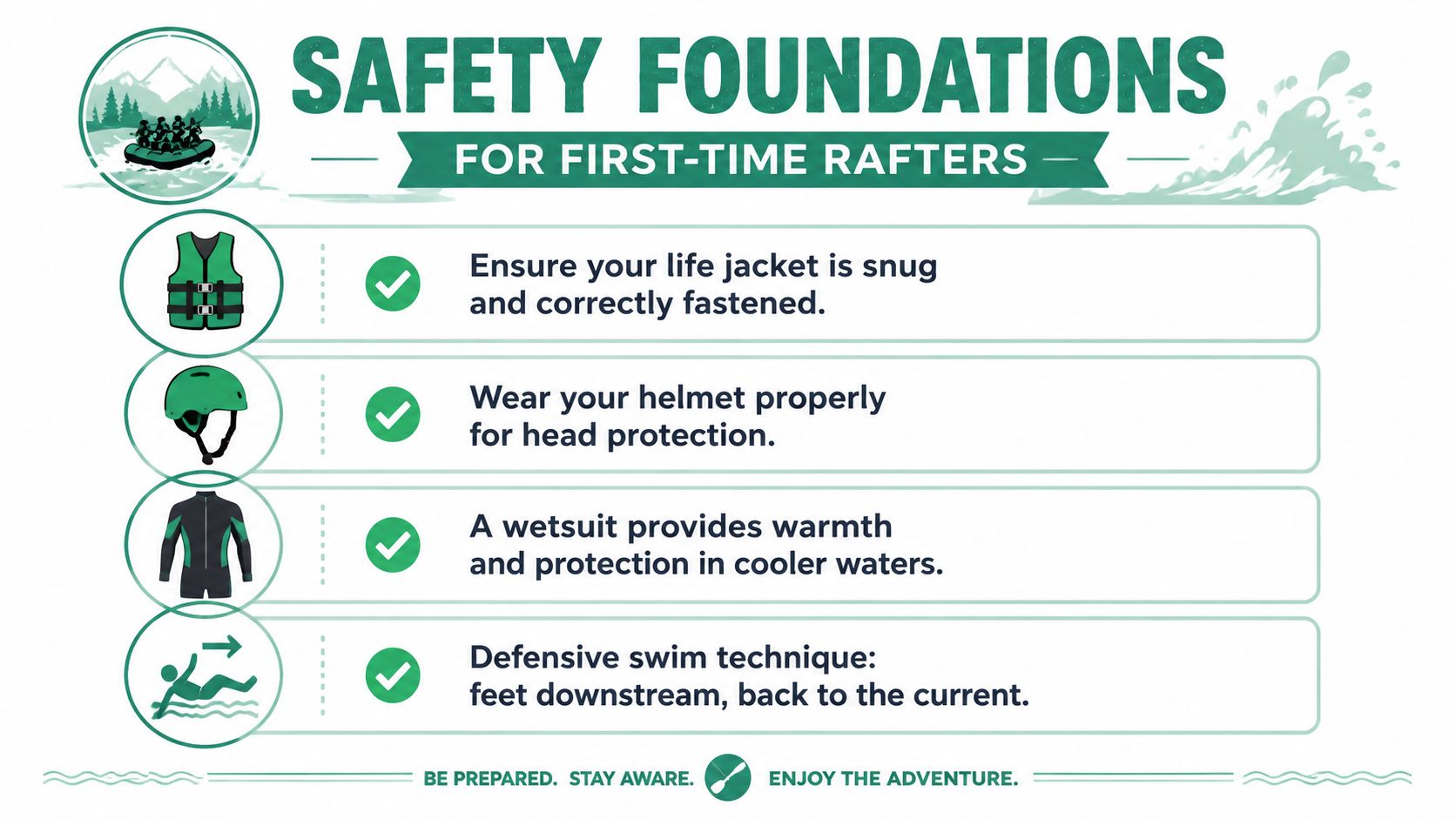
Before the raft moves, the guide checks the equipment. That's not formalities, it's the part that keeps the trip calm and predictable. For a beginner, the safest habit is to treat every piece of kit as active safety, not as optional clothing.
A PFD or life jacket must stay fully buckled and tightened on the water. Multiple beginner safety guides stress that it should sit low and snug so it doesn't ride up, even in calmer sections. If you're bringing valuables, a small dry pouch is useful, and what is a dry bag is a handy primer for understanding how people keep phones and spare layers protected on wet days.
What the guide expects from you
The instructions are short on purpose. You may hear “lean left,” “lean right,” “paddle,” “stop paddling,” “high-side,” or “hold on.” The reason the commands are so simple is that the guide needs a fast response when the raft changes angle or the current shifts.
If you end up in the water, the standard self-protection posture is a defensive swim, on your back with your feet pointed downstream so your head and legs stay safer from submerged obstacles (active-traveller.com). That posture matters because even water that looks calm can hide rocks or uneven current.
A few gear points help beginners stay relaxed:
- Helmet fit: it should sit properly and not wobble.
- Wetsuit comfort: it helps in cooler water and gives extra protection.
- PFD fit: it should feel secure before the raft leaves the bank.
- Hands free: keep straps, zips, and loose items managed before launch.
For people who like to prepare in an organised way, self-protection equipment for rafting is a useful internal reference. Good gear doesn't replace the guide, but it does make the first trip feel far less mysterious.
Understanding River Class Levels
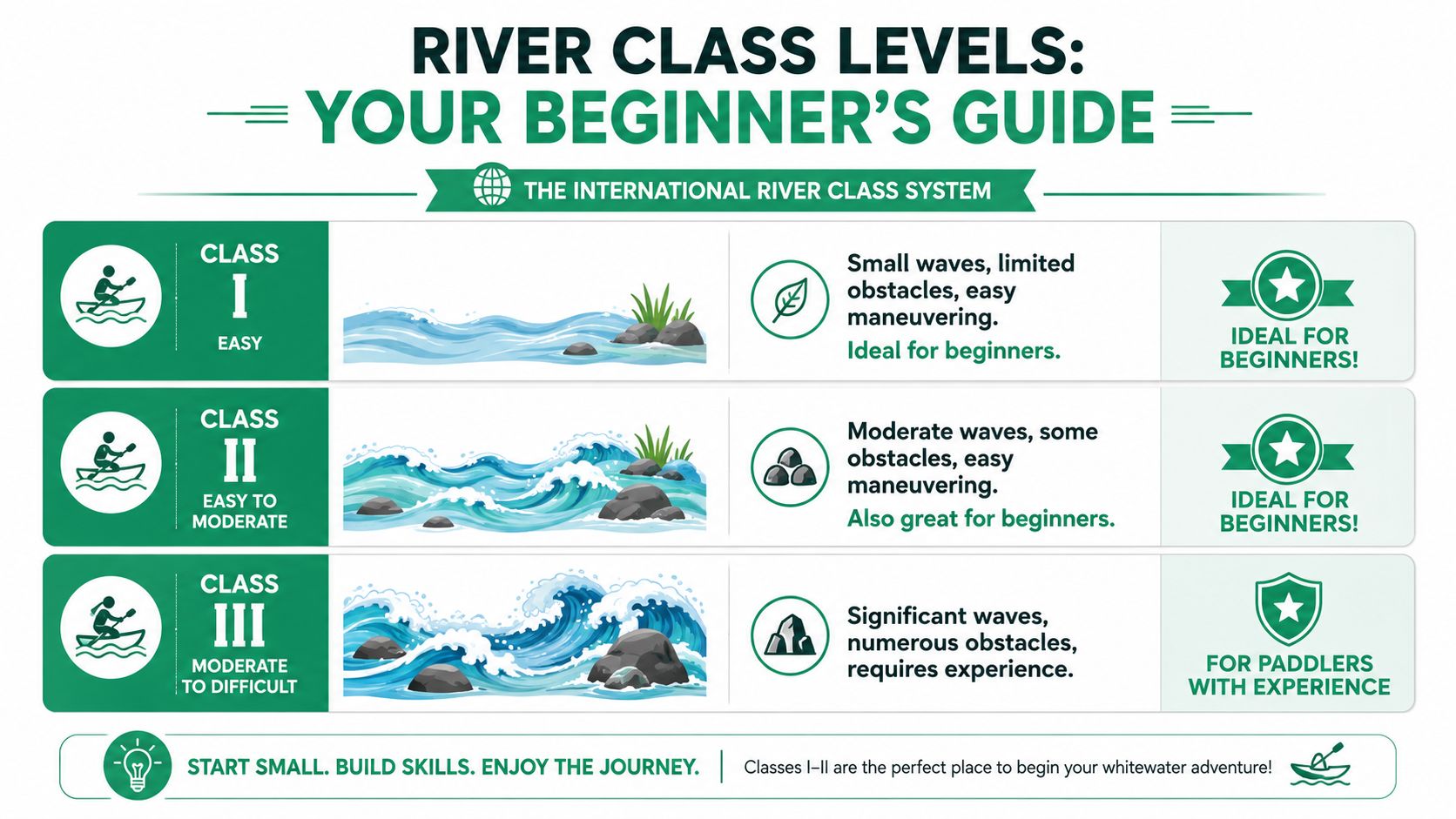
A first rafting trip is easier to plan once you understand river classes. For beginners around Bled, Class I–II water is usually the right starting point because it gives you movement and a bit of spray without demanding advanced boat handling. The current is easy to read, the rapids stay manageable, and the guide can hold the raft on line without constant corrections.
Why Class II works so well for first-timers
Class II water has clear rapids and obstacles that can usually be avoided, with only limited manoeuvring, while Class III brings irregular waves and narrower passages that ask for more precise boat control (tripoutside.com). On paper, that gap can seem small. On the river, it changes how the whole trip feels. In Class II, the raft still has energy, but the guide can keep instructions simple and let the group focus on timing rather than constant technical fixes.
For first-timers, the move away from Class III is about coordination more than fear. Class III asks more of the crew because the line is less forgiving and the paddlers need quicker, cleaner responses. That can suit a group that already paddles together, but it is a clear step up from the beginner runs most visitors want on a first day.
Season matters too, especially around Bled. Alpine snowmelt can make spring water feel livelier, while later in the season some stretches settle into a calmer rhythm. That is one reason operators around Lake Bled often choose beginner-friendly sections of the Sava Dolinka, where the river class stays approachable and the trip feels well matched to families, mixed-age groups, and nervous first-time paddlers. If you want a contrast with a more demanding Slovenian river, look at the Soča River rafting routes, where the experience can move into more technical territory.
Simple test: if you want scenic water, short rapids, and easy reactions, look for Class I–II. If you want stronger teamwork and sharper boat control, you are moving into a more demanding day.
For travellers comparing options in Slovenia, the better question is not whether a river is “hard” or “easy.” It is whether the section fits your confidence, your travel companions, and the kind of memory you want from the day on the water.
Top Beginner White Water Rafting Routes Around Bled
Around Lake Bled, the most welcoming beginner water sits on rivers that have become part of Slovenia's adventure travel story. Slovenian rafting tourism expanded in the late 20th century, and the Sava Dolinka emerged as a well-known entry-level river near Lake Bled and Kranjska Gora for family and first-time adventure travel (krdo.com). That history matters because it explains why the region now feels so organised for novice guests.
A route comparison that helps with planning
| Route | River | Class | Duration | Season |
|---|---|---|---|---|
| Bled beginner run | Sava Dolinka | Beginner-friendly Class II | Half-day style outing | Seasonal, strongest in spring and early summer |
| Kranjska Gora entry stretch | Sava Dolinka | Beginner-friendly Class II | Short guided trip | Seasonal, snowmelt influenced |
| Scenic family section | Sava Dolinka | Class I–II | Relaxed guided outing | Seasonal, calmer later in summer |
The Bled side of the river works well for nervous first-timers because the scenery softens the whole experience. You're not just chasing rapids, you're floating through a setting of Alpine foothills, clear water, and guide-led pacing that keeps the trip friendly for mixed-age groups.
Kranjska Gora brings a slightly different feel. The water there still suits beginners, but the mountain setting gives the trip a more classic Alpine backdrop. That makes it a strong choice for guests who want a scenic descent without moving into higher technical demand.
For photos, the best moments usually come before and after the rapids, when the raft is steady and the light sits nicely over the valley. Those river sections are often the ones families remember most, because they balance motion with enough calm to look around and enjoy the setting.
Operator Services and How to Prepare
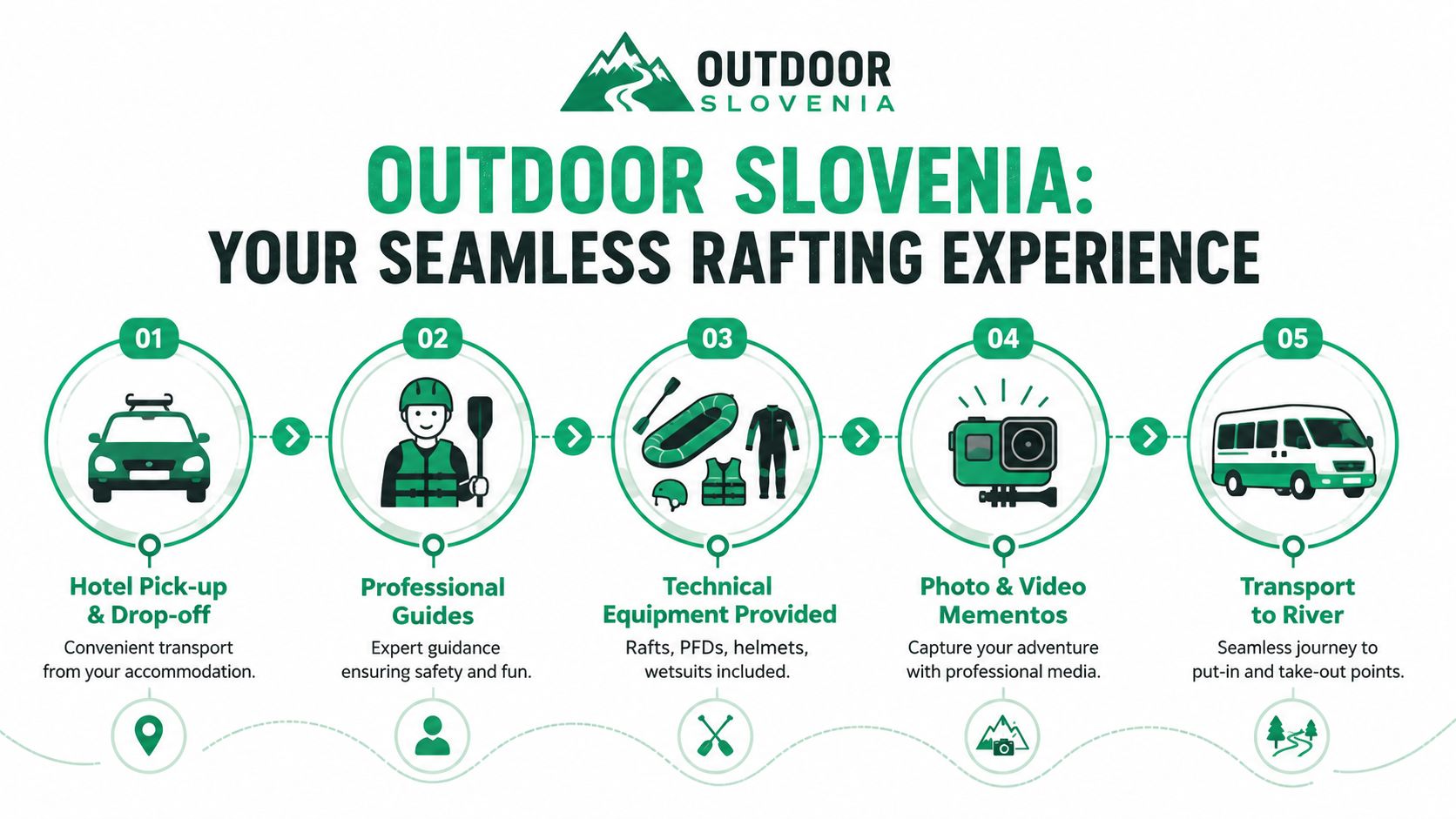
A beginner trip feels much easier when the operator handles the logistics. Outdoor Slovenia Activities, for example, provides professional guides, technical equipment, hotel pick-up and drop-off, transport to put-in and take-out points, and photo or video mementos. That kind of setup removes the awkward first-time questions about where to go, what to bring, and how the day will move from one stage to the next.
How to prepare for seasonal water
The important planning detail in Slovenia is that alpine water changes with the season. The Bled region is strongly snowmelt-driven, so spring conditions can feel very different from late summer, and that affects comfort and safety (outdoorbeginner.com). If you're sensitive to cold, booking later in the season can feel more comfortable, even if the river is still perfectly suitable for beginners.
Pack for being wet, cool, and active. A swimsuit or quick-drying base layer works well under the provided gear, and closed shoes that can get wet are far better than sandals. If you're travelling with a group, book together so the guide can plan seating and pacing around the same comfort level.
A simple booking approach
- Choose the right river section. For first-timers, aim for calm beginner water rather than trying to “level up” too soon.
- Check the season. Spring is colder and more variable, while later summer usually feels easier for nervous guests.
- Reserve early for groups. Families and corporate teams usually benefit from organised timing and a shared transport plan.
- Ask what's included. Helmets, PFDs, wetsuits, and transport should be clear before the day starts.
- Confirm the meeting point. Small details matter when you're trying to keep a relaxed schedule.
The biggest win is simplicity. When the operator takes care of the moving parts, you can focus on the river instead of the logistics.
Taking the Plunge with Confidence
A first rafting trip around Bled usually feels easier once the plan is clear. Choose a beginner-friendly section, listen closely to the safety briefing, and let the guide set the pace. That is why the first outing feels exciting without turning chaotic for a white water rafting beginner.
For newcomers, the river is easier to understand in simple layers. Class I–II water gives you a sensible starting point, a snug PFD and proper helmet keep your upper body protected, and the defensive swim is the position to remember if you ever end up in the water. Alpine rivers around Bled also change with the season, so a trip that feels lively in spring may feel calmer and more comfortable later in the year.
Bled beginners often worry about choosing the wrong trip, but operators take much of that guesswork away. Guided outings usually include the transport, the gear, and the section of river that fits your group, so you do not have to sort out every detail yourself. Outdoor Slovenia Activities offers beginner-friendly rafting around Bled with the practical support first-timers usually want, so you can arrive ready and leave with a real river story. Visit Outdoor Slovenia Activities to choose a trip that matches your group and book your first guided descent with confidence.