
You're standing at a Lake Bled dock, the water is calm, the mountains look perfect, and the only real question is whether you should step into a kayak or a canoe. Most visitors treat that as a small gear choice. It isn't. The difference between kayaking and canoeing changes how stable you feel, how hard you work, how much gear you can carry, and how relaxed the whole outing becomes.
If you pick the wrong craft for your group or the day's conditions, the scenery won't save the trip. Choose well, and you get the kind of easy, confident paddling that makes Slovenia's lakes and rivers memorable instead of tiring.
Table of Contents
- Standing at the Dock and Choosing Your Craft
- Core Design and Paddle Differences Explained
- How Technique and Performance Compare on the Water
- Which Craft Suits Families and Mixed-Ability Groups
- Making Your Decision Based on Conditions and Experience
- Recommended Paddling Experiences on Lake Bled
- Common Questions About Kayaking and Canoeing in Slovenia
Standing at the Dock and Choosing Your Craft
You arrive at the rental dock, the guide points at two boats, and everyone in your group suddenly looks more uncertain than they did five minutes ago. One craft sits lower and sleeker. The other looks more open, roomier, and easier to climb into. That moment matters because the craft you choose shapes the whole rhythm of the day.
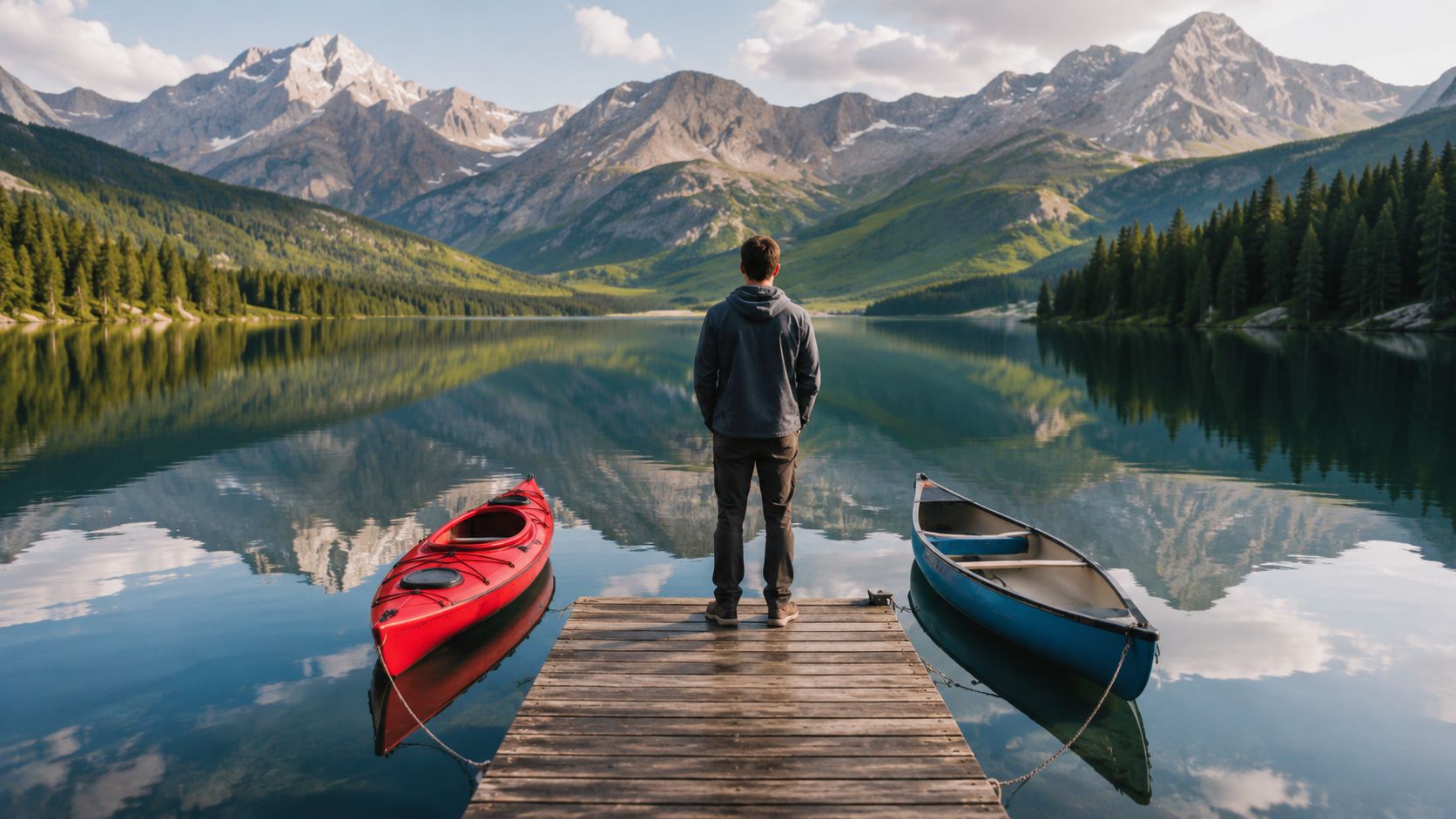
On a calm Slovenian lake, a kayak usually feels more direct and tidy. You sit lower, you move with a double-bladed paddle, and the boat tends to track more cleanly. A canoe feels more open and social, with space for a bag, a child, or a second adult who wants a little more room.
Practical rule: if you want the simplest, most efficient first outing, start with the craft that asks less of your balance and steering.
That is why this choice is not just about style. It affects comfort, confidence, and how much effort you spend correcting the boat instead of enjoying the water. On a short scenic trip, that difference is the gap between a relaxed afternoon and a workout you did not plan for.
For travellers who want a quick first read on paddles and setup, our kayak paddle guide gives the practical basics without the fluff. If you also want a broader shopping context, the overview on summer canoeing paddles is a useful reminder that the tool in your hands changes the entire stroke.
Core Design and Paddle Differences Explained
The boat itself changes the feeling
A first-time paddler on Lake Bled notices the difference before the boat leaves the dock. The International Canoe Federation keeps the formal line clear, in a kayak the athlete is seated and uses a double-bladed paddle, while in a canoe the athlete is typically kneeling and uses a single-bladed paddle (International Canoe Federation explanation). That small hardware choice changes how stable the craft feels, how much room you have for a child or dry bag, and how much correction you need if the wind picks up.
A kayak is usually narrower and lower to the water. That lower profile helps it sit cleaner in wind and light chop, and the narrower hull usually makes it easier to keep a straight line across a calm alpine lake. A canoe sits higher and feels more open, which is useful if you are loading gear or sharing space with another person, but it also gives the wind more surface to push against.
| Feature | Kayak | Canoe |
|---|---|---|
| Seating | Seated, lower position | Typically kneeling or seated higher |
| Paddle | Double-bladed | Single-bladed |
| Hull feel | Narrower, lower profile | Wider, more open |
| Best known for | Efficient cruising and easier line-holding | Space, access, and tandem comfort |
| Steering style | Alternate strokes on both sides | Side-switching or corrective strokes |
The paddle determines the rhythm
A kayak paddle lets you work both sides without changing tools. That gives the stroke a steady, even rhythm, and on Lake Bled's calm water the blade angle stays efficient because each catch pulls the boat forward instead of wasting effort on extra correction. Beginners usually feel that benefit quickly once they settle their shoulders and stop overreaching.
A canoe paddle asks for more steering awareness. You are usually working one side at a time, so you need to pay attention to the blade angle, the path of the shaft, and when to switch sides before the boat starts to wander. That is why a canoe can feel relaxed and spacious, but also less automatic for a visitor who just wants to paddle straight and enjoy the view.
That difference shapes the whole outing. In a kayak, the stroke is direct and tidy, and the boat responds quickly to your hands. In a canoe, you trade some of that immediacy for space, loading flexibility, and a more open seating position.
For a more detailed paddling walkthrough, the simple guide to how to paddle a kayak correctly is worth reading before you get on the water. If you are comparing equipment in practical terms, the overview on summer canoeing paddles is a useful reminder that the paddle shape changes how the boat moves from the first stroke.
How Technique and Performance Compare on the Water
Speed is only half the story
The practical difference shows up quickly on the water. Touring kayaks usually cruise faster on calm water because their narrower hulls sit lower and track more cleanly, while solo canoes on flat water move more slowly and ask for more steering input. A technical guide on canoe versus kayak performance makes that plain, and it explains why a kayak often feels faster on open stretches, even when the paddler isn't working harder.
That matters on Slovenia's alpine lakes and sheltered river sections, where wind and small course corrections can shape the whole outing. A kayak gives you a straighter, cleaner line with less attention spent on keeping the bow where you want it. A canoe gives you more room and comfort, but you pay for that with extra steering work.
The body works differently too
Technique changes the load on your body. A systematic review of flatwater canoeing and kayaking shows that performance depends on a mix of anthropometric, physiological, biomechanical, neuromuscular, psychological, and nutritional factors. For a first-time paddler, the useful takeaway is simple, the craft that matches your movement pattern will feel easier long before your arms get tired.
On calm water, the better boat is usually the one that leaves you free to enjoy the water instead of correcting every few strokes.
The mechanics also differ in a way you can feel after a few minutes. A kayak rewards steady cadence and symmetrical force on both sides, so the boat keeps moving with less interruption. A canoe rewards balance, edging, and line control, and that suits paddlers who want room, visibility, and a more open setup. For a clear step-by-step refresher before you book, use this practical guide to paddling a kayak correctly.
On Lake Bled, wind exposure makes the split obvious. A kayak usually stays calmer in your hands when the surface starts to shift, and that is why it is the safer pick for visitors who want efficient self-rescue and a more predictable feel. A canoe still has its place, especially for relaxed family outings with extra gear, but if you care about straight-line efficiency and easier handling in changing conditions, choose the kayak. If you want a broader family travel comparison, the Alaska family vacations guide shows the same pattern, comfort and logistics matter more than abstract performance talk.
Which Craft Suits Families and Mixed-Ability Groups
Families need space, not abstract theory
When I'm guiding first-timers with children, the question is never “which craft is technically better.” It's “which one keeps the group calm, together, and comfortable.” A canoe usually wins when you need room for a child, a dry bag, or a parent who wants to help a younger paddler settle in. The open layout makes boarding easier, especially from a dock or a shallow shore.
Kayaks are often the better solo choice. They feel more locked in, and that helps nervous paddlers because they don't have to think about moving around inside an open hull. A sit-on-top kayak is especially forgiving for beginners, because it gives easy entry, easy exit, and a lot of confidence on warm, calm water.
Pick the craft that matches the people, not the postcard
Slovenia's tourism profile leans toward short, family-oriented outdoor experiences, and many visitors are casual participants rather than experienced paddlers (Slovenia visitor profile and sports participation context). That is exactly why the family question matters more here than in many other places. On a Lake Bled outing, one confident adult and one tired child can turn a beautiful boat into a nuisance if the setup is wrong.
If you're weighing a broader family adventure style, the Alaska family vacations guide is a decent reminder that the best trip format is the one that fits the group's energy, not just the scenery.
My recommendation: choose a canoe for mixed ages, bags, and easy conversation. Choose a kayak for solo control, simpler handling, and less distraction.
That does not mean canoes are “for families” and kayaks are “for everyone else.” It means the canoe is more forgiving of moving around and carrying things, while the kayak is more direct and manageable for a single paddler or an active pair who want a clean, simple outing.
Making Your Decision Based on Conditions and Experience
Slovenia changes the answer with the weather
The paddling scene here is strongly seasonal, and river conditions are tied to snowmelt and weather (seasonality and alpine water conditions). That means the right boat in July may not be the right boat in spring, or on a day when the wind builds across an exposed lake. A beginner who chooses well in flat conditions can still have a poor time if the craft doesn't suit the day.
Use this logic instead of defaulting to a single “best” boat:
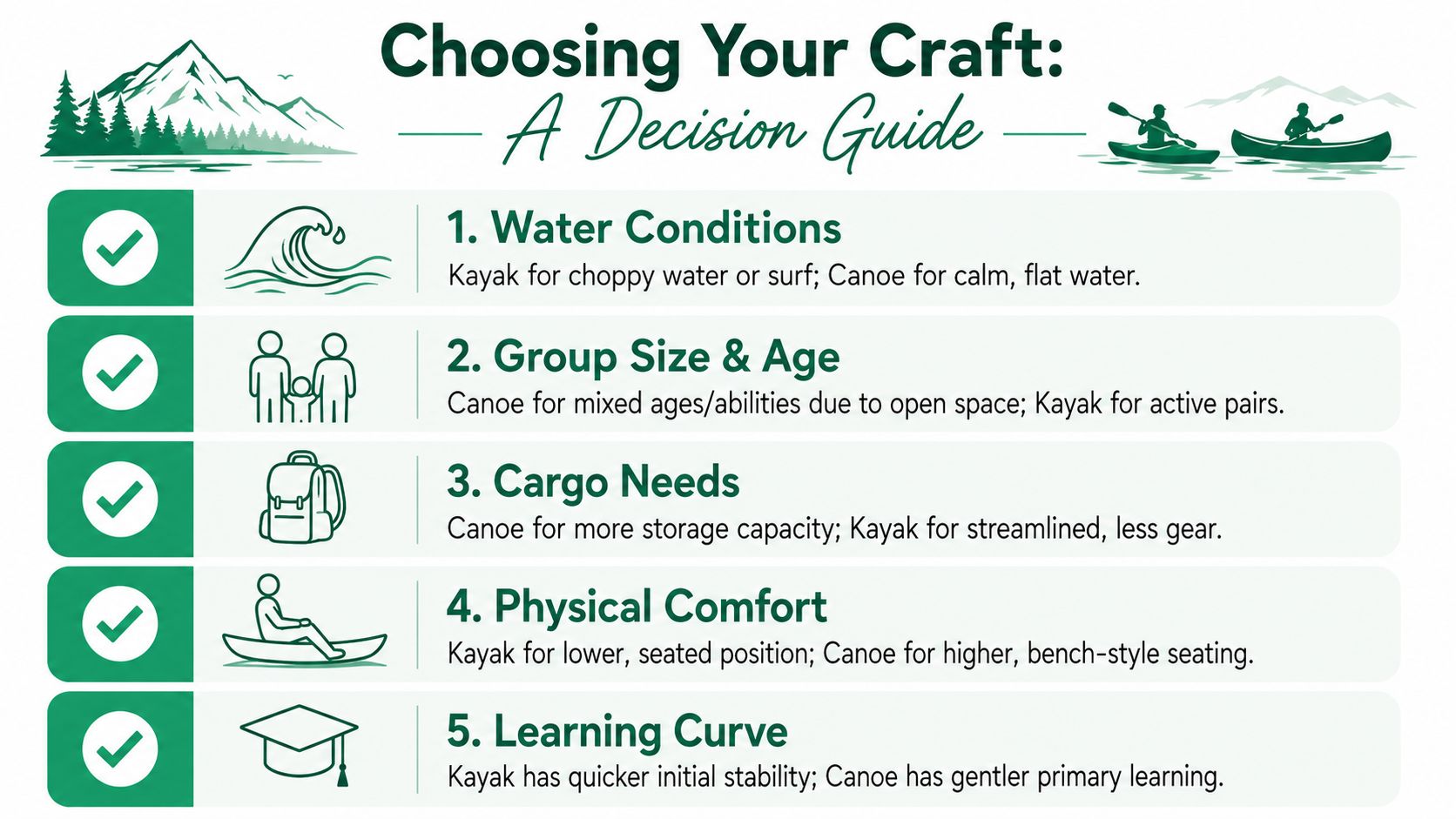
- Calm lake, first time on the water. A kayak is the cleaner, safer-feeling starting point for most adults because the lower seat and double-blade rhythm keep the boat predictable.
- Family group, mixed confidence, snacks and dry bags. A canoe is the better logistical choice because the open layout makes everything easier to manage.
- Cold shoulder-season water. Choose the option that your guide can keep most stable and most controlled, because comfort drops fast when people get tense.
- Short guided outing. Either can work, but the better craft is the one that reduces correction and confusion.
Stability and self-rescue matter more than people admit
Most online comparisons skip the part that matters in real bookings, which is what happens if someone feels uneasy, gets splashed, or needs to reposition. In cold alpine water, confidence disappears fast when a craft feels unstable, and that changes how a beginner moves. A guided trip should therefore prioritise the option that makes entry, exit, and recovery feel obvious to the group.
A kayak usually gives a lower seated feeling that many beginners interpret as safer. A canoe gives more openness, but it also asks more from balance and steering discipline. Neither is magically “safe” or “unsafe.” The right choice is the one that matches the water, the month, and the person in the seat.
For first-timers, I'd keep it blunt. If you want the least complicated introduction, start in a kayak on a calm day. If you're moving as a family or carrying gear, choose a canoe and accept that it will ask for more steering attention.
Recommended Paddling Experiences on Lake Bled
Start with the simplest, most forgiving format
For first-time visitors to Lake Bled, I'd recommend sit-on-top kayaking before anything else. It is the most approachable way to get on the water, especially if you want the lake views without a complicated learning curve. You sit securely, you can get in and out quickly, and the whole experience feels less intimidating than trying to manage a more demanding craft on your first outing.
If you want a straightforward way to organise that kind of trip, the rental options on Outdoor Slovenia's kayak page are the sensible place to begin. The important part is not just the boat, but the support around it. Beginners do better when the setup is clear, the gear is ready, and the guide keeps the pace relaxed.
Combine lake time with a bigger day
Some travellers want more than a gentle circuit on the lake. For them, a kayak and rafting combo makes sense because it gives variety without demanding advanced skills. You still get the controlled, beginner-friendly feel of kayaking, but you also add a more active river experience into the day.
The best guided experiences in Slovenia should include professional instruction, all technical equipment, hotel pick-up and drop-off, and photo or video mementos. That matters because first-timers don't need more variables. They need a smooth handover from arrival to launch, and they need someone local who knows how to adjust the route to the day's water and the group's confidence.
If your goal is to enjoy Bled without second-guessing the boat, book the trip that removes decisions before launch.
For families, small groups, and people who have never held a paddle before, that's the key filter. Not speed. Not bragging rights. Just a calm, well-run outing where the guide does the heavy lifting and you get the scenery.
Common Questions About Kayaking and Canoeing in Slovenia
Do I need experience to join a guided trip
No. On Lake Bled and similar Slovenian waters, beginner-friendly guided trips are built for people who are new to paddling. The point of a good guide is to make the first twenty minutes feel simple, not to test you.
What should I wear
Wear clothes that can get wet and won't drag when you move. On alpine water, comfort matters more than looking prepared. Bring layers if the day is cool, because Slovenia's weather can shift quickly on the water.
Is kayaking or canoeing more popular
Recreational kayaking exceeded 11 million participants by 2019, while canoeing had 9.1 million participants and averaged 6 days per year on the water (paddlesports participation report). That reflects the same basic reality you'll see here, kayaking is usually the more accessible entry point, while canoeing remains a strong option for people who value space and repeat outings.
Can children join
Yes, with the right craft and guide. For mixed ages and shorter lake outings, a canoe often makes the most sense because it gives everyone more room and makes boarding simpler. For older children who want their own paddle and a more active role, a kayak can work well in calm conditions.
If you want a clean, beginner-safe day on Lake Bled, choose the craft that matches your group instead of the one that looks best in photos. Outdoor Slovenia Activities runs beginner-friendly water adventures with professional guides, full equipment, and a practical approach to safety, so you can spend less time worrying about the boat and more time enjoying the lake. Visit Outdoor Slovenia Activities and book the paddling experience that fits your pace, your group, and the day's conditions.